

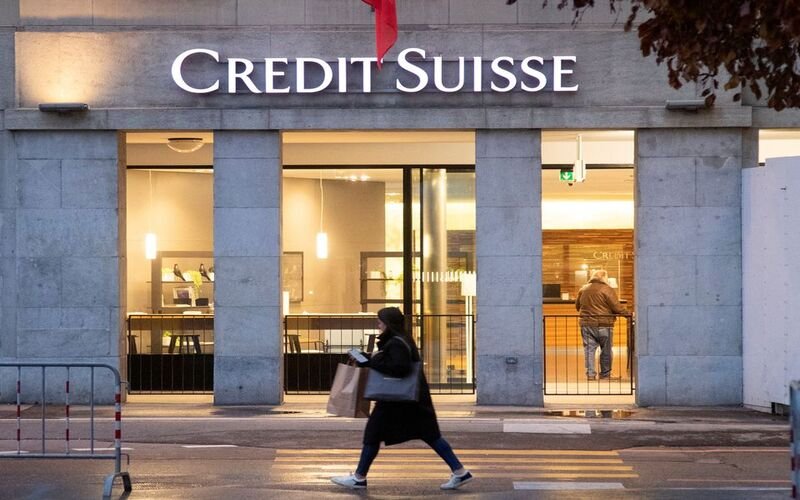
After parliament’s two chambers failed to agree a day earlier, Swiss legislators debated the bailout of Credit Suisse (CSGN.S) on Wednesday.
The decision to accept the 109 billion Swiss francs ($120.82 billion) government rescue package for the Swiss bank is mostly symbolic.
The administration used emergency law to commit financial guarantees without parliamentary approval, angering lawmakers.
On Tuesday, Switzerland’s upper parliament supported the bailout, but its lower, bigger chamber rejected it.
Raclette, hard-boiled Easter eggs, and wine-fuelled parliamentarians’ heated arguments in the country’s four official languages into the early morning.
They will vote again on Wednesday, revising the proposals to reach a consensus.
Finance minister Karin Keller-Sutter told parliament on Wednesday that MPs should examine what kind of financial center Switzerland wants to be and what message rejecting the bailout would send.
“What signal do you want to send internationally, are the institutions dependable, do you prioritize financial market stability in an area where you already have a significant financial center?”
Last week, lawmakers were summoned to Bern for a rare extraordinary session to address Credit Suisse’s quick rescue and the Swiss government’s open-checkbook approach to a failure many blame on top management.
A shotgun marriage between Credit Suisse and UBS (UBSG.S) for 3 billion Swiss francs and more than 250 billion guarantees and backing has been widely criticized.
Last month, Swiss emergency law allowed a subgroup of six parliamentarians to endorse the financial pledge on behalf of the full body, angering roughly 250 MPs.
“The usage of emergency legislation has reached a level in the previous three years that is beginning to upset me,” Hansjoerg Knecht, an upper house member, said Tuesday.
Keller-Sutter admitted dissatisfaction before Tuesday’s vote.
“I heard rage, I heard aggravation, occasionally I also heard a little of helplessness,” Karin Keller-Sutter said, adding that the merger between traditional cross-town rivals Credit Suisse and UBS was not forced but convenient.

