

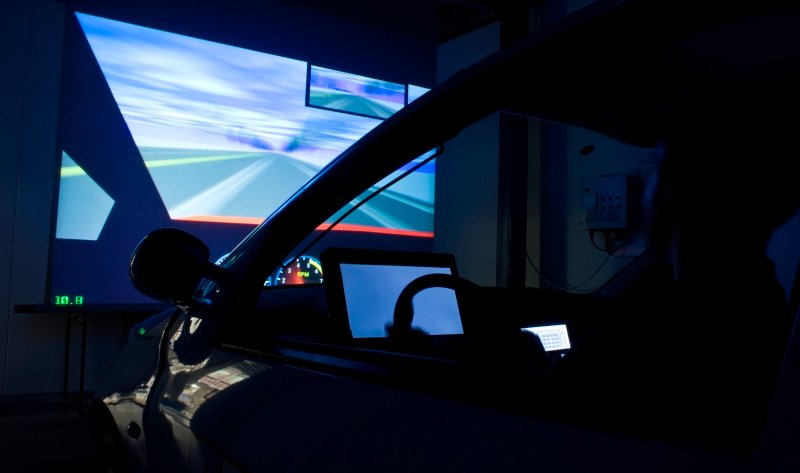
Driving while drowsy is a deadly problem all over the United States. In an extensive study conducted by the Center for Disease Control and Prevention (CDC), 4.2 percent of the drivers tested said they had fallen asleep at the wheel within the last 30 days. That number may seem low, until you factor in that 4.2 percent of all cars is roughly about every 25th car you see on the road.
Across the 19 North American states tested, Oregon scored the lowest amount of drowsy drivers at 2.5 percent and Texas received dubious top-billing at 6.1 per cent. Project HARKEN (Heart and Respiration In-Car Embedded Non-Intrusive Sensors) is looking to reduce fatalities due to drowsiness.
A person’s heart rate and respiratory rate change in predictable ways when he or she becomes fatigued. Specialized materials in the seat cover and seat belt measure the fluctuation as fatigue sets in. The system measures and monitors the patterns of heart rate and respiratory function while eliminating the noise caused by the vehicle and outside elements. When the system detects a sleepy driver, alarms are set to go off inside the car.
The system is still a prototype, but even now, the finished early versions remain completely hidden. Developers hope that a person will hear the alarms and take a rest on the side of the road before they head out again. The device is being developed by Biomechanics Institute in Valencia, Spain. The research is funded by the European Union.

