

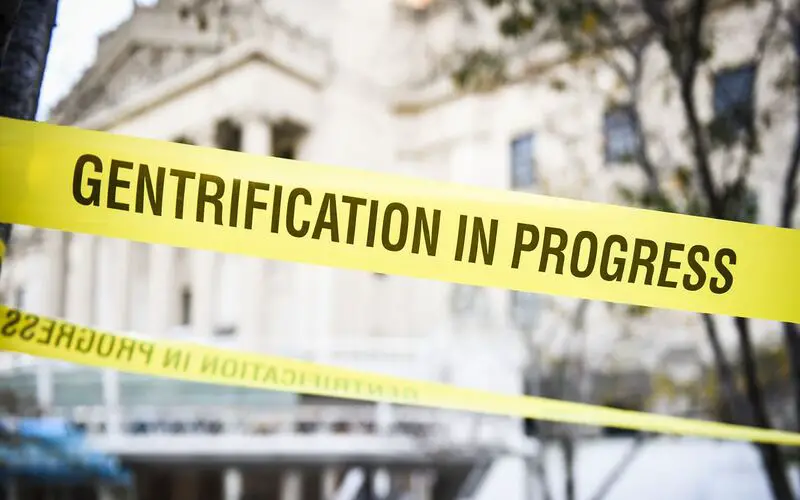
What Is Gentrification?
Gentrification raises the value of a city neighborhood. Gentrification occurs when a neighborhood or part of a city proliferates, frequently due to urban renewal efforts. This practice typically results in increased housing prices and the displacement of local populations.
Understanding Gentrification
Gentrification comes from “gentry,” which refers to the elite. The phrase “landed gentry” originated in the U.K., referring to landowners who relied on rental revenue from their holdings. Ruth Glass introduced the word “gentrification” in 1964 to characterize the inflow of middle-class individuals into London’s working-class districts, displacing the old occupants.
The concept of gentrification affects housing market dynamics in several places worldwide. In most large cities, underperforming areas have become thriving districts with luxury condos and offices, new coffee shops and restaurants, costly retail outlets, and plenty of entertainment.
Gentrification is complicated.
Social issues like gentrification have pros and cons. Young families like affordable houses in secure communities with solid infrastructure and many facilities and services. Higher taxes on growing property values and economic activity help local governments. However, increasing rents and a more significant cost of living displace the area’s original residents—families and individuals of all ages.
The Controversy of Gentrification
Gentrification has traditionally discriminated against racial minorities, women, children, people with low incomes, and older adults, making it contentious. Gentrification may reverse a city’s decline, but it can move former inhabitants into poorer, sometimes risky neighborhoods with limited access to affordable housing, decent food, and social networks. This might raise stress and lower mental wellness.
The CDC reports that underprivileged populations are more susceptible to the negative health impacts of gentrification, including lower life expectancies and higher incidences of cancer, diabetes, and cardiovascular disease. Displacement typically results in the marginalization of original inhabitants, mainly persons of color, a lack of government support for low-income housing, and decreased social and communal ties.
Between 2000 and 2013, seven of the largest U.S. cities—New York City, Los Angeles, Washington, D.C., Philadelphia, Baltimore, San Diego, and Chicago—accounted for about half of gentrification, according to 2019 National Community Reinvestment Coalition research.
Gentrification Causes
A well-cited Brookings Institution Center for Urban and Metropolitan Policy research identifies gentrification issues.
- More incredible job growth in a city’s downtown and periphery might lead to gentrification.
- Tight housing market factors contribute to gentrification and vary by place. In the 1980s gentrification boom, the San Francisco Bay Area had limited housing supply, while Washington, D.C., had relative house affordability.
- Certain demographic groups may favor metropolitan districts due to perceived benefits such as cultural venues, restaurants, stores, bustling street life, and population variety. Such qualities can help city planners identify gentrifying regions.
- Rising metropolitan populations and aging infrastructure can lead to increased traffic congestion, travel times, and a reduced quality of life, contributing to gentrification.
- Many cities use targeted public-sector policies, such as tax incentives, public housing plans, and local economic development tools, to attract middle- and high-income families to distressed areas or upgrade their homes.
A community land trust (CLT) can help individuals access inexpensive homes and combat housing discrimination. These private, non-profit groups own property for a community, encouraging housing affordability and sustainable development and reducing historical homeownership and wealth disparities.
Challenge Long-Term Views
A recent study questions several long-held beliefs regarding gentrification’s detrimental impacts. A July 2019 study by the Federal Reserve Bank of Philadelphia and the U.S. Census Bureau concluded that gentrification can benefit original inhabitants while causing little downside.
- According to the research, original residents—including the most disadvantaged—did not migrate to poorer areas or experience unfavorable changes in employment, income, or commute distance.
- Many adult initial inhabitants stayed in gentrifying communities and profited from growing property values and decreasing poverty. Increased economic opportunities helped some children attend and graduate college.
- Gentrification was primarily evident in the neighborhood’s influx and makeup, not in the displacement of existing residents.
Conclusion
- A city neighborhood rapidly evolves from poor to high-value through gentrification.
- Gentrification raises rents and living costs, displacing populations.
- Gentrification is political and involves complicated societal concerns with pros and cons.
- Rapid job development, tight housing markets, city amenities, and transportation congestion can cause gentrification.

