

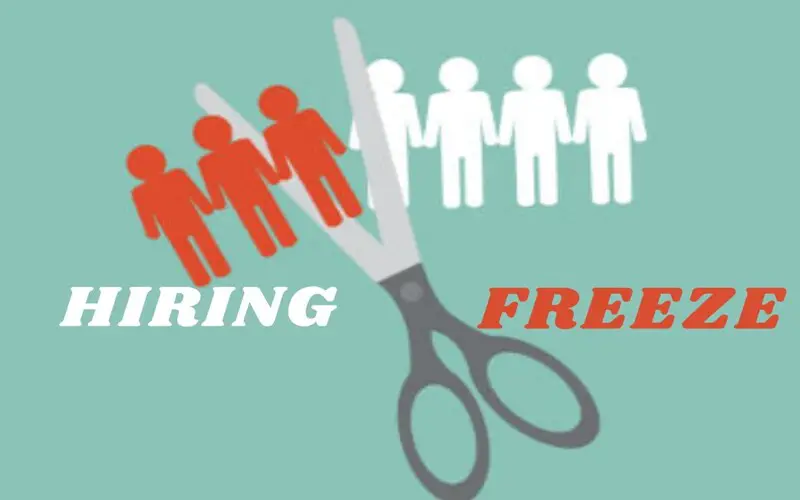
What is a hiring freeze?
A hiring freeze is when a business temporarily ceases hiring to cut costs. Financial difficulties can lead to cost-cutting, but even successful organizations may delay recruiting during economic slowdowns, recessions, or overcapacity.
Short-term or long-term hiring freezes might prevent layoffs for a corporation. Hiring freezes occur in empty positions due to firings or natural attrition. In addition, they prohibit new roles.
Understanding Hiring Freezes
Hiring freezes may occur in failing and successful firms to maintain profit margins. Management may decide to freeze recruiting soon due to a sudden economic downturn, industry slowdown, or cost increase.
Hiring freezes enable organizations to halt non-essential hiring, resetting payroll expenditure growth. Management may be able to reconfigure work groups to increase efficiency after a hiring moratorium. A hiring freeze should not reduce revenue, as that would negate its goal of protecting earnings.
A hiring freeze may not stop all hiring. Companies may still hire for customer-facing or specialist positions. They may be able to hire freelancers or part-time workers at a lesser cost than full-time employees. A hiring freeze helps companies control expenses without affecting vital tasks like R&D, manufacturing, and sales.
Hiring Freeze Effect
During a freeze, employees who leave due to retirement, family or medical leave, or job changes may find it difficult to replace them. Workers must often take up the duties of departed coworkers. Performance and morale may decrease as workloads increase. This can increase staff turnover, making the freeze unsustainable.
With no replacements, a freeze may encourage managers to accept subordinates’ lousy performance rather than terminate or confront them. Temporary or freelance workers may minimize the cost savings from a hiring moratorium and lower long-term performance. For these reasons, a freeze is usually short to cut expenses during a slowdown.
Conclusion
- The freeze indicates a company has halted employment.
- Companies facing financial difficulties or an economic slump might cut costs by freezing hiring.
- Hiring freezes leave layoffs and voluntary departures unfilled.
- Employees must step in for newly recruited workers during a hiring freeze, which raises their workloads.
- Some hiring freezes enable managers to hire freelancers or part-time workers but not full-time workers.

