

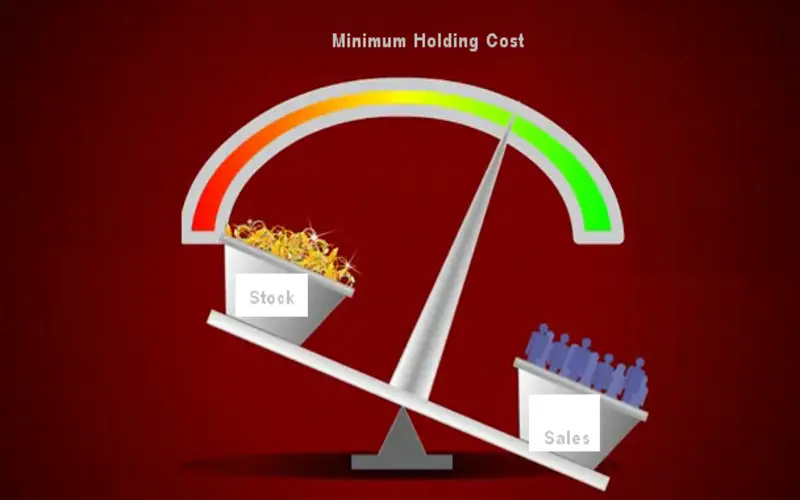
What Are Holding Costs?
Holding costs refer to the expenses of holding unsold merchandise. Total inventory expenses include these charges and ordering and shortfall fees.
A company’s holding expenses encompass damage or spoilage fees, storage space, labor, and insurance.
Understanding Holding Costs
Minimizing inventory costs is crucial for supply-chain management. Inventory expenditure decisions might restrict cash available for other uses, as it involves a significant monetary commitment.
For instance, adding $10,000 to inventory reduces monthly cash flow. This condition represents an opportunity cost.
Example of Holding Costs
Say ABC Manufacturing makes furniture and ships it to retailers from a warehouse. ABC must rent or buy warehouse space and pay utilities, insurance, and security.
The corporation needs paid workers to carry inventory into the warehouse and load sold goods onto vehicles for delivery. Moving furniture into and out of the warehouse risks harm to the company.
Holding Cost-Reduction Methods
Selling products and collecting payments swiftly can help a firm maintain cash flow. The sooner clients pay, the less cash the business needs to operate. To determine cash collection frequency, businesses use the inventory turnover ratio, which is the cost of goods sold (COGS) divided by the average inventory.
A corporation with $1 million in cost of goods sold and $200,000 in inventory has a turnover ratio of five. The objective is to enhance sales and decrease inventory to boost turnover.
Calculating a reorder point—the inventory level at which a corporation orders more from a supplier—is another way to reduce holding costs and inventory expenses. The company can fulfill consumer orders without overpaying for inventory with an exact reorder point. Reorder points prevent shortage costs resulting from low inventory levels and losing client orders.
The reorder point incorporates supplier delivery times and weekly or monthly product sales. Using a reorder point helps businesses determine the optimal economic order quantity (EOQ) for supplier inventory orders. Calculate EOQ with inventory software.
Conclusion
- Unsold inventory incurs holding expenses.
- Storage space, labor, insurance, and damaged or spoiled items are holding expenses for a company.
- Inventory cost reduction is crucial to supply-chain management.
- Quick payment collection and correct reorder points save on holding expenses.

