

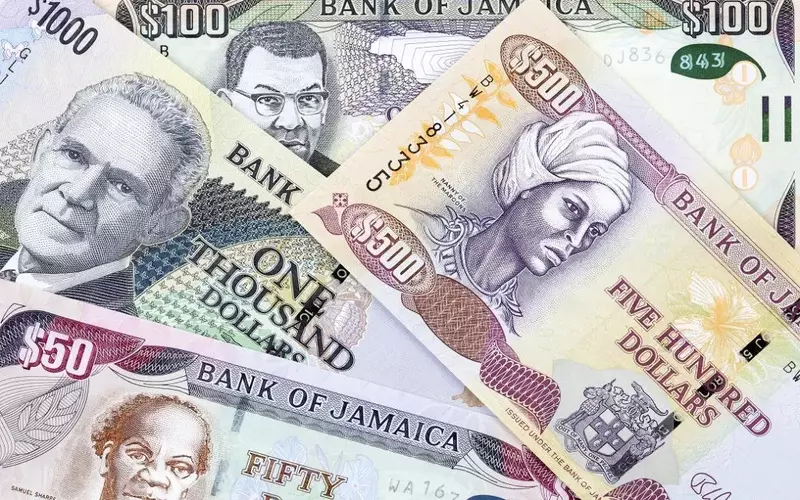
What is the JMD (Jamaican Dollar)?
With 100 cents, the Jamaican dollar (JMD) is the official currency of the island country of Jamaica. J$, or JA$, stands for the Jamaican dollar (JMD).
How to Understand the Jamaican Dollar (JMD)
There are JMD (Jamaican dollar) bills worth J$50, J$100, J$500, J$1,000, and J$5,000 right now. On the front of the bills, there are prominent print symbols or numbers that help people who are blind or have low vision. A picture of a famous Jamaican person is on the front of each note. Most of the time, these people are either national heroes or past prime ministers. Pictures of Jamaican places or well-known sites are on the back of the dollar bills.
A lot of tourist spots in Jamaica also take U.S. dollars, but stores that aren’t near the big tourist spots are more likely to only take the Jamaican dollar. However, each merchant can set their own exchange rates, so customers paying with foreign currency may find that the exchange rates are not reasonable based on the merchant’s rules. At one point, the Cayman Islands also used the Kingston dollar. The most popular way to trade the Jamaican dollar on the foreign exchange market is with the U.S. dollar. As of July 4, 2021, 1 USD was equal to 150.05 JMD.
Although De La Rue Currency Ltd. in England has been printing Jamaican bills since 1920, the Bank of Jamaica got the exclusive right to mint coins and bills made in Jamaica in 1960. In 1968, the country switched to a decimal-based payment system. The JMD was the first dollar that wasn’t based on Spanish or U.S. dollars but on half-pound sterling.
In 1969, JMD took the place of the Jamaican pound. At that time, coins and bills were used, but coins have replaced some bills. The first J$1,000 note came out in 2000, and the first J$5,000 note came out in 2009. Authorities from the Bank of Jamaica set limits on how many coins can be used to buy things and services in a single transaction. The regulations also spell out the maximum value of coins used in those transactions.
The most recent data from the World Bank shows that Jamaica’s annual inflation rate is 3.9% and its GDP showed a 0.7% figure.
How the Jamaican Dollar (JMD) came to be
Jamaica has used different coins and bills from different countries over the years. The original people who lived in the area didn’t really see a need for money because they mostly traded goods for goods. As time passed, Spanish money slowly replaced local money to buy and sell things in Jamaica after the Spanish took over in the 1600s. After two hundred years, when Jamaica was a British colony, most Jamaicans used British money or a slightly modified version of it. It was once the only British colony in the West Indies that had its own unique pound sterling coins.
Conclusion
- With 100 cents, the Jamaican dollar (JMD) is the official currency of the island country of Jamaica.
- The most popular way to trade the Jamaican dollar on the foreign exchange market is with the U.S. dollar. As of April 2021, 1 USD is equal to 150.27 JMD.
- The JMD was the first dollar that wasn’t based on Spanish or U.S. dollars but on half-pound sterling.

