

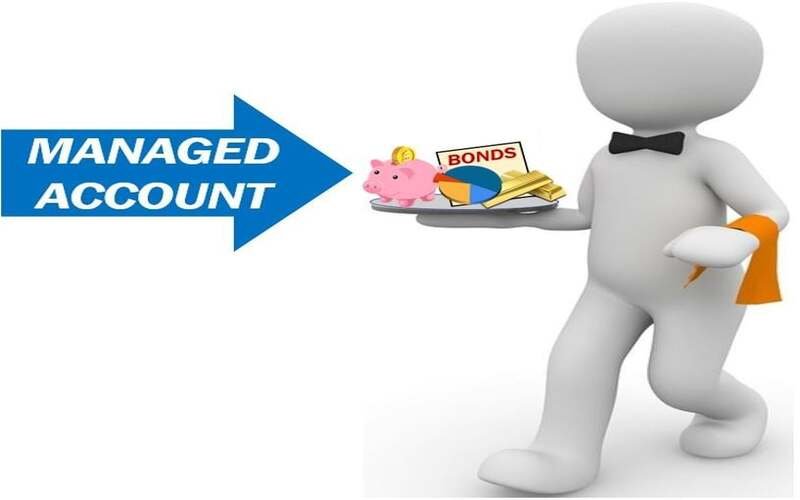
What is a managed account?
A managed account is an investor-owned investment account under a third party’s management. Individual retail investors or institutional investors may hold the account owner designation. The investor subsequently appoints a professional money manager to supervise the account and its trading activities.
The devoted manager, endowed with discretionary authority over the account, proactively formulates investment decisions relevant to the client’s specific circumstances, considering their risk tolerance, asset size, and objectives. Generally, managed accounts are observed with high-net-worth investors.
The Function of a Managed Account
A managed account may comprise cash, real estate titles, or financial assets. The money or investment manager may purchase and sell assets without the client’s prior consent as long as they do so per the client’s objectives. The manager must act in the client’s best interest due to the fiduciary duty associated with managed accounts; failure to do so may result in civil or criminal penalties. Generally, the investment manager will provide periodic updates to the client regarding the performance and holdings of the account.
Money managers frequently impose minimum dollar requirements on the accounts under their management, which necessitates that clients possess a specific amount of capital to invest. Although many minimums begin at $250,000, certain administrators will accept accounts for as little as $50,000 or $100,000.
Typically, managers remunerate their services with an annual fee as a percentage of the assets under their care (AUM). Compensation fees vary considerably but average between 1% and 2% of AUM. Numerous managers offer discounts proportional to the size of the account’s assets; thus, the percentage fee decreases as the portfolio size increases. As per the Internal Revenue Service ruling, the tax deductibility of these fees as investment expenses has ceased.
An emerging concept in the realm of managed accounts designed for non-investors is the robo-advisor. Robo-advisors are algorithmically driven digital platforms that manage investments in a portfolio in an automated fashion, requiring minimal human oversight. These platforms generally offer more affordable pricing, with initiation fees of around 0.25% of AUM and starting capital requirements as low as $5.
The contrast between managed accounts and mutual funds
Mutual funds and managed accounts comprise collections of money or portfolios actively managed and allocated across diverse asset classes.
Mutual funds are, in essence, a classification of managed accounts. The fund company will employ a money manager to oversee asset allocations within the fund’s portfolio. Following the fund’s objectives, this manager may rotate the fund’s holdings.
During the initial stages of marketing in the 1950s, mutual funds were promoted as a means for small retail investors, or the “little guy,” to benefit from and experience professional money management. In the past, this service was exclusively accessible to affluent individuals.
Pros
- Personalized managed accounts cater to the specific requirements of the account bearer, whereas mutual funds allocate investments following the fund’s objectives.
- The timing of managed account transactions can minimize tax liability, whereas investors in mutual funds do not influence when the fund realizes taxable capital gains.
- The owners of managed accounts enjoy the highest level of asset transparency and control, whereas the owners of mutual funds only own a portion of the fund’s asset value.
Cons
- Certain managed accounts necessitate an initial investment of six figures, whereas mutual funds demand considerably reduced sums.
- Investments and divestments in managed accounts can take days; in contrast, shares of mutual funds are more liquid and can be purchased and sold daily.
- High annual fees charged by managed account administrators hurt overall returns, whereas expense ratio fees for mutual funds are typically lower.
Management Factors to Consider
Mutual funds and managed accounts are both under the supervision of professional administrators. Managed accounts consist of individualized investment portfolios tailored to the holder’s risks, objectives, and requirements. The management of the mutual fund is devoted to achieving the investment and return objectives of the fund on behalf of the numerous fund holders.
The investor allocates funds to a managed account, while the manager acquires and affixes tangible shares of securities to the account’s portfolio. The account holder possesses the securities and can instruct the manager on how to trade them.
On the other hand, mutual funds are categorized according to the investment objectives of the funds and investors’ risk tolerance, not by personal preference. Additionally, investors who acquire shares of a mutual fund do not own the fund or its actual assets; instead, they acquire a percentage of the fund’s value.
Transactional Aspects to Consider
Transactional processes may be executed at a slower pace in a managed account. There may be a delay in the manager allocating the funds in their entirety. Managers may also be able to liquidate securities only at designated times, contingent upon their chosen holdings.
On the contrary, mutual fund shares are generally available for purchase and redemption daily. Nevertheless, redeeming certain mutual funds before the completion of a designated holding period may incur penalties.
A managed account advisor may mitigate gains and losses by purchasing and selling assets at the account owner’s most advantageous tax times. By doing so, the individual may incur minimal or no tax obligations on a substantial profit. On the other hand, mutual fund shareholders lack influence over the timing of sales by portfolio managers of the underlying securities, which could expose them to capital gains tax liabilities.
Particular Considerations
In July 2016, several institutional investors elected to place a portion of their portfolios in managed funds instead of the hedge funds in charge. This development garnered significant media attention. The investors expressed a desire for more extensive platforms, tailored strategies, complete authority over their accounts, daily account valuations, substantially reduced fees, and complete transparency regarding both those fees and the characteristics of the holdings.
Pensions & Investments asserted that Alaska Permanent Fund Corp., a state-managed organization, redeemed $2 billion in hedge funds in Juneau to place the funds in a managed account, thereby retaining control over investment decisions. Additionally, it was disclosed that the Iowa Public Employees’ Retirement System, valued at $28.2 billion, formulated strategies in 2016 to transfer $700 million in investments to managed accounts with seven firms.
Conclusion
- An investor hires a skilled money manager to watch over a portfolio that is in a managed account. The investor owns the portfolio.
- As payment, money managers get a portion of the assets under management (AUM), which can be as high as six figures.
- Automated investment accounts handled by robo-advisors are cheaper for regular investors with small amounts.
- While a mutual fund is a controlled account, anyone with the money to buy shares can do so. It is not explicitly designed for one tiny investor.

