

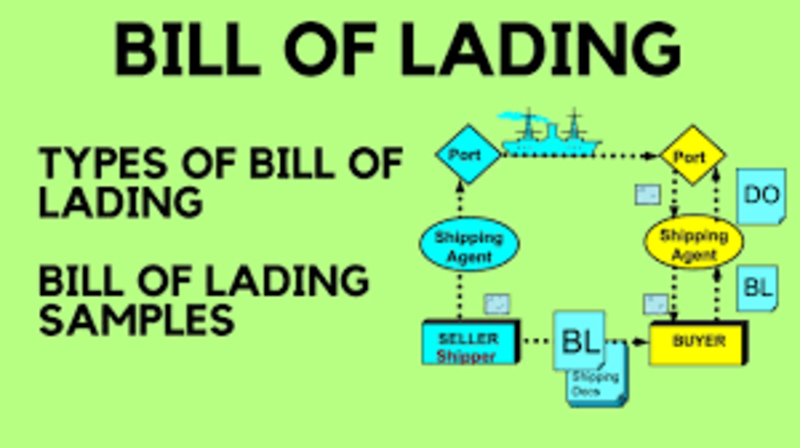
What is a Bill of Lading?
A bill of lading (BL or BoL) is a legal document issued by a carrier (transportation company) to a shipper that details the type, quantity, and destination of the goods being carried. A bill of lading is a shipment receipt issued when the carrier delivers the goods to a predetermined destination. No matter the mode of transportation, this document must be present with the shipped goods and have the signatures of the carrier, shipper, and receiver.
Understanding Bills of Lading
The bill of lading is a legally binding document that provides the carrier and the shipper with all the necessary details to process a shipment accurately. It has three main functions:
- It is a document of title to the goods described in the bill of lading.
- It is a receipt for the shipped products.
- It represents the agreed-upon terms and conditions for the transportation of the goods.
:max_bytes(150000):strip_icc():format(webp)/bill-of-lading-01-9ea02358e8a04863b781b4fe33ff809d.jpg)
For example, a logistics company intends to transport gasoline via heavy truck from a plant in Texas (the shipper) to a gas station in Arizona (the recipient). A plant representative and the driver sign the bill of lading after loading the gas on the truck. Once the carrier delivers the fuel to the gas station in Arizona, the truck driver requests that the station clerk also sign the document.
Every business needs to have internal controls in place to prevent theft. One key component of internal control is the segregation of duties, which prevents one employee from having too much control within a business. No two internal control systems are the same. However, most follow a standard set of core philosophies that have become standard management practices. Implementing internal controls can help streamline operations and prevent fraud. A bill of lading is one of several key documents that must be appropriately managed and reviewed to prevent asset theft.
Types of Bills of Lading
There are several types of bills of lading. Some of the most common include:
- Inland bill of lading
- Ocean bill of lading
- Through bill of lading
- Negotiable bill of lading
- Nonnegotiable bill of lading
- Claused bill of lading
- Clean bill of lading
- Uniform bill of lading
Choosing the appropriate bill of lading is essential. For example, doing so can prevent delivery delays or help locate lost goods during transport.
Bill of Lading Example
Assume, for example, that XYZ Fine Dining receives shipments of fresh meat and fish five times a week. The restaurant manager determines the type and amount of meat and fish that the restaurant needs to order. They then fill out a purchase order (PO), and XYZ’s owner reviews and initials each PO before it is emailed to the food vendor. The vendor gathers the meat and fish and signs a bill of lading along with a representative from the overnight carrier.
Next, the carrier delivers the food to the restaurant, and the manager compares the information on the bill of lading to what was requested on the PO. If the information matches, the PO and the bill of lading are sent to the owner, who reviews the documents and writes a check payable to the food vendor.
In this example, the owner does not issue a check to the vendor without reviewing the purchase order and the bill of lading. This step ensures that XYZ pays only for what it orders and receives. If the two documents do not match when the restaurant manager compares them, the manager will ask the vendor about the exception. A third employee reconciles the bank statement and makes company deposits. All of these steps must be in place to prevent theft.
Why is a bill of lading important?
The importance of a bill of lading lies in the fact that it’s a legally binding document that provides the carrier and the shipper with all of the necessary details to process a shipment accurately. This implies that it can be used in litigation if needed and that all parties involved will take great pains to ensure the document’s accuracy.
Essentially, a bill of lading works as undisputed proof of shipment. Furthermore, a bill of lading allows for the segregation of duties, a vital part of a firm’s internal control structure, to prevent theft.
What is the purpose of a bill of lading?
A bill of lading has three primary purposes. First, it is a document of title to the goods described in the bill of lading. Second, it is a receipt for the shipped products. Finally, it represents the agreed terms and conditions for the transportation and eventual release of the shipped goods.
What is in a bill of lading?
Typically, a bill of lading will include the names and addresses of the shipper (consignor) and the receiver (consignee), shipment date, quantity, exact weight, value, and freight classification. Also included is a complete description of the items, including whether they’re classified as hazardous, the type of packaging used, any specific instructions for the carrier, and any particular order tracking numbers.
What is a bill of lading vs. an invoice?
A bill of lading is a legal document between a shipper and a transport company (carrier) that spells out the type, quantity, and destination of the goods transported. An invoice tracks the sale of goods between a buyer and a seller.
A bill of lading is a contract issued by a transport company to a shipper that spells out the quantity, type, and destination of the goods being shipped. It serves as a receipt for the shipment and can help prevent the theft of goods being transported. It’s crucial to understand the different types of bills of lading to ensure that the right ones are chosen. If not, your shipment will likely be delayed.
Conclusion
- A bill of lading is a legal document issued by a carrier to a shipper that details the type, quantity, and destination of the goods being carried.
- A bill of lading is a document of title, a receipt for shipped goods, and a contract between a carrier and a shipper.1
- This document must accompany the shipped goods and be signed by an authorized representative from the carrier, shipper, and receiver.
- A bill of lading can help prevent asset theft if managed and appropriately reviewed.
- There are different types of bills of lading, so it’s essential to choose the right one.

