

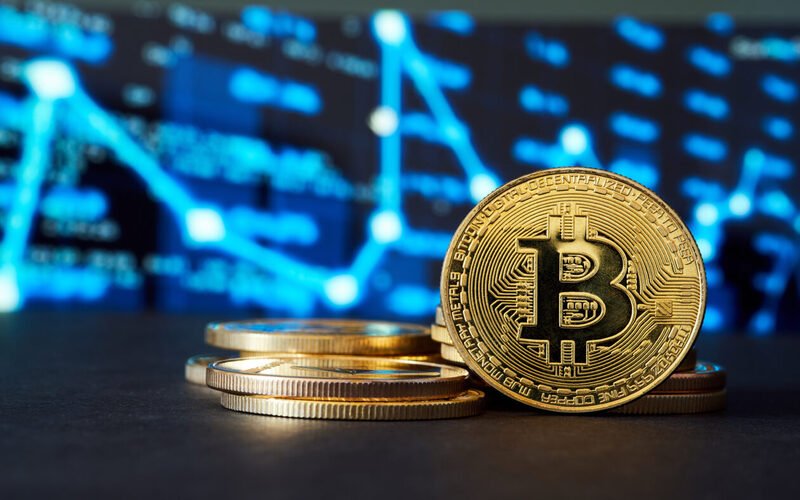
What is Bitcoin?
Bitcoin (BTC) is a cryptocurrency, which is a kind of virtual currency that is meant to function as money and a method of payment that is not under the control of any one person, organization, or institution. This eliminates the requirement for a third party to be involved in financial transactions. It is a cryptocurrency that can be traded on several exchanges and paid to blockchain miners for confirming transactions.
An unknown developer or group of developers named S. Nakamoto first made the cryptocurrency known as Bitcoin available to the general public in 2009.
Since then, it has grown to become the cryptocurrency that is most well-known all around the world. A significant number of different cryptocurrencies have been developed as a result of their widespread appeal. These rivals attempt to replace it as a payment system or are being utilized as utility or security tokens in other blockchains and new financial technologies.
Understanding Bitcoin
In August 2008, the domain name Bitcoin.org was registered. Today, at least, this domain is WhoisGuard protected, meaning the identity of the person who registered it is not public information.
First Block
On January 3, 2009, the first Bitcoin block was mined—Block 0. This is also known as the “genesis block” and contains the text: “The Times 03/Jan/2009 Chancellor on brink of second bailout for banks,” perhaps proof that the block was mined on or after that date.5
Rewards
Bitcoin rewards are halved every 210,000 blocks. For example, the block reward was 50 new bitcoins in 2009. On May 11, 2020, the third halving occurred, bringing the reward for each block discovery down to 6.25 bitcoins; the next halving is expected to occur sometime in 2024 and bring the reward to 3.125 bitcoins.
Denominations
One bitcoin is divisible to eight decimal places (100 millionths of one bitcoin), and this smallest unit is referred to as a satoshi. If necessary and the participating miners accept the change, Bitcoin could eventually be divisible to even more decimal places.
Bitcoin’s Blockchain Technology
Bitcoin isn’t too complicated to understand as a form of digital currency. For example, if you own a bitcoin, you can use your cryptocurrency wallet to send smaller portions of that bitcoin as payment for goods or services. However, it becomes very complex when you try to understand how it works.
Blockchain
Cryptocurrencies are part of a blockchain and the network required to power it. A blockchain is a distributed ledger, a shared database that stores data. Encryption methods secure data within the blockchain.
When a transaction occurs on the blockchain, information from the previous block is copied to a new block with the new data, encrypted, and validators verify the transaction—miners—in the network. When a transaction is verified, a new block is opened, and a Bitcoin is created and given as a reward to the miner(s) who verified the data within the block—they are then free to use it, hold it, or sell it.
Transactions are placed in a queue to be validated by miners within the network. Miners in the Bitcoin blockchain network all attempt to verify the same transaction simultaneously. The mining software and hardware work to solve for the nonce, a four-byte number included in the block header.
The block header is hashed, or randomly regenerated, by a miner repeatedly until it meets a target number specified by the blockchain. The block header is “solved,” and a new block is created to encrypt and verify more transactions.
Encryption
Bitcoin uses the SHA-256 hashing algorithm to encrypt the data stored in the blocks on the blockchain. Simply put, transaction data stored in a block is encrypted into a 256-bit hexadecimal number. That number contains all the transaction data and information linked to the blocks before that block.
How to Mine Bitcoin
A variety of hardware and software can be used to mine Bitcoin. When Bitcoin was first released, it was possible to mine it competitively on a personal computer; however, as it became more popular, more miners joined the network, which lowered the chances of being the one to solve the hash. You can still use your computer as a miner if it has newer hardware, but the chances of solving a hash individually are minuscule.
This is because you’re competing with a network of miners that generate around 444 quintillion hashes (444 exa hashes), or random number generations, per second. Machines—called Application Specific Integrated Circuits (ASICs), which have been built specifically for mining—can generate up to 335 trillion hashes per second. In contrast, a computer with the latest hardware hashes around 100 megahashes per second (100 million).
To successfully become a Bitcoin miner, you have several options. You can use your existing computer to use mining software compatible with Bitcoin and join a mining pool. Mining pools are groups of miners that combine their computational power to compete with sizeable ASIC mining farms. You increase your chances of being rewarded by joining a pool, but rewards are significantly decreased because they are shared.
You could also purchase an ASIC miner if you have the financial means. You can generally find a new one for around $10,000, but miners sell used ones as they upgrade their systems. Consider some significant costs, such as electricity and cooling, if you purchase one or more ASICs.
There are several mining programs and many pools you can join. Two of the most well-known programs are CGMiner and BFGMiner. When choosing a pool, finding out how they pay rewards and fees and reading some mining pool reviews is essential.
How Do You Buy Bitcoin?
If you don’t want to mine Bitcoin, it can be bought on a cryptocurrency exchange. Most people cannot purchase an entire BTC because of its price, but you can buy portions of BTC on these exchanges in fiat currency, like U.S. dollars. For example, you can buy Bitcoin on Coinbase by creating and funding an account. You can fund your account using your bank account, credit card, or debit card. The following video explains more about buying Bitcoin.
How is Bitcoin used?
Bitcoin was initially designed and released as a peer-to-peer payment method. However, its use cases are growing due to its increasing value and competition from other blockchains and cryptocurrencies.
Payment
To use your Bitcoin, you need to have a cryptocurrency wallet. Wallets are your interface to the blockchain and can hold the private keys to the Bitcoin you own, which must be entered when conducting a transaction. Bitcoin is accepted as a means of payment for goods and services at many merchants, retailers, and stores.
Brick-and-mortar stores that accept cryptocurrencies will generally display a sign that says “Bitcoin Accepted Here”; the transactions can be handled with the requisite hardware terminal or wallet address through QR codes and touchscreen apps. An online business can easily accept Bitcoin by adding this payment option to its other online payment options: credit cards, PayPal, etc.
Investing and Speculating
Investors and speculators became interested in Bitcoin as it grew in popularity. Between 2009 and 2017, cryptocurrency exchanges emerged that facilitated bitcoin sales and purchases. Prices began to rise, and demand slowly grew until 2017, when its price broke $1,000. Many believed Bitcoin prices would keep climbing and began buying them to hold. Traders began using cryptocurrency exchanges to make short-term trades, and the market took off.
In 2022, Bitcoin’s price came crashing down. In March 2022, it was as high as $47,454; by November 2022, it was $15,731. It then recovered in 2023, seeing a price as high as $31,474 before dropping below $30,000. The drop in Bitcoin followed a decrease in other assets, partly due to more considerable market turmoil related to inflation, rising interest rates, supply chain issues from COVID, and the war in Ukraine. Additionally, some essential tokens have crashed in the crypto world, as well as one of the crucial exchanges, which has raised concerns about the stability of digital currencies.
Risks of Investing in Bitcoin
Speculative investors have been drawn to Bitcoin after its rapid price appreciation in recent years. Bitcoin had a price of $7,167.52 on December 31, 2019, and a year later, it had appreciated more than 300% to $28,984.98. It continued to surge in the first half of 2021, trading at a record high of $68,990 in November 2021—it then fell over the next few months to hover around $40,000. As mentioned above, its price continues to fluctuate wildly.
Thus, many purchase Bitcoin for its investment value rather than its ability to act as a medium of exchange. However, the lack of guaranteed value and its digital nature means its purchase and use carry several inherent risks. For instance, the Securities and Exchange Commission (SEC), the Financial Industry Regulatory Authority (FINRA), and the Consumer Financial Protection Bureau (CFPB) have all issued numerous investor alerts regarding Bitcoin investing.
- Regulatory risk: The lack of uniform cryptocurrency regulations raises questions over their longevity, liquidity, and universality.
- Security risk: Most individuals using Bitcoin have not acquired their tokens through mining operations. Instead, they buy and sell Bitcoin and other digital currencies on popular online markets, known as cryptocurrency exchanges. Bitcoin exchanges are entirely digital and—as with any virtual system—are at risk from hackers, malware, and operational glitches.
- Insurance risk: Bitcoin and cryptocurrencies are not insured through the Securities Investor Protection Corporation (SIPC) or the Federal Deposit Insurance Corporation (FDIC), but some exchanges provide insurance through third parties. In 2019, prime dealer and trading platform SFOX announced it would be able to offer Bitcoin investors FDIC insurance, but only for the portion of transactions involving cash.9
- Fraud risk: Even with the security measures inherent within a blockchain, there are still opportunities for fraudulent activity.
- Market risk: As with any investment, Bitcoin values can fluctuate. Indeed, the currency’s value has seen wild price swings over its short existence. Due to the high volume of buying and selling on exchanges, it is susceptible to any newsworthy events. According to the CFPB, the price of Bitcoin fell by 61% in a single day in 2013, while the one-day price drop record in 2014 was as extensive as 80%.10
Regulating Bitcoin
Like any new technology, attempts at regulating Bitcoin have been difficult. The current administration seeks to impose regulations around Bitcoin but simultaneously struggles to try not to throttle a growing and economically beneficial industry.11
Biden has stated he will seek to prevent the illegal use of Bitcoin but also support its development. The U.S. has mainly been focused on regulating crypto and its criminal usage overseas, such as sanctioning cryptocurrency exchanges and individual cryptocurrency wallets and recovering crypto payments made to criminals. As the Bitcoin and cryptocurrency world emerges, so will regulation, which will see many changes and laws over time.
How Long Does It Take to Mine One Bitcoin?
It takes 10 minutes for the mining network to validate a block and create the reward. The Bitcoin reward is 6.25 BTC per block. This works out to be about 96 seconds for 1 BTC to be mined.
Bitcoin has a short investing history filled with very volatile prices. Whether it is a good investment depends on your financial profile, investment portfolio, risk tolerance, and investment goals. You should consult a financial professional before investing in cryptocurrency to ensure it suits your circumstances.
How Does Bitcoin Make Money?
The Bitcoin network of miners makes money from Bitcoin by successfully validating blocks and being rewarded. Bitcoins are exchangeable for fiat currency via cryptocurrency exchanges and can be used to make purchases from merchants and retailers that accept them. Investors and speculators can make money from buying and selling bitcoins.
How Many Bitcoins Are Left?
The total number of Bitcoins in existence is 19.51 million. The number of Bitcoins left to be mined is about 1.4 million as of October 10, 2023.12
Bitcoin was the first cryptocurrency intended to be used as a form of payment outside legal tender. Since its introduction in 2009, Bitcoin’s popularity has surged, and its uses have expanded, creating many new competitor cryptocurrencies.
Though the process of generating Bitcoin is complex, investing in it is more straightforward. Investors and speculators can buy and sell Bitcoin on crypto exchanges. As with any investment, particularly one as new and volatile as Bitcoin, investors should carefully consider whether it suits them.
Conclusion
- Launched in 2009, Bitcoin is the world’s largest cryptocurrency by market capitalization.
- Unlike fiat currency, Bitcoin is created, distributed, traded, and stored using a decentralized ledger system known as a blockchain.
- Bitcoin and its ledger are secured by proof-of-work (PoW) consensus, which secures the system and verifies transactions.
- Bitcoin can be purchased via various cryptocurrency exchanges.
- Bitcoin’s history as a store of value has been turbulent; it has undergone several boom and bust cycles over its relatively short lifespan.

