

What is the Bitcoin Misery Index (BMI)?
The Bitcoin Misery Index, often known as the BMI, measures Bitcoin’s price activity. It employs contrarian economic indicators, in which opportunities move in the opposite direction of traditional indicators, and it provides a range from 0 to 100. The win ratios and volatility of the market are two of the many market elements incorporated into this system.
Understanding the Bitcoin Misery Index (BMI)
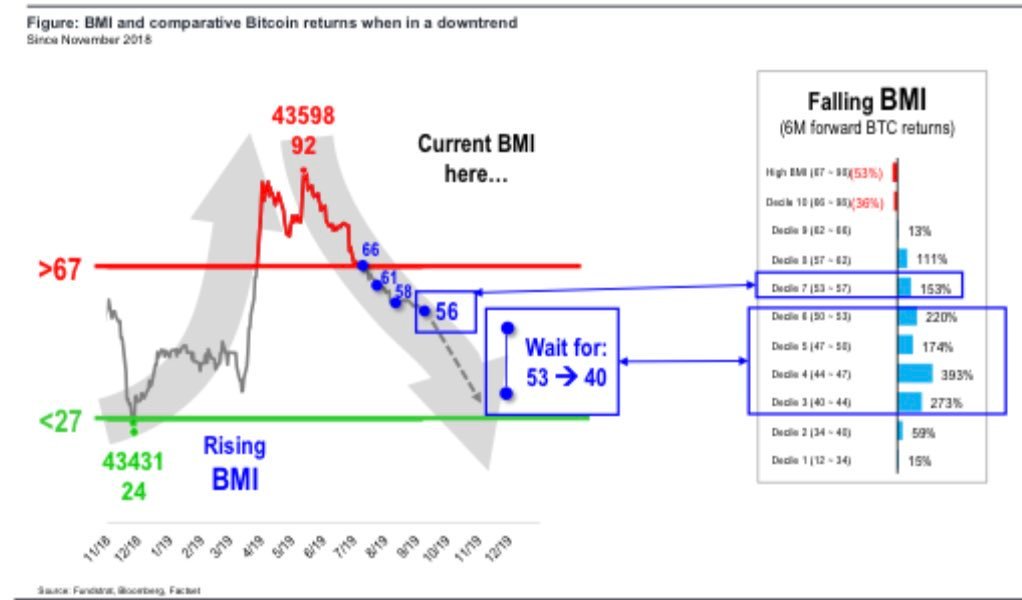
The BMI was created in 2018 by Tom Lee, a co-founder of Fundstrat Global Advisors. The index relates the percentage of winning trades to total trades and volatility. It shows a value of zero to 100. The index indicates “misery” when the value is below 27, which means that traders are not happy with the results of their trades. As a contrarian index, the closer the index is to zero, the louder the signal to “buy” becomes. It is a “buy” signal because traders believe prices may not go any lower and profitable trades are on the horizon.
Price History
Interest in Bitcoin (BTC) increased dramatically in 2016, with the BTC price rising 123% by year’s end. By 2017, investors were pouring into BTC, pushing the price to just under $20,000 in December. Investors who expected Bitcoin prices to continue their meteoric rise after December 2017 were met instead by a decline of over 50%.
Threats to Bitcoin’s Profitability
As interest in Bitcoin has risen, so too have threats to its stability. As a result, several countries have banned or created substantial regulations targeting cryptocurrencies. For example, China banned cryptocurrency over financial stability concerns, money laundering, and fraud.
Goals of the Bitcoin Misery Index
According to Fundstrat Insight, the BMI is a proxy for investor sentiments about Bitcoin’s price action. It indicates whether traders and investors are feeling happy (100–67), neutral (66–28), or miserable (27–0) about prices.3
Cryptocurrency trading and investing expose you to several types of risk, including transaction, interest rate, leverage, counterparty, and country risks. Unlike trading U.S. dollars or euros, you must contend with other risks created by assets based on a decentralized ledger. Without a central bank as a guarantor, you may have little recourse or protection if something goes awry with a cryptocurrency.
The hazardous and speculative nature of Bitcoin investing favors those who can quickly analyze price shifts, understand the impact of news announcements, and place buy or sell trades accordingly.
Indexes create a tendency for investors to self-fulfill prophecies. If, as a group, investors believe that when an index hits a specific level, it signals an opportunity to buy, they will wait until it hits that level to start buying.
While indexes are sometimes helpful as early warning indicators of market sentiment, they are backward-looking measures. The BMI cannot predict whether hackers will attack a cryptocurrency exchange; it won’t predict whether the Securities and Exchange Commission (SEC) will approve a new U.S.-based exchange or Bitcoin-backed security. It will only tell you what other investors and traders felt at any given moment in the past.
What Is the Bitcoin 200-Day Moving Average?
The 200-day moving average is a gauge of an asset’s long-term performance. For Bitcoin, it measures a 200-day moving average price.
Did Bitcoin lose value?
Bitcoin is a volatile asset. Its value changes daily; it reached a record price of $69,000 in late 2021, so it has dropped in value since then. However, it has increased in value many times over its lifetime.
How Many Bitcoins Are Left?
The number of bitcoins still available to be mined is around 2 million as of February 2022.
Investing in cryptocurrencies and other initial coin offerings (also known as “ICOs”) is a complex and speculative endeavor. Investopedia and the author of this page do not advocate that readers engage in cryptocurrencies or other ICOs. Because each person’s circumstances are different, it is always advisable to get the advice of a competent specialist before making any choices about finances. Investopedia does not make any guarantees or warranties on its accuracy or timeliness when it comes to the information presented within this article.
Conclusion
- The Bitcoin Misery Index (BMI) was created in 2018 by Tom Lee, a co-founder of Fundstrat Global Advisors.
- The index relates the percentage of winning trades to total trades and volatility; it is calculated on a 100-point scale, where zero indicates maximum misery.
- The index is considered “in misery” when the value is below 27. As a contrarian index, the closer the index is to zero, the louder the signal is to “buy.”

