

What is a blind trust?
A blind trust is a trust established by the owner (or trustor), giving another party (the trustee) complete control of the trust. The trustee has complete discretion over the assets and investments while being charged with managing the assets and any income generated in the trust. The trustor can terminate the trust but otherwise exercises no control over the actions taken within the trust and receives no reports from the trustees while the blind trust is in force. Blind trusts are often established when individuals want to avoid conflicts of interest between their employment and investments.
How a Blind Trust Works
In a typical trust, the trustor or originator appoints a trustee to act as the fiduciary, meaning the trustee is charged with honoring the trust agreement, such as distributing the funds following the trustor’s death. The trust can contain various investments, including equities, bonds, and real estate. The trustor and trustee are often in contact with each other, while the beneficiary is usually aware of the trust and perhaps the holdings within the trust.
Conversely, a blind trust is designed so that the trust beneficiaries and the trustor do not know about the investment holdings within the trust. Neither party has any control or say in how the investments are managed, including whether to buy or sell specific securities.
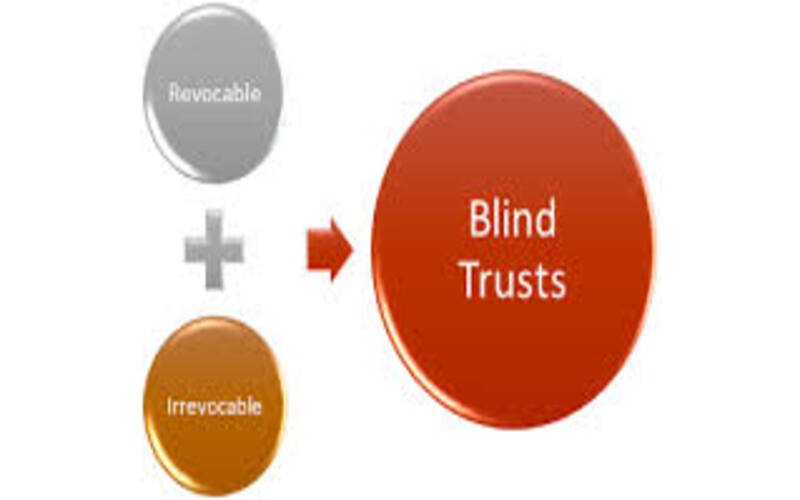
A blind trust can be revocable, meaning the trustor can make any changes to the trust and the trustee and terminate the trust. A blind trust can also be irrevocable, meaning nothing can be changed once it has been established. Whether the trustor would set up a revocable or irrevocable trust depends on the particular situation and goal of the trust. An irrevocable trust, for example, can be designed so that assets are no longer the legal property of the trustor, thus preventing creditors or the government, such as Medicaid, from claiming the assets.
Special Considerations
Some challenges and issues can arise with a blind trust since the trustor establishing the trust is at least aware of the investment mix at the onset and cannot realistically forget that information when weighing future decisions. The trustors may also set the rules under which the investments are managed and, of course, pick trustees that they are confident will act in a certain way in potential situations. As a result, the efficacy of blind trust in truly eliminating conflicts of interest is far from proven. That said, politicians with enormous wealth or in high office use blind trusts to show that at least an effort is being made to establish impartiality.
Blind Trust Alternatives
Establishing a blind trust can be expensive; politicians and executives have other ways to remove potential conflicts of interest without a blind trust. They can sell out specific investments, real estate, or private holdings in favor of index funds and bonds. A person could also sell the assets, converting them to cash, while occupying employment. However, selling investments can trigger tax implications, and some investments, such as land or real estate, can be challenging to sell. Although blind trusts are helpful, no legal structure can remove all conflicts of interest, nor can they guarantee ethical behavior from the person holding the position or office.
Examples of Blind Trusts
Although anyone can set up a blind trust, they are often used to leave money to beneficiaries and to prevent conflicts of interest.
Estate Planning
A blind trust might be established during estate planning if the trustor doesn’t want the beneficiaries to know how much money is in the trust. A blind trust could also be tailored so that the funds go to the beneficiary when the person reaches a certain age or milestone, such as college graduation.
Politicians
Blind trusts are also used when a wealthy individual is elected to a political office, where the investment holdings could create a conflict of interest. The Ethics in Government Act of 1978 requires those holding political offices to disclose all their assets unless held in a blind trust.
For example, a politician owning equity in a company with a pending regulatory issue might create a conflict of interest. The blind trust separates the politician from any trades initiated by the trustee or the financial institution acting as the trustee.
Conclusion
- A blind trust is a trust that the owner (or trustor) establishes and transfers complete control of the trust to another party (the trustee).
- The trustee controls the assets and investments while managing the assets and any income generated in the trust.
- Blind trusts are often established when individuals want to avoid conflicts of interest between their employment and investments.

