

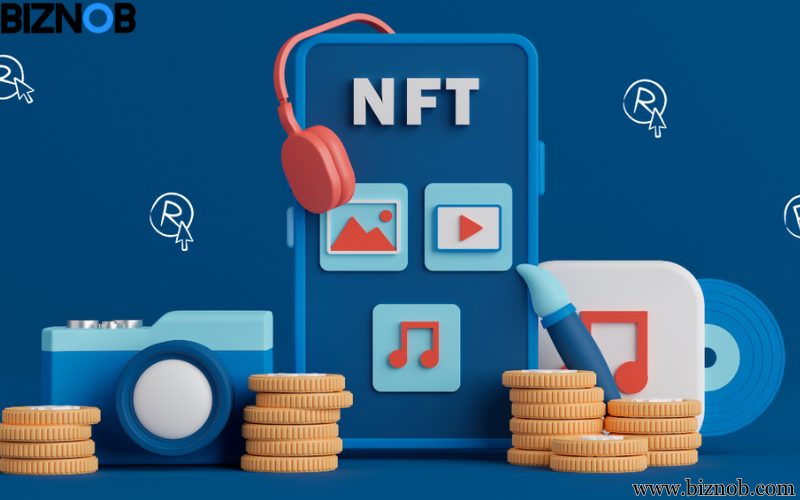
What Is a Virtual Good?
An intangible item exchanged in a virtual market, such as online gaming, is called a virtual good. Because virtual commodities are, by definition, nonphysical, the only factor determining their worth is the price that customers are prepared to pay.
The increasing popularity of social media platforms has led to an exponential increase in the market for virtual products in recent years.
Knowledge of Virtual Goods
It could be challenging for those unfamiliar with virtual goods to comprehend how businesses can charge substantial amounts of money for things that don’t exist in the real world. However, there is no denying their appeal. Virtual goods sales in Zynga Inc.’s (ZNGA) famous online game FarmVille brought in over $1 billion in revenue in 2012. In 2018, the free-to-play video game “Fortnite” sold virtual items worth $1 billion. Recent estimates place the yearly sales of virtual products at around $52 billion globally.
They consider virtual goods services rather than products, which might help us comprehend their appeal. They augment and elevate their clientele’s gaming or community experience. This is particularly evident when you consider that most games where virtual goods are most popular may be played for free, indicating that buying virtual goods is entirely a choice.
However, despite their widespread use, virtual commodities present some distinct obstacles. Virtual products are susceptible to loss owing to technological malfunctions or hacking because of their virtual nature. Similarly, their legal standing may also become ambiguous, particularly when several levels of previous transactions are involved. Several platforms have attempted to mitigate these concerns by encrypting virtual product transactions.
An Actual Case of a Virtual Good
The distinction between real and virtual items may become less apparent in the following years. Yes, this procedure is already underway. Trading virtual products for real ones was so popular in China that the Chinese government was forced to outlaw it in 2009. Similarly, in March 2012, Zynga Inc. said that it had partnered with Frito-Lay to provide discount coupons for virtual items that could be redeemed inside the virtual economies of its games to Frito-Lay chip customers.
It’s also expected that the expansion of online gaming will fuel further development in the virtual goods business. This will probably lead to a rise in demand for in-app purchases, which app developers are making more and more accessible, which will provide avatars, power-ups, and other in-game things. Additionally, there will probably be a rise in demand for rare or prestigious products. For instance, one science fiction online game Entropia Universe player spent $330,000 on a virtual space station in 2009.
Conclusion
- Intangible assets sold in virtual economies, such as online games, are referred to as virtual goods.
- Recent years have seen an explosion in the virtual goods business, which is expected to generate over $52 billion in sales annually. As transactions involving the exchange of real and virtual assets grow increasingly frequent, the distinction between physical and virtual products may become more blurry in the coming years.

