

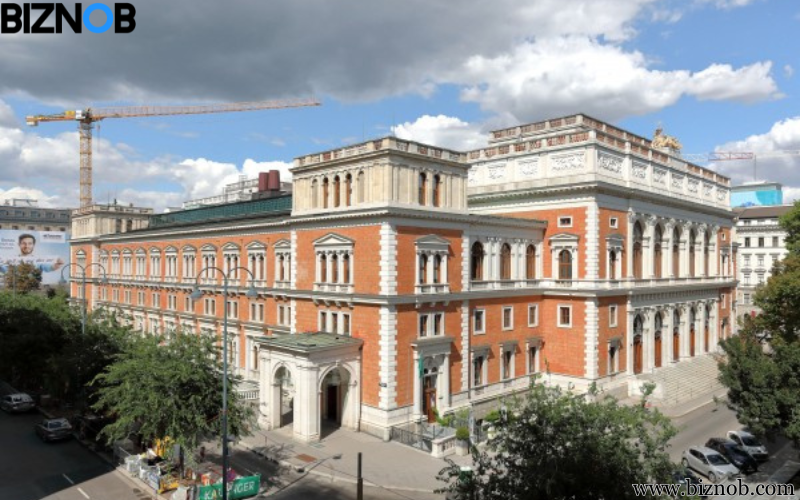
What is the Vienna Stock Exchange (WBAG)?
The only stock exchange in Austria is the Vienna Stock Exchange, which runs the market data center for markets in Central and Eastern Europe and is run by Wiener Börse AG, the organization responsible for running the exchange. It sees itself as a market-driven, customer-focused business essential to Austria’s capital market.
The Vienna Stock Exchange and the Securities Exchange manage the Energy Exchange Austria (EXAA), a Central European energy exchange headquartered in Vienna.
A Comprehensive Guide to the Vienna Stock Exchange (WBAG)
In addition to running Austria’s bond and equities markets, the Vienna Stock Exchange also runs a market for trading structured goods. It offers services, including training and seminars on financial markets, index creation, and administration. The trading schedule and hours of the exchange are 8:55 a.m. to 5:35 p.m., Monday through Friday.
The Vienna Stock Exchange had more than 140 indexes, 117 ETFs, 85 trading members, and a market value of more than 90 billion euros as of June 2020.
Corporate social responsibility is one of the most critical aspects of the Vienna Stock Exchange’s operations. It claims to have a corporate social responsibility policy and support Austria’s sustainable development on all fronts—environmentally, socially, and economically. The exchange seeks to achieve two objectives. The first is to strengthen the Austrian investing culture and the domestic market.
The second is to keep up its network of cooperation in Central and Eastern Europe (CEE), which entices foreign investors to consider these regions’ local marketplaces. The Central Securities Depository, market data, index computation, IT services, and securities trading and listing are the five pillars of the stock exchange group.
The Vienna Stock Exchange’s past
The Vienna Stock Exchange is among the oldest in the world, established in 1771 by the empress Maria Theresa. In its early years, it operated as a market for exchanging bonds, bills of sale, and foreign currencies. The Austrian National Bank was the first company to list on the market and was involved in the first share transaction in 1818.
The Vienna Stock Exchange closed during World War I until 1919. The exchange had a significant resurgence during the war but abruptly ceased in March 1934. It should be emphasized that the United States Stock Market Crash of 1929 had little effect on exchange trade during these years, despite the worldwide economic crisis and bank failure.
Wiener Börse lost its autonomy in 1938 when Austria was absorbed into the Deutsche Reich. From then on, there was little stock market activity until just before World War II ended.
1948 saw the reopening of the exchange after the war. Although the bond market rebounded in 1952, the stock market could have been more robust. Bond trading increased until 1985, when an American analyst highlighted the possibilities of the Austrian capital market, resulting in a stock market boom.
Conclusion
- The Vienna Stock Market is the only stock market in Austria and among the oldest in the world, established in 1711.
- The trading schedule and hours of the exchange are 8:55 a.m. to 5:35 p.m., Monday through Friday.
- The Vienna Stock Exchange had more than 140 indexes, 117 ETFs, 85 trading members, and a market value of more than 90 billion euros as of June 2020.

