

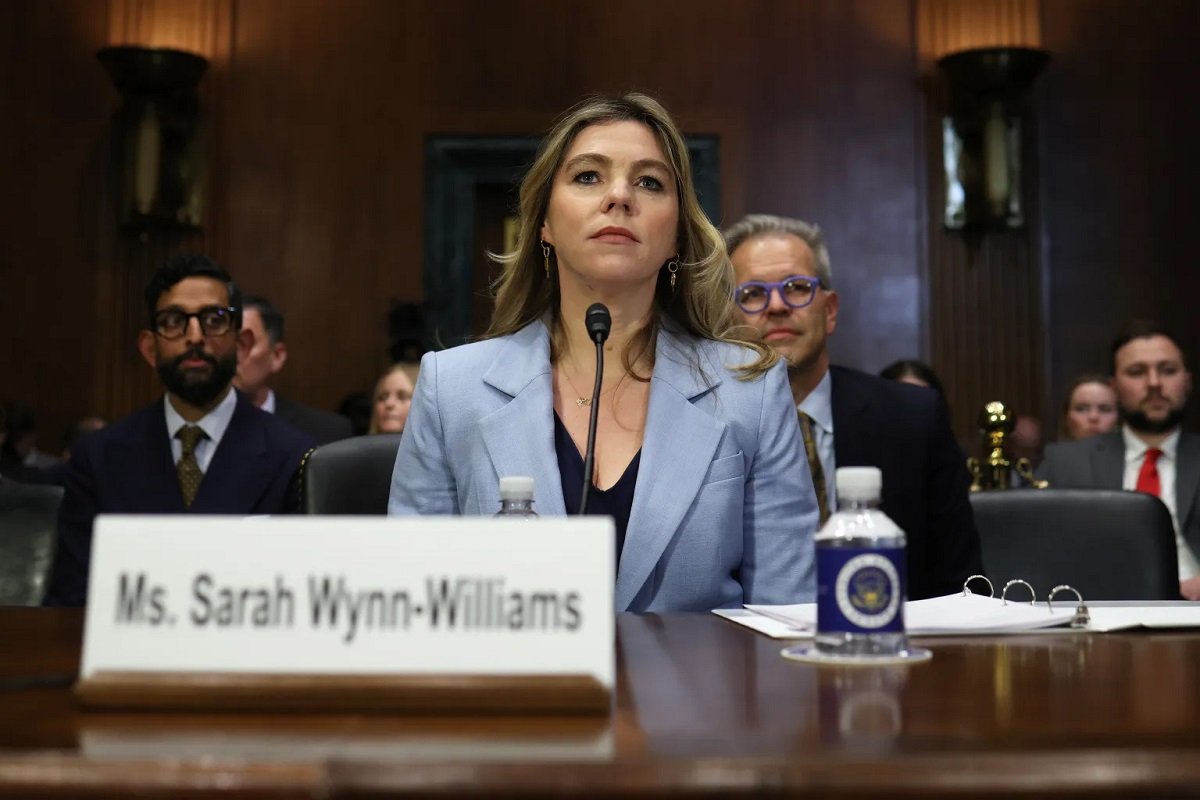
Understanding Meta’s Alleged Ties with China: A Deep Dive into Sarah Wynn-Williams’ Testimony
The U.S. Senate recently hosted a hearing featuring Sarah Wynn-Williams, the former head of Global Public Policy at Facebook, now known as Meta. Her testimony has sparked widespread discussion about the company’s alleged relationship with the Chinese government and its implications for U.S. national security and democratic values.
Allegations of Censorship Tools and Content Control
According to Wynn-Williams, Meta actively collaborated with the Chinese Community Party (CCP) to develop custom-built censorship tools. These tools reportedly granted a “chief editor” significant authority over content moderation in China. This included the ability to shut off services in specific regions or on sensitive dates, such as the anniversary of the Tiananmen Square massacre. Such claims suggest that Meta may have prioritized market access over principles like free expression and transparency.
Meta has strongly denied these allegations. Ryan Daniels, a spokesperson for the company, stated that Wynn-Williams’ testimony is filled with false claims and disconnected from reality. He emphasized that while Meta once explored offering its services in China, it currently does not operate platforms like Facebook or Instagram in the country. Despite this, Meta acknowledges generating advertising revenue from Chinese businesses.
The Role of Wynn-Williams’ Book in Amplifying the Debate
Wynn-Williams’ testimony aligns closely with her recently published book, “Careless People: A Cautionary Tale of Power, Greed, and Lost Idealism.” The book delves into her experiences at Facebook and highlights what she perceives as the company’s moral compromises. Shortly after its release, Meta secured an interim arbitration decision claiming Wynn-Williams violated a non-disparagement clause. However, this legal action inadvertently boosted the book’s visibility, propelling it to second place on The New York Times Best Sellers list under non-fiction.
Meta clarified that the arbitration order does not prevent Wynn-Williams from speaking to Congress. The company also acknowledged its business dealings in China, including generating ad revenue despite the ban on its core platforms. For instance, Meta launched apps like Colorful Balloons and Moments in China during Wynn-Williams’ tenure, though these efforts were short-lived and widely reported at the time.
Unpacking the Claims: Data Sharing and Technological Collaboration
During the Senate hearing, Wynn-Williams shared documents suggesting deeper ties between Meta and the Chinese government. Redacted versions of these documents, presented by Senator Josh Hawley, hinted at discussions involving user data access for individuals in China and Hong Kong. Senator Richard Blumenthal highlighted an email exchange indicating Facebook’s willingness to provide data during a period of heightened political tension in Hong Kong.
Wynn-Williams further elaborated on the technical mechanisms behind the alleged censorship tools. She described features like virality counters, which flagged content receiving over 10,000 views for review by the chief editor. Notably, these counters were reportedly active not only in mainland China but also in Hong Kong and Taiwan. This revelation contradicts Mark Zuckerberg’s previous denials under oath regarding the development of censorship tools for the Chinese market.
Broader Implications for U.S.-China Relations and AI Development
One of the most striking aspects of Wynn-Williams’ testimony was her claim that Meta briefed Chinese officials on advancements in technologies like artificial intelligence and facial recognition. She argued that such actions undermine U.S. leadership in cutting-edge innovation while strengthening China’s technological capabilities.
Senator Blumenthal echoed concerns about the broader geopolitical implications. He accused Zuckerberg of misleading the public by portraying himself as a patriot while simultaneously building an $18 billion business in China. Wynn-Williams reinforced this critique, stating that Meta’s actions reflect a pattern of prioritizing profits over principles.
Conclusion: Navigating the Crossroads of Profit and Principle
Sarah Wynn-Williams’ testimony has reignited debates about the ethical responsibilities of tech giants operating in authoritarian regimes. While Meta continues to deny the allegations, the hearing underscores the challenges of balancing global expansion with adherence to democratic values. As the world moves into a new era dominated by artificial intelligence, questions remain about how companies like Meta will navigate the complex interplay between profit motives and societal impact.
The outcome of these discussions could shape not only the future of social media but also the broader landscape of international relations and technological progress.

