

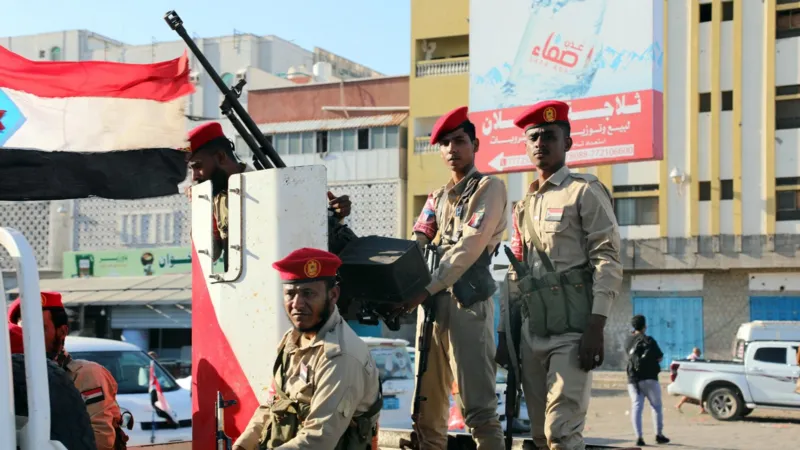
The United Arab Emirates has announced it will withdraw its remaining forces from Yemen, following a sharp escalation in tensions with Saudi Arabia after a Saudi-led coalition air strike targeted a port controlled by UAE-backed separatists.
The announcement came after Saudi Arabia supported a demand by Yemen’s presidential council for Emirati forces to leave the country within 24 hours. The council also cancelled a defence pact with the UAE, citing concerns over Yemen’s unity and national security.
Saudi officials said the coalition had carried out a “limited” air strike on the southern port of Mukalla, claiming it targeted a shipment of weapons and military vehicles intended for the Southern Transitional Council (STC), a separatist group backed by the UAE that seeks independence for southern Yemen. Saudi Arabia described the shipment as an imminent threat to stability.
The UAE rejected the accusation, insisting the shipment contained no weapons and was intended solely for Emirati forces operating in Yemen. Abu Dhabi expressed “deep regret” over the strike and said the coalition’s statement had been issued without consultation.
In a statement released on Tuesday, the UAE’s defence ministry said it would end the deployment of its remaining counterterrorism personnel in Yemen, citing recent developments and concerns over the safety and effectiveness of its missions. The ministry did not directly reference the Saudi strike or warnings.
Saudi Arabia also accused the UAE of pressuring the STC to launch offensives in Yemen’s eastern provinces of Hadramawt and al-Mahra, calling such actions a serious threat to regional security. The UAE strongly denied the claims, saying it had instead worked to promote de-escalation and stability.
Yemen’s presidential council chairman Rashad al-Alimi declared a 90-day state of emergency, blaming what he described as internal unrest driven by armed groups acting under Emirati influence. The STC rejected the withdrawal ultimatum, saying it had no legal basis and insisting the UAE remained a key partner in the fight against the Houthi movement.
The escalation highlights growing divisions within the Saudi-led coalition, which has fought Yemen’s Iran-backed Houthis since 2015. While Saudi Arabia and the UAE were once close allies in the conflict, rival factions they support have increasingly clashed.
Yemen’s war, which began in 2014, has killed more than 150,000 people and caused one of the world’s worst humanitarian crises. Although southern separatists initially allied with the government against the Houthis, they now control much of southern Yemen and remain at odds with the internationally recognised government.

