

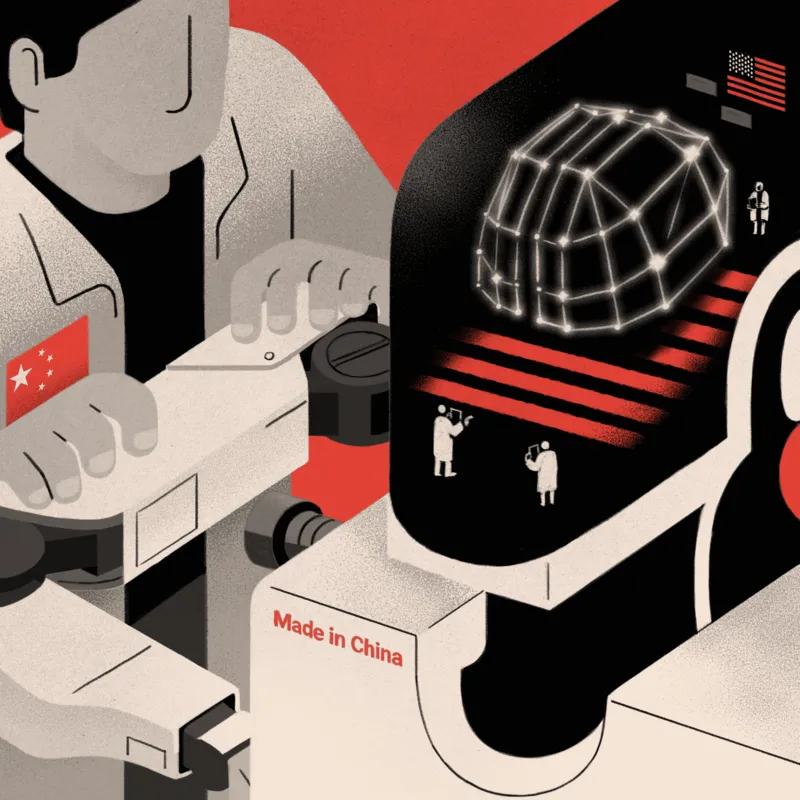
The US and China are locked in a high-stakes race to dominate artificial intelligence, with each side leading in different areas—and neither clearly ahead overall.
The US has long held the advantage in AI “brains,” particularly large language models developed by firms like OpenAI, whose chatbot ChatGPT helped bring AI into the mainstream. Backed by companies such as Nvidia, which produces the advanced chips powering these systems, the US has used export controls to limit China’s access to key technologies.
However, China has narrowed the gap. The launch of DeepSeek showed it can build competitive AI models at a fraction of the cost, boosting confidence in its growing tech ecosystem and highlighting a more open, collaborative approach to development.
While the US leads in software and high-end chips, China has the edge in AI “bodies”—robotics and manufacturing. Supported by heavy government investment, China now operates millions of industrial robots and dominates the export of humanoid robots, integrating automation deeply into its economy.
Still, advanced robots depend on intelligent software, and the US retains an advantage in these more complex AI systems. Companies like Boston Dynamics are already combining robotics with advanced AI for real-world applications, from industrial inspections to autonomous systems.
The competition is not just technological but strategic. The US relies on private innovation and tight control of key technologies, while China emphasizes state backing and rapid deployment.
Rather than a single moment, the outcome will depend on who can scale AI most effectively across their economy and set global standards. For now, the US leads in AI intelligence, China in physical deployment—and the balance could still shift either way.

