

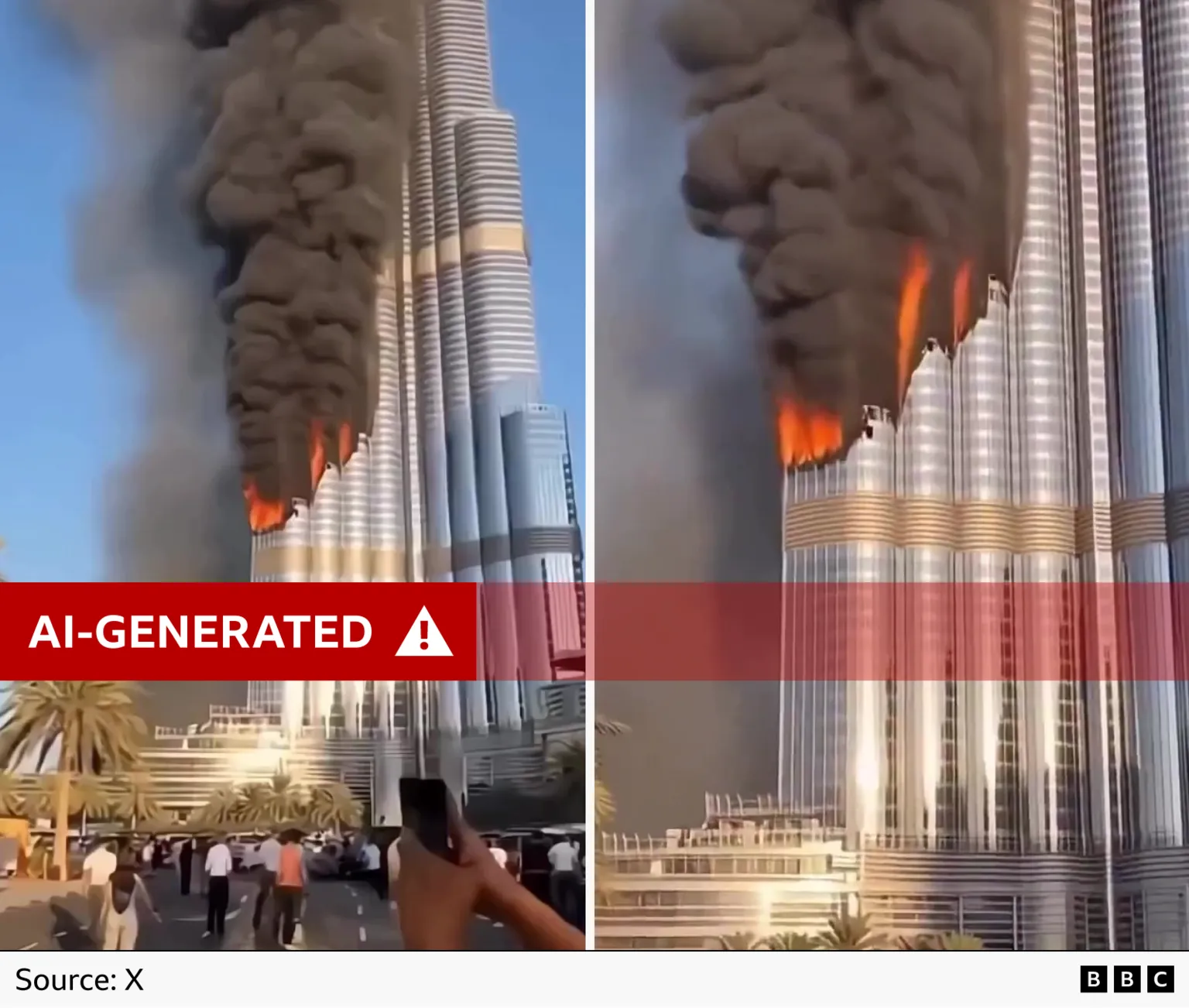
AI’s war-video factory is producing digital nightmares faster than missiles can cross the Strait of Hormuz. As the conflict involving United States, Israel, and Iran intensifies, social media feeds are filling with highly realistic but completely fake war footage. For millions of people scrolling through their phones, the line between real missile strikes and AI-generated spectacle is becoming harder to see.
Behind many of these clips are independent creators using advanced image and video generation tools to produce dramatic scenes of destruction—burning aircraft carriers, aerial dogfights, and cities in flames. The videos spread rapidly across platforms such as TikTok , Instagrams, and X (Twitter), where shocking visuals often translate directly into views, engagement, and advertising revenue.
A typical scenario might involve a young creator generating footage with a prompt on Mid-journey or similar tools: a dramatic fighter-jet battle over oil tankers, complete with a fake breaking-news banner and an AI voiceover claiming a major military strike. Within hours, the clip can attract millions of views. Monetization programs on social platforms mean those views can quickly turn into thousands of dollars.
The incentive is clear. Sensational war content drives engagement, and engagement generates income. Some creators even share prompts and templates in private online communities, claiming that certain “war video” formulas can produce huge weekly earnings.
But the consequences go far beyond misleading entertainment.
Fake war footage spreads confusion at scale. A viewer might watch a clip claiming a military base has been destroyed or a city has been attacked and share it before realizing it is fabricated. Panic spreads easily when dramatic images appear to confirm a crisis.
Fact-checking groups such as Bellingcat and Reuters are working to verify viral videos, but the volume of synthetic content is overwhelming. Thousands of clips labeled as “Iran war footage” are uploaded every day, many of them altered or completely generated by AI.
The growing flood of fabricated imagery is also eroding public trust. When viewers repeatedly encounter convincing fake footage, they begin to doubt authentic reporting as well—even from established outlets like BBC. In an environment where everything looks real, people may assume nothing is trustworthy.
Experts warn that the situation could also have geopolitical consequences. Disinformation campaigns could use AI-generated footage to manipulate public opinion, disrupt financial markets, or inflame political tensions during an already volatile conflict.
Platforms are trying to respond. Some now label content that is likely AI-generated, but these systems often miss many videos. Watermarks can be removed, and many AI-generation tools operate outside the jurisdiction of major technology companies, making enforcement difficult.
Researchers are proposing stronger solutions, including digital provenance systems that verify whether an image or video originated from a real camera. Such technology would create a traceable record from the moment footage is captured to the moment it appears online. However, widespread adoption remains slow.
The human impact is already visible. People watching these clips often cannot tell whether they are witnessing real destruction or an artificial simulation. In moments of crisis, misinformation spreads faster than verification.
The danger is not only that fake war footage exists. The greater risk is that it undermines confidence in all visual evidence. When viewers start believing that every image might be fabricated, even genuine documentation of real events may be dismissed.
In a digital environment where attention is currency, synthetic conflict has become profitable. But the price may be the public’s ability to trust what they see.

