

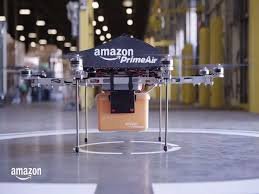
Amazon has announced that it will no longer pursue commercial drone delivery in Italy after a strategic review, ending efforts to launch the service despite earlier successful tests and regulatory progress. The company said the broader business and regulatory environment in Italy does not currently support its long-term goals for the Prime Air program.
The decision comes more than a year after Amazon completed initial drone delivery tests in San Salvo, in the central Abruzzo region, where it demonstrated the potential of its Prime Air drones.Despite cooperation with Italy’s aerospace regulators, Amazon concluded that Italy’s broader regulatory framework is not suitable for scaling the service to a viable commercial business at this time.
Amazon described its engagement with the Italian civil aviation regulator ENAC and other authorities as positive and constructive, noting progress on technical safety and approvals. However, the company said that operational and regulatory conditions in Italy — beyond aviation approval — make it difficult to pursue the program there.
Italy’s civil aviation authority ENAC called the move unexpected, suggesting the decision was influenced by internal company policy and recent financial developments within Amazon rather than safety concerns. ENAC had supported early test flights and had been working with Amazon on requirements for broader operations.
Initial tests conducted in December 2024 used Amazon’s MK30 drone model, capable of carrying lightweight packages over short distances and operating in light rain. Those tests were seen as key steps toward establishing commercial drone delivery in Europe.
Amazon’s Prime Air initiative has aimed to accelerate delivery times by using autonomous drones to carry small packages directly to customers’ homes or nearby designated landing zones. The company has been testing the service in multiple regions, including parts of the United States and plans for the UK.
Prime Air deliveries have already begun in select U.S. markets, where Amazon operates limited commercial drone services and continues to expand test flights. In the UK, the company has also sought regulatory approval but has faced delays as it works with the Civil Aviation Authority on beyond-visual-line-of-sight operations.
Amazon said that while its drone delivery projects in the U.S. and the UK are progressing, commercial launch in Italy will not move forward. The company emphasized its commitment to serving Italian customers through traditional delivery networks and noted its long-term investment in the country.
In its statement, Amazon pointed out that it has invested more than €25 billion in Italy over the past 15 years and directly employs over 19,000 people across more than 60 sites. The company said it will continue to focus on other areas of its logistics and retail operations in Italy.
The retreat from Italy highlights broader challenges facing commercial drone delivery beyond technical and safety hurdles. Companies like Amazon must also consider economic viability, complex regulatory environments, airspace rules, insurance requirements and infrastructure needs when evaluating where to deploy such services.
Industry analysts say that while regulatory approvals are essential, they are not sufficient on their own to guarantee success. Factors such as operating cost, local labor and logistics dynamics, and market demand all play a role in whether drone delivery can be scaled sustainably.
In many parts of Europe, strict aviation rules — including requirements for maintaining visual contact with drones and limitations on beyond-visual-line-of-sight flights — continue to slow broader adoption of drone delivery services. These regulatory complexities can vary widely from one country to another.
Amazon’s withdrawal from the Italian market does not necessarily signal the end of drone delivery efforts in Europe, but it underscores that the path to widespread use remains uneven. Some regions may offer more favorable conditions for the deployment of autonomous drone networks.
For Italian customers, this means that drone delivery is unlikely to become a mainstream option in the near future. Instead, they will continue to rely on traditional delivery methods for parcel shipments, at least until market conditions change or new regulatory frameworks are introduced.
The San Salvo test site had been considered a potential hub for drone operations in Europe, and local stakeholders had viewed the trials as a step toward innovation in logistics. With Amazon stepping away, the future of that infrastructure and similar initiatives in Italy remains uncertain.
Amazon’s retreat highlights the challenges that major technology and logistics firms face when expanding innovative services internationally, especially when regulatory approaches and business conditions differ significantly by country.
Despite the setback, Amazon continues to invest in drone technology and is likely to pursue opportunities in markets where both regulatory and business environments align more closely with its strategic goals.
As the broader industry watches how drone delivery evolves, Amazon’s experience in Italy may inform how regulators and companies approach future deployments, balancing safety, innovation and commercial feasibility.

