

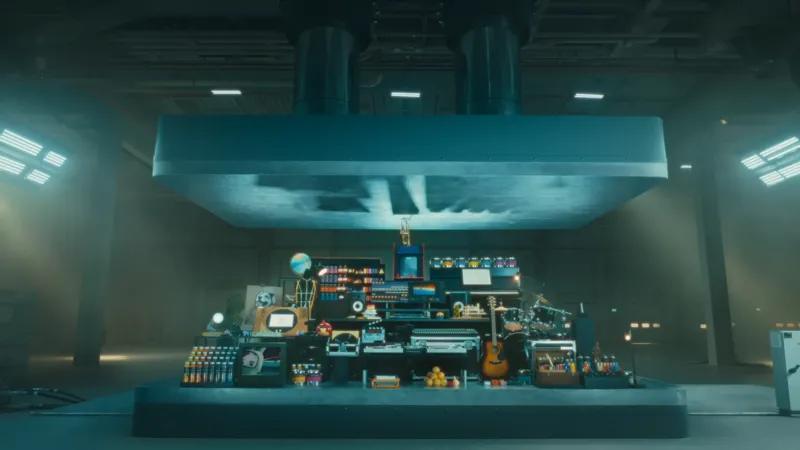
Apple apologises after piano crushing: A public backlash over an ad that featured the hydraulic press destroying numerous objects—including books and musical instruments—put Apple in a sticky situation not long ago. Apple issued an apology in reaction to the criticism, stating that the advertisement did not convey its intended message of encouraging and praising creativity.
In a statement given to the advertising newspaper Ad Age, Apple conveyed their remorse for the ad’s failure to capture the essence of innovation in their newest iPad. Apple VP of marketing communications Tor Myhren expressed regret for the gaffe and reiterated the company’s dedication to valuing user expression.
Crushing a piano, trumpet & guitar evokes the same primal horrific sacrilege as watching books burn.
Surprisingly tone-deaf from Apple, who’ve previously enabled & championed creativity.
But I imagine they’ll see how out of tune this is once they turn off the autotune. https://t.co/ZdRmVrcOZl
— Crispin Hunt (@crispinhunt) May 9, 2024
Hugh Grant and Justine Bateman were among the famous people who were outraged by the graphic violence in the advertisement. Grant called it “the destruction of the human experience, courtesy of Silicon Valley,” and Bateman called it “crushing the arts.” Multi-Platinum selling songwriter Crispin Hunt further evoked images of repression and censorship by drawing a comparison between the destruction of musical instruments and burning books.
Some felt the ad unintentionally brought attention to worries that technology stifles creativity instead than encouraging it. The creative sectors, which are already worried about the effects of AI on jobs, found this remark quite resonant. An outspoken critic of artificial intelligence (AI) in cinema, Justine Bateman, bemoaned Apple’s representation, seeing it as representative of the larger problems confronting the arts.
Meet the new iPad Pro: the thinnest product we’ve ever created, the most advanced display we’ve ever produced, with the incredible power of the M4 chip. Just imagine all the things it’ll be used to create. pic.twitter.com/6PeGXNoKgG
— Tim Cook (@tim_cook) May 7, 2024
Comments on Tim Cook’s post on X (formerly Twitter) expressed dissatisfaction and even embarrassment in relation to Apple’s goods, extending the backlash to social media. There were some users who felt the commercial was disrespectful and used Japanese terms like “tsukumogami” to express their disapproval. In Japanese folklore, “tsukumogami” are tools that are believed to have spirits or souls attached to them. It was considered disrespectful and haughty to destroy such tools.
Some have also drawn negative parallels between the ad and a classic 1984 Apple campaign that portrayed a rebel against a totalitarian government. Users drew attention to the new ad’s irony by drawing comparisons to the original’s promise of empowerment and liberation. Some felt that Apple’s most recent commercial represented a change towards a more robotic and imposing corporate identity, in contrast to the company’s previous approach.
Apple's new "Crush" ad (let's call it "2024") is a visual & metaphorical bookend to the 1984 ad.
1984: Monochome, conformist, industrial world exploded by colourful, vibrant human
2024: Colourful, vibrant humanity is crushed by monochrome, conformist industrial press https://t.co/WkyAdubx2m pic.twitter.com/p0yqQ8ZGYL
— James Clark 📈📉¯_(ツ)_/¯ (@mr_james_c) May 8, 2024
The debate over Apple’s ad campaign has brought attention to the fine line that must be drawn between technological advancement and the protection of creative expression.

