

Revolutionizing Freight Transport: Parallel Systems’ Vision for Autonomous Rail Technology
The freight transportation landscape in the United States is heavily reliant on trucks, which account for approximately two-thirds of the 20.2 billion tons of goods moved annually. However, Matt Soule, the founder and CEO of Parallel Systems, envisions a transformative shift by reimagining the centuries-old railroad system with modern autonomous and electric technology.
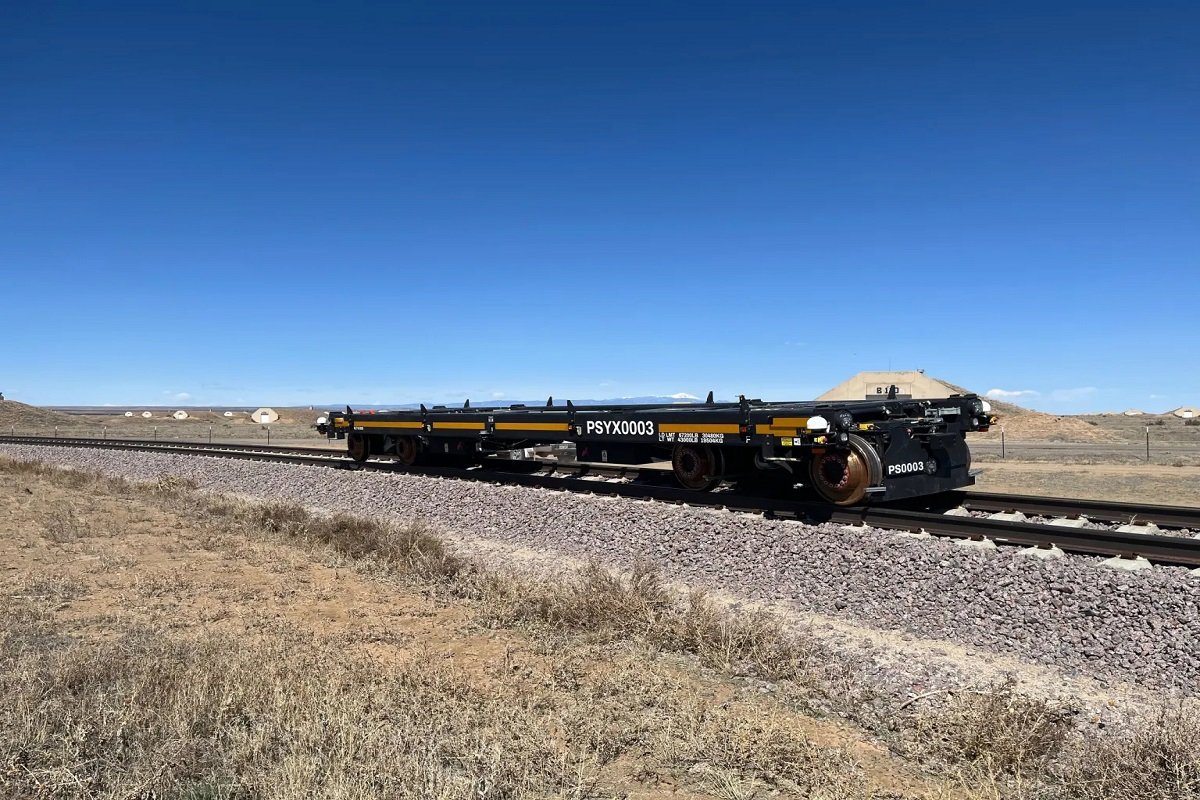
Based in Los Angeles, Parallel Systems is developing battery-powered autonomous freight solutions that integrate seamlessly with existing rail infrastructure and train control software. The company’s mission is to make rail transport more cost-effective than trucks for short-distance deliveries, addressing inefficiencies in current freight logistics.
Addressing the Underutilization of Rail Transport
Rail transport has traditionally been underutilized for shorter distances due to the reliance on large, expensive locomotives designed for hauling hundreds of freight cars over long routes. As a result, businesses often default to trucks for regional freight movement. Parallel Systems aims to disrupt this trend by introducing a system that allows train cars to attach and detach autonomously, eliminating the need for manual intervention—a process historically fraught with safety risks.
Additionally, Parallel’s technology enables freight cars to brake much faster than traditional trains, significantly enhancing operational safety. According to Matt Soule, the company’s approach focuses on achieving truck-competitive economics at smaller scales rather than relying solely on large-scale operations. This innovation leverages existing rail infrastructure while operating alongside conventional rail services, ensuring compatibility without necessitating a complete overhaul of current systems.
Piloting the Future of Freight in Georgia
Parallel Systems recently received approval from the Federal Railroad Administration to pilot its technology in Georgia. The program will test the tech-enabled trains along a 160-mile route between the Port of Savannah and several distribution centers across the state. This trial marks a pivotal step toward validating the feasibility and efficiency of autonomous rail freight solutions.
Securing Funding for Commercialization
In a significant milestone, Parallel Systems raised $38 million in a Series B funding round led by Anthos Capital, with contributions from Collaborative Fund, Congruent Ventures, and Riot Ventures, among others. This brings the company’s total funding to over $100 million. The capital infusion is earmarked for advancing commercialization efforts, with an anticipated initial launch slated for 2026.
Sophie Bakalar, a partner at Collaborative Fund, highlighted the firm’s interest in Parallel despite its deviation from their typical consumer-focused investment thesis. Bakalar noted that shipping and freight logistics play a critical role in the success of many consumer-facing companies within their portfolio. She emphasized the rarity of teams capable of tackling such a massive challenge and expressed confidence in Parallel’s ability to drive meaningful change.
A Founder with a Vision for Innovation
Although Matt Soule does not have a background in rail specifically, his extensive experience in regulated transportation—particularly his 20-year tenure in aerospace, including 13 years at SpaceX—has equipped him with the expertise to spearhead this ambitious project. During his time at SpaceX, Soule worked in avionics, focusing on electronics and software that controlled rockets. This exposure sparked his curiosity about applying cutting-edge technologies to industries ripe for innovation, such as freight transport.
Parallel Systems was founded in 2020, and over the past five years, the company has made remarkable progress in developing its technology. With a clear focus on commercialization, Parallel is poised to redefine how goods are transported across key markets.
Global Interest and Potential Impact
While the company has garnered interest from stakeholders worldwide, Parallel plans to concentrate its efforts on the U.S. and Australia initially. Soule acknowledges that convincing businesses to adopt new shipping strategies may be challenging, but he remains optimistic given the growing demand for innovative solutions.
This development comes amid ongoing discussions about tariffs in the U.S., which could further drive demand for cost-effective alternatives like those offered by Parallel Systems. Bakalar predicts that if tariffs are implemented, companies will seek ways to reduce expenses, making Parallel’s offerings increasingly attractive.
A Generational Leap in Freight Innovation
Matt Soule describes Parallel Systems’ advancements as a generational leap in freight transport, emphasizing the rarity of transformative changes in the industry. By addressing critical pain points and leveraging existing infrastructure, the company is well-positioned to lead the charge in reshaping how goods are moved across the country.
As the freight industry continues to evolve, Parallel Systems’ autonomous rail technology represents a bold step toward a more efficient, sustainable, and cost-effective future. With regulatory approvals, substantial funding, and a visionary team at the helm, the stage is set for this innovation to leave a lasting impact on the global logistics landscape.

