

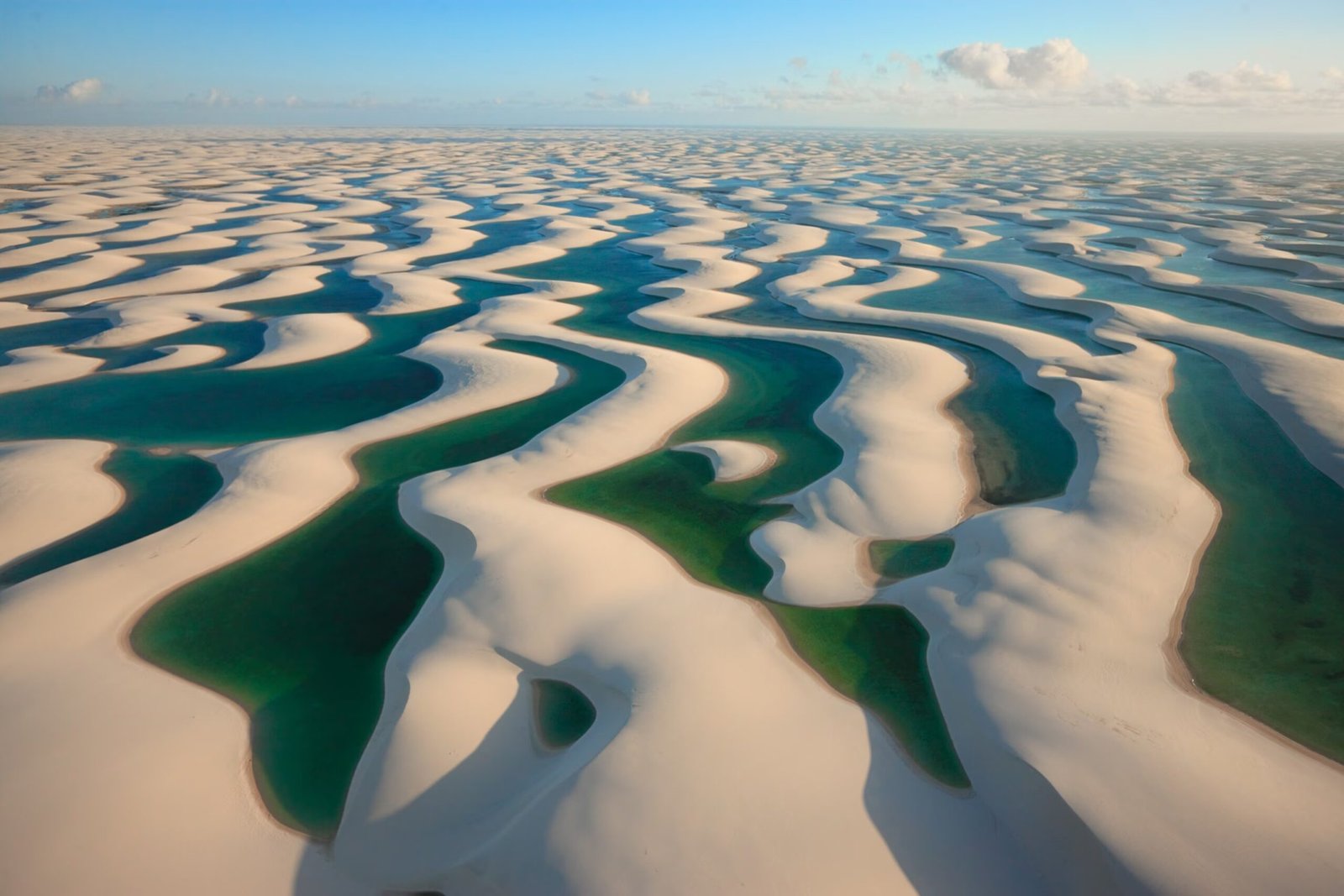
Lençóis Maranhenses National Park in north-eastern Brazil looks like a desert, but it is defined by water, movement and life. Each year, seasonal rains transform its rolling white dunes into a mosaic of freshwater lagoons, creating one of the country’s most unusual landscapes.
Covering around 1,500 sq km, the park sits between lush vegetation and the Atlantic Ocean. Strong coastal winds push sand inland, shaping dunes that can rise up to 30m high. From January to June, heavy rainfall collects in natural basins between the dunes, forming hundreds of clear, swimmable lagoons that can last for months.
This constantly shifting environment is home to more than 1,000 families living in small oasis communities scattered across the park. Local guides rely on deep, inherited knowledge of the land to navigate routes that change every season, often walking barefoot to better sense the sand’s texture and temperature.
In 2024, Lençóis Maranhenses was granted Unesco World Heritage status, drawing fresh international attention. Visitor numbers reached a record 552,000 that year and have continued to climb, increasing pressure on infrastructure and fragile ecosystems.
Park authorities are now working with local communities to manage growth, regulate access and ensure tourism benefits are shared. Multi-day treks on foot remain one of the most immersive ways to experience Lençóis, offering access to remote lagoons, traditional villages and a landscape where footprints disappear almost as soon as they are made.
In Lençóis Maranhenses, nothing stays still for long. Dunes shift, lagoons fade and return, and the only constant is change shaped by nature and the people who have learned to move with it.

