

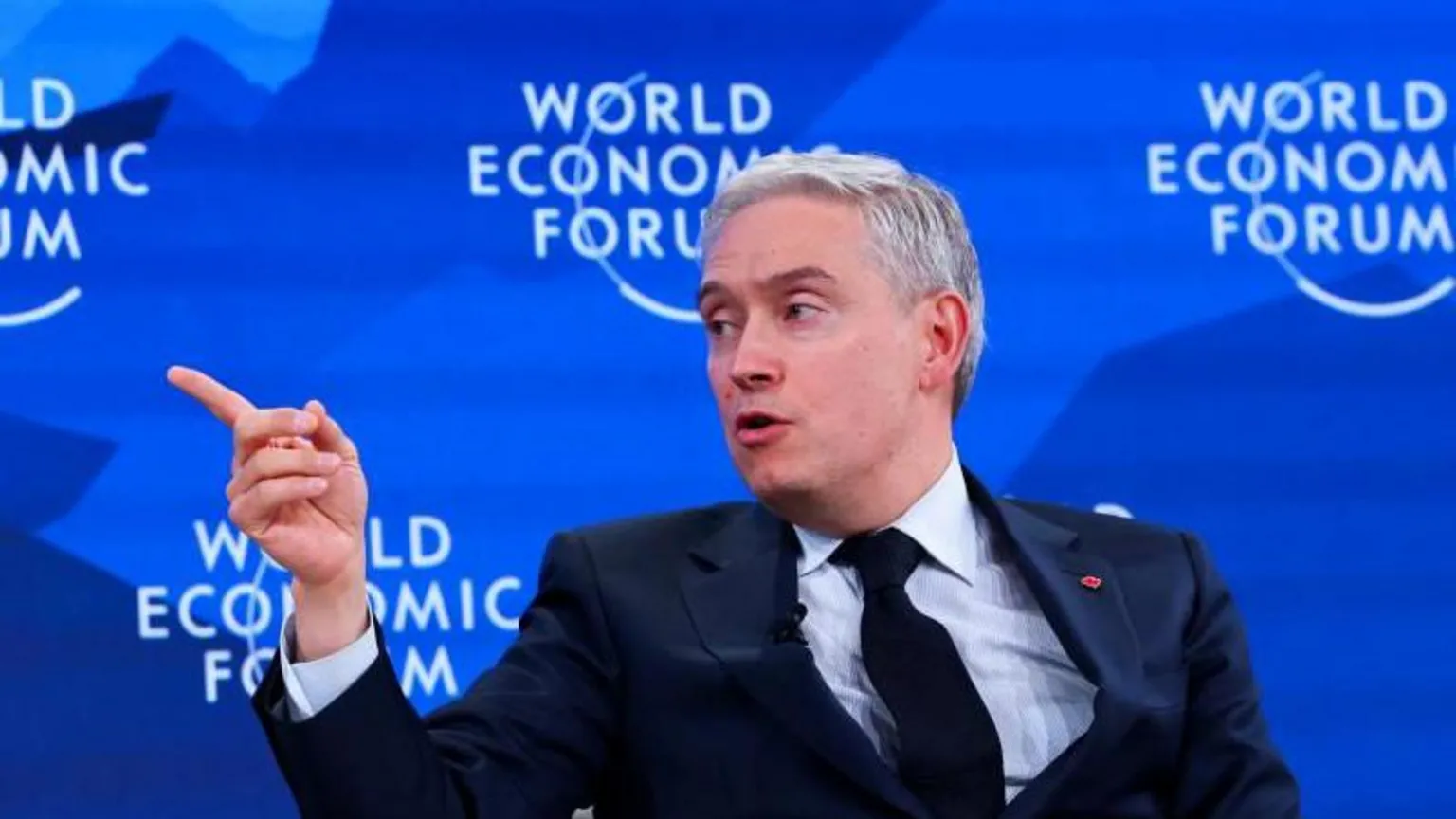
Canada’s finance minister has said it is increasingly clear that the United States is unlikely to remove tariffs on Canadian goods, arguing that paying some form of trade levy may now be the cost of continued access to the US market.
Speaking in Ottawa, François-Philippe Champagne said the current stance of the US administration suggests tariffs are not a temporary negotiating tactic but a long-term feature of American trade policy.
His remarks came shortly after Donald Trump delivered his State of the Union address, during which the US president reiterated his belief that tariffs should eventually replace income taxes as the primary source of government revenue in the United States.
“I think it is pretty well understood now in the world that the view of the American administration is that there’ll be a price to access the American market,” Champagne told reporters, when asked whether Trump’s speech had dampened Canada’s hopes of securing tariff relief.
“Every country of the world that I know of is paying a price,” he said. “What I’m saying is that Canada is paying the lowest price.”
Champagne’s comments followed remarks by US trade chief Jamieson Greer, who said Canada would need to accept “some level of higher tariff” if it wanted to continue doing business with the United States.
“If Canada wants to agree that we can have some level of higher tariff on them, while they open up their market to us in things like dairy and other things, then that’s a helpful conversation,” Greer said in an interview with CBC on Tuesday.
Canada currently benefits from tariff exemptions under the USMCA free trade agreement, provided its goods comply with the pact’s rules. However, it remains subject to higher tariffs on products such as steel, aluminium and softwood lumber.
The comments come amid heightened trade tensions after Trump last week imposed a worldwide 10% tariff under a rarely used provision of US law known as Section 122. The move followed a 6–3 ruling by the US Supreme Court that struck down the administration’s earlier sweeping tariff policy, finding that the president had exceeded his legal authority.
Trump announced the new tariff as a replacement for the measures invalidated by the court. The levy, which took effect on Tuesday, was imposed under Section 122 of the 1974 Trade Act, a statute that allows the president to introduce tariffs of up to 15% for a period of 150 days, after which Congress must decide whether to extend them.
During his address to Congress, Trump defended the policy, arguing that tariffs paid by foreign countries could eventually replace income taxes for Americans.
“And as time goes by, I believe the tariffs, paid for by foreign countries, will, like in the past, substantially replace the modern-day system of income tax, taking a great financial burden off the people that I love,” he said.
In Canada, the evolving US approach has prompted a shift in tone from Ottawa. Prime Minister Mark Carney has said his government aims to double Canada’s non-US exports over the next decade, with a particular focus on industries such as metals and automobiles.
Despite those ambitions, the United States remains by far Canada’s largest trading partner, accounting for roughly 75% of Canadian exports — a reality that limits Ottawa’s room for manoeuvre as Washington presses ahead with its tariff strategy.

