

What is a bid price?
A bid price is a price for which somebody is willing to buy something, whether a security, asset, commodity, service, or contract. It is a “bid” in many markets and jurisdictions.
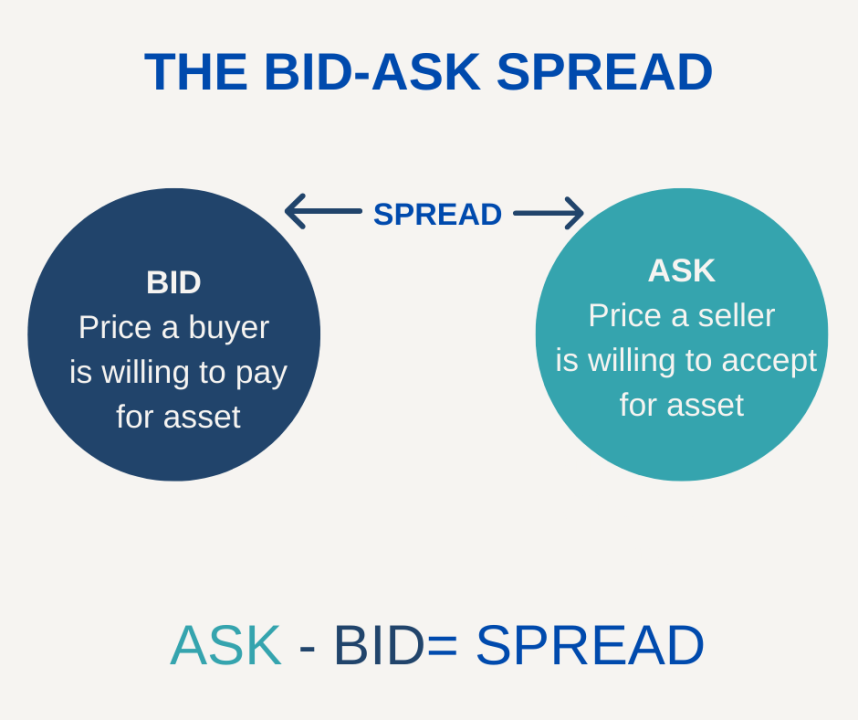
Generally, a bid is lower than an offered price, or “ask” price, which is the price at which people are willing to sell. The difference between the two prices is called a bid-ask spread.
Bids are made continuously by market makers for security and may also be made in cases where a seller requests a price where they can sell. Sometimes, a buyer will present a bid even if the seller is not actively looking to sell, which is considered an unsolicited bid.
Understanding Bid Prices
The bid price is the amount of money a buyer is willing to pay for a security. It is contrasted with the sell (ask or offer) price, which is the amount a seller is willing to sell a security for. The difference between these two prices is referred to as the spread. The spread is how market makers (MMs) derive profits. Thus, the higher the spread, the greater the profit.
Bid prices are often explicitly designed to exact a desirable outcome from the entity making the bid. For example, suppose the asking price of a good is forty dollars, and a buyer wants to pay thirty dollars for the good. In that case, they might bid twenty dollars and appear to compromise and give up something by agreeing to meet in the middle—exactly where they wanted to be in the first place.
When multiple buyers bid, it can develop into a bidding war, wherein two or more buyers place incrementally higher bids. For example, a firm may set an asking price of five thousand dollars on a good. Bidder A might make a bid of three thousand dollars. Bidder B may offer three thousand and five hundred dollars. Bidder A might counter with four thousand dollars.
Eventually, a price will be settled when a buyer makes an offer that their rivals are unwilling to top. This is quite beneficial to the seller, as it puts a second pressure on the buyers to pay a higher price than if there was a single prospective buyer.
In stock trading, the bid price refers to the highest amount of money a prospective buyer is willing to spend for it. As displayed by quote services and on stock tickers, most quote prices are the highest bid prices available for a given good, stock, or commodity. The ask or offer price displayed by said quote services corresponds directly to the lowest asking price for a given stock or commodity on the market. In an options market, bid prices can also be market-makers if the market for the options contract is illiquid or lacks enough liquidity.
Buying and Selling at the Bid
Investors and traders who initiate a market order to buy will typically do so at the current ask price and sell at the current bid price. Limit orders, in contrast, allow investors and traders to place a buy order at the bid price (or a sell order at the ask), which could get them a better fill.
Those looking to sell at the market price may be said to “hit the bid.”
Bid Size
In addition to the price people are willing to pay, the amount or volume they bid for is also essential for understanding the liquidity of a market. Bid sizes are typically displayed along with a level 1 quote. If the quote indicates a bid price of $50 and a bid size of $500, you can sell up to 500 shares at $50.
Bid size may be contrasted with the ask size, where the ask size is the amount of a particular security that investors are offering to sell at the specified ask price. Investors interpret differences in the bid size and ask size as representing the supply and demand relationship for that security.
Example of Bid Price
Suppose Alex wants to buy shares in company ABC. The stock is trading in a range between $10 and $15. But Alex is unwilling to pay more than $12 for them, so they place a limit order of $12 for ABC’s shares. This is their bid price.
Conclusion
- The bid price is the highest price a buyer is willing to pay for a security or asset.
- A bid price is generally determined through a negotiation process between the seller and a single or multiple buyers.
- The difference between the bid and ask prices is known as the market’s spread and is a measure of liquidity in that security.

