

Bid: What It Means, How It Works, Types, and Examples
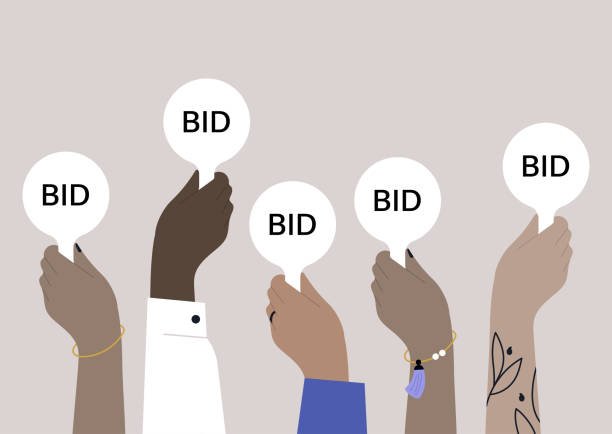
The term bid refers to an offer made by an individual or corporation to purchase an asset. Buyers commonly bid at auctions and in various markets, such as the stock market. Bids may also be made by companies that compete for project contracts. When a buyer makes a bid, they stipulate how much they’re willing to pay for the asset and how much they are willing to purchase.
A bid also refers to the price a market maker is willing to buy a security. But unlike retail buyers, market makers must also display an asking price.
How a Bid Works
Buyers and sellers keep the market going. Each participant facilitates the purchase and sale of assets. Sellers are entities that provide assets for purchase. Buyers are those who want to purchase goods or services. These parties typically come together at different venues to conduct their business, including auctions (live and online), the stock market, and retail outlets.
The bid process depends on the market through which these goods and services are sold. For instance, bids at an auction may be made in person or online, while investors may bid for securities like stocks through their brokers. Some bids take place in secret, usually through a sealed process. This process allows for fair and conflict-free bidding.
In some cases, companies may make bids to win job contracts. The bidding process involves sending out packages to interested parties.1 These contracts may be issued by governments or large corporations for infrastructure, construction, and other projects in a variety of different industries, such as:
- Public safety
- Information technology
- Education
- Social services
- Consulting and management
- Healthcare
- Art and recreation
Inside the Spread
The spread between the bid and the ask is a reliable indicator of supply and demand for a particular financial instrument. Put, the greater the interest on the part of the investor, the narrower the spread.
In stock trading, the spread constantly varies as buyers and sellers match electronically, where the size of the spread in dollars and cents reflects the price of the stock being traded. For example, a spread of 25 cents on a price of $10 equals 2.5%. But the spread shrinks to only 0.25% if the stock price jumps to $100.
In foreign exchange, the standard bid-ask spread in EUR/USD interbank quotes is between two and four pips (the price move in a given exchange), depending on both the amount being traded and the time of the day in which the trade occurs.
Spreads are typically narrowest during the morning in New York, when the European market is simultaneously open for business. For example, a bid of 1.1015 is typically accompanied by an ask between 1.1017 and 1.019. A standard USD/JPY bid-ask spread is 106.18 to 106.20. Currency pairs that are less actively traded tend to have wider spreads.
Many buyers make bids to procure the goods and services they seek.1 These may include securities (stocks, bonds, and other investments), commodities, currencies, or other assets. The bid is the price of a stock for a buyer, while the ask represents the price a seller is willing to accept on the trade. The mathematical difference between the bid and the ask is known as the spread.
When completing a purchase at the bid price, both the bid and the ask may rise to significantly higher levels for subsequent transactions if the seller perceives a strong demand.
Market Makers
Market makers, often referred to as specialists, are vital to the efficiency and liquidity of the marketplace. By quoting both bid and ask prices, they step into the stock market when electronic price matching fails, which enables investors to buy or sell a security. Although specialists must always quote a price for a stock they trade, there is no restriction on the bid-ask spread.
Interbank traders function as market makers in the foreign exchange market because they provide a continuous stream of two-way prices to direct counterparties and electronic trading systems. Their spreads widen during market volatility and uncertainty, and unlike their counterparts in the stock market, they are not required to make a price in low-liquidity markets.
Other Types of Bids
There is more than one way to make a bid. As mentioned above, the different types of bids depend on where the offer is made. Some of the most common types of bids are listed below.
Auction Bids
Auctions are forums that bring together multiple buyers who compete for certain assets, such as livestock, home goods, properties, property tax liens, and art. These venues are usually held in person, but the rise in technology has made online auctions a reality.
Buyers in auctions bid against each other to win the asset through an open bidding process. They do so by placing competitive bids to beat out the other buyers. The person who bids the highest amount wins the auction.
Online Bidding
Online bidding sites work just like traditional auctions. Sites like eBay, eBid, and QuiBids allow buyers to assemble in a virtual arena and bid for their chosen products and services.
For instance, someone may sell a pair of designer sunglasses on eBay and start an auction with a minimum price. Interested buyers can bid on the item with an amount they wish to pay until the seller accepts one person’s bid. These sites usually require buyers to set up accounts and may require payment card information.
Sealed-Bids
Unlike the two types of bids noted above, participants in some venues aren’t privy to how much their competitors are bidding. This is the case with sealed-bid auctions.
A sealed-bid auction happens when multiple bidders are given envelopes in which they place their bids. The envelopes are then sealed so no one bidder can knowingly outbid the other, making the outcome fair. The highest bidder is the one who wins. This type of bidding typically takes place for contracts or real estate sales.
Make sure you don’t go over your maximum amount when you’re bidding at an auction.
Examples of a Bid
Let’s look at how the bidding process works using two examples.
Bidding at Sotheby’s
Sotheby’s is one of the world’s most significant art and luxury goods marketplaces. It operates a network in 40 countries that cater to 44 different categories, including jewelry, contemporary art, and wine and spirits. The organization holds more than 600 auctions each year in person, online, and through private sales.3 A winning bid of $2.68 million landed a buyer an unmounted diamond weighing 50.03 carats on June 17, 2021.
A Ride on the Blue Origin
Jeff Bezos, the founder of Amazon, auctioned off a seat on his spaceship in June 2021 through a month-long bidding process. The auction, which took place over the phone, ended on June 12, 2021. The undisclosed winner bid $28 million to secure a place on the Blue Origin with Bezos for a sightseeing tour on July 20, 2021, from West Texas.5
How Do You Bid on eBay?
You can create an account or bid on eBay as a guest. The easiest way to make your bids is through the automated process. This allows you to enter the total amount you will pay for an item. The site then bids for you in increments without exceeding your maximum limit. If another individual outbids you, eBay will let you know. You can decide whether you want to place a new maximum limit.6
How Do You Cancel a Bid on eBay?
Buyers can retract or cancel their bids on eBay in certain circumstances. You can cancel your bid if you enter the wrong amount when the seller drastically changes the item’s description or if the seller’s contact information is incorrect. Bids can also be retracted if more than 12 hours are left in the sale. If there are less than 12 hours left, you can cancel your last bid, provided you placed it less than an hour ago. If all else fails, you can contact the seller to see if they’re willing to cancel your bid.7
How Do You Bid on Government Contracts?
There are a few different ways to bid on government contracts. You may have to register your company with the appropriate agency or website to compete for these jobs. Most government contracts are open for bids through a sealed bid process, so you can’t see how your competition bids.
You can bid for the contract through government bidding portals, which often take time. You can also use a bidding service to provide information on various government contracts available in your area.
What Is an Automated Bid Strategy in Google Ads?
Google Ads has an automated bid strategy that automatically places bids on a company’s advertisements based on how likely they are to receive a click from someone online.8 Advertisers may have different goals based on the type of ad, including increasing visits by individuals to their websites and increasing their visibility by showing ads at the top of pages within Google search results.9
What Is a Bid Bond?
A bid bond is a type of investment that guarantees payment to the bondholder if the bidder fails to follow through with the beginning of the project. This provides the project owner with some security that the bidder will abide by the contract after they are selected and that they have the financial resources to complete the project.
Bids allow individuals to purchase goods and services through auctions and other venues. It is a competitive process wherein two or more entities try to outbid each other by raising the amount they’re willing to pay to win the asset. You can bid for several different things, whether you want to buy property, livestock, luxury goods, art, vehicles, government contracts, or even financial instruments.
The spread between the bid and ask price for particular securities, such as stocks, is usually a good indicator of the available supply and demand. While you may have your eyes on the prize, it’s always essential to ensure you don’t exceed your maximum budget when you try to win.
Conclusion
- A bid is an offer made by an investor, trader, or dealer to buy an asset or compete for a contract.
- The spread between the bid and the ask is a reliable indicator of supply and demand for the financial instrument.
- Market makers are vital to the efficiency and liquidity of the marketplace.
- Bids can be made live, online, through brokers, or a closed bidding process.
- Types of bids include auction bids, online bids, and sealed bids.

