

What Is Hawk Inflation?
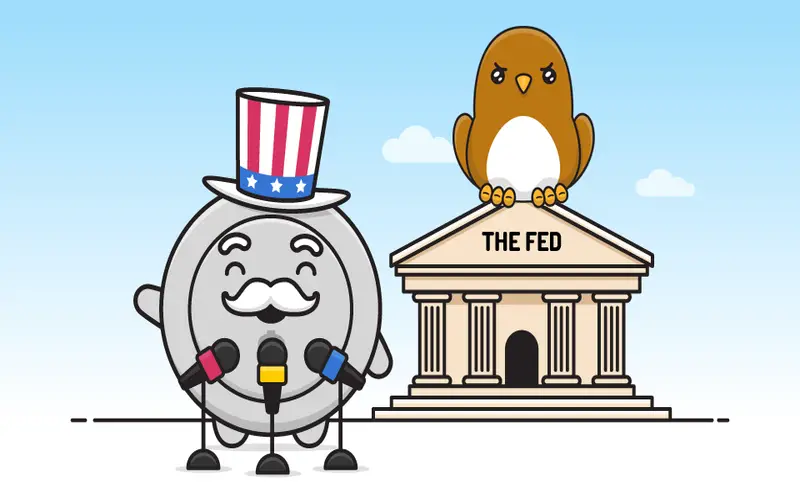
A hawk in inflation or economics is a policymaker or counselor focused on the influence of interest rates on monetary policy.
How is hawkish defined? Hawks advocate for higher interest rates to combat inflation, even if it harms economic growth, consumer spending, and jobs. Compare a hawk to a dove.
Understanding Hawk Inflation
Hawks advocates for higher interest rates to control inflation. Hawks prioritize recessionary pressure from high inflation rates over economic growth.
The suitability of a hawkish posture depends on the economy and other macroeconomic conditions. Hawkish policies that suppress inflation may induce economic contraction, unemployment, and deflation.
While commonly associated with monetary policy, the term “hawk” has broader applications. Both relate to someone intensely engaged in a particular portion of a broader project. A budget hawk prioritizes the government budget, just as a general or inflation hawk prioritizes interest rates. Warhawks prefer war over diplomacy or moderation.
Unlike hawks, doves are economic policy advisors who favor low-interest rates for monetary policies. Doves think lower rates will boost the economy and jobs.
Pros and Cons of Hawkish Policies
Advantages
The epithet “hawk” is typically insulting, yet high-interest rates may be beneficial. They reduce borrowing but increase saving.
When interest rates rise, banks may lend more freely. High rates can reduce risk, leading banks to approve borrowers with less-than-perfect credit histories. In addition, if a country raises interest rates, but its trade partners do not, import prices may decrease.
Disadvantages
High-interest rates can deflate prices. Although short-term, deflation might worsen over time compared to moderate inflation. In persistent deflation, a dollar will be worth more tomorrow than today and even more in a week or month. This encourages consumers to save money and postpone big purchases until the dollar’s buying power makes them cheaper.
Higher interest rates reduce credit borrowing and spending. Mortgage rates might potentially slow the housing market and lower prices. Higher vehicle loan rates might affect the auto market.
As loan costs and bond interest rates rise, hawkish policies may decrease a company’s appetite to borrow and invest. In such an atmosphere, employers will hire and retrain fewer personnel.
Hawkish measures can hurt domestic manufacturing and trade. When the home country’s inflation rate falls compared to a trade partner’s, the exchange rate should adjust to align prices with the dollar’s appreciation. When the native currency appreciates, imported items become cheaper, affecting domestic manufacturers. Local exports become more expensive for international buyers, further impacting local production.
Hawkish policies benefit savers and lenders (higher interest rates). They reduce imports and international travel costs.
Hawkish policies hurt borrowers and domestic manufacturers. They raise export and domestic tourism prices.
Pros and Cons of Hawkish Policy
Pros
- Can stop hyperinflation?
- Increases savings
- Cheaper imports
- Tourists abroad spend more.
Cons
- Can damage domestic producers
- Higher borrowing costs for households and businesses
- Can deflate
Other economic descriptions employ animals. Bulls and bears relate to markets with increasing and falling prices, respectively.
Who watches inflation?
President Esther George of the Federal Reserve Bank of Kansas City is known as a hawk. George supports hiking interest rates and worries about inflation-related price bubbles.
Additionally, Cleveland Fed president Loretta Mester matches this group. A hawkish former Fed Bank of Philadelphia president, Charles Plosser, taught Mester. She fears inflation from dove-backed low-interest rates.
Atlanta Fed president Raphael Bostic is a hardline Fed voting member.
What makes it ‘hawkish’?
Hawks and hawkish policy are more active in monetary and military matters. They are named after hawks, ferocious birds of prey. Meeker, or conservative dove, and dovish policies are the opposite. These represent the dove’s calm.
Do hawks become doves, and vice versa?
U.S. Fed leadership has shown this recently.
Alan Greenspan, Fed head from 1987 to 2006, was bullish in 1987 but dovish after that. From 2006 until 2014, Ben Bernanke alternated between hawkish and dovish.
From 2014 to 2018, Fed Chair Janet Yellen was a dove who wanted low lending rates. The Bloomberg Intelligence Fed Spectrometer ranked 2018 nominee Jerome Powell as neutral (neither hawkish nor dovish).
What determines interest rates?
During its eight annual meetings, the Fed evaluates economic indices, including CPI and PPI, to decide on interest rate changes or stability. Hawks promote high rates, whereas doves prefer low rates.
Borrowing becomes less appealing due to high-interest rates. Therefore, customers are less inclined to buy big or use credit. Less spending means less demand, which stabilizes prices and prevents inflation.
Conversely, low-interest rates encourage automobile, home, and other loan purchases. More consumer spending causes inflation.
The Fed manipulates interest rates to balance economic growth and inflation.
Bottom Line
Inflation hawks rapidly raise interest rates and take other contractionary measures to reduce inflation quickly, even if it hurts economic growth and jobs; hawks want to keep target inflation rates at 2% to 3%. The reverse is a dovish policy.
Conclusion
- Hawks advise policymakers to raise interest rates to control inflation.
- When economic growth “overheats,” higher interest rates may decrease inflation.
- Doves, unlike hawks, want accommodating interest rates to boost spending.
- Policymakers may be hawkish or dovish, depending on the U.S. economy.

