

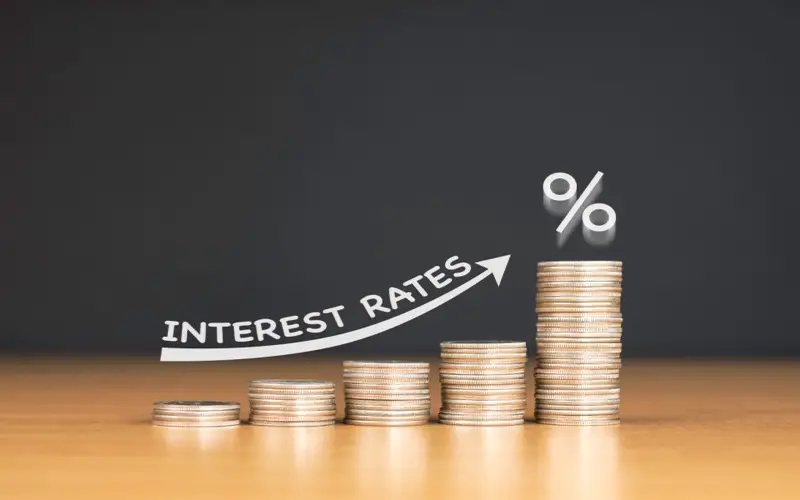
Interest: What Is It?
It costs money to borrow money, and that money is called interest. The amount of interest paid or earned is usually given in dollars, while the interest rate used to figure out interest is usually an annual percentage rate (APR). Interest is the amount of money a lender or bank gets for lending money. The amount of ownership a stockholder has in a company, generally given as a percentage, is another meaning of interest.
Getting to Know Interest
Interest rewards one party for taking a risk and giving up the chance to use funds while punishing another party for using someone else’s funds. People who temporarily give someone their money are entitled to compensation, and people who temporarily use that money are often required to pay this compensation.
Interest is added to your savings account when you leave money in it for a while. This is because the bank takes your money and lends it to other people, which means you make money from interest.
How much interest someone pays is often based on how good their credit is, how long the loan is, or what kind of loan it is. If everything else stays the same, interest rates are higher when there is more risk. This is because the lender is more likely to lose money if the borrower can’t repay the loan, so they may charge more interest to get the borrower to agree to the loan.
APR includes more than just the interest rate on the loan. It also includes initial fees, closing costs, or discount points.
Rates of Interest in the Past
These fees for getting money are standard these days. It wasn’t until the Renaissance, though, that interest became widespread.
Interest has been around for a long time, but from ancient Middle Eastern societies to the Middle Ages, it was seen as a sin to charge interest on loans. At least some of this was because people in need were given loans, and the only thing that was gained was money from the interest payments.
It stopped being morally wrong to charge interest on loans during the Renaissance. To get ahead, people started borrowing money to grow their businesses. As markets grew and people could move up or down the economic ladder, loans became more popular, and charging interest became more acceptable. During this time, money started to be seen as good, and people thought it was fair to charge for the chance of giving it.
In the 1700s and 1800s, political thinkers like Adam Smith, Frederic Bastiat, and Carl Menger explained the economic theory behind why people charge interest on loans.
Iran, Sudan, and Pakistan all have banking systems that don’t charge interest. Iran does not charge any interest, while Sudan and Pakistan only do some. 1 Instead of charging interest on the money they give, lenders share the profits and losses. In Islamic banking, refusing to take interest on loans became more common near the end of the 20th century, even if it meant losing money.
Interest rates can now be used for mortgages, credit cards, car loans, and personal loans, among other financial goods. In 2019, interest rates began to go down; by 2020, they were almost zero.
Interest Formula and How to Figure It Out
To figure out interest, you only have to increase the amount you still owe by the interest rate.
Interest = Rate of Interest x Principal or Balance
Finding the correct interest rate is often the most challenging part of figuring out interest. Most of the time, the interest rate is given as a number and is called the APR. When figuring out the APR, however, the effects of compounding are not always taken into account. The effective yearly rate shows the real interest rate that needs to be paid.
Often, an annual rate needs to be changed to find the interest made during a specific period. A savings account might give 0.25% interest each month, 3% times 12 months, if the interest rate is 3% on the average amount.
Once the interest rate is known, it is multiplied by the amount still owed for the interest charge. This is the amount of the loan’s capital that is still due. Most of the time, this is the average amount of money saved over a specific time frame.
In either case, the interest rate that is charged each period is going to be different. When people take out loans, they usually make payments that lower the principal amount, which means the interest rate is lower. As for savers, regular action often changes the balance, such as adding last month’s interest.
When you apply for loans and lines of credit, the interest rate you get is mainly based on your credit score.
When to use simple interest vs. compound interest
Loans can have two main types of interest: simple and compound. People who borrow money have to pay a set amount of interest on the money first given to them. This is called simple interest. Compound interest is the interest added to the loan’s capital and the interest added to it over time. Most people are interested in the second type of interest.
People who want to earn interest deal with compound interest. Because of this agreement, interest is gained on interest, meaning more money is made overall. Many bank savings accounts earn interest that builds on itself over time. Any interest you paid on your savings in the past is added to your account balance, and this new balance earns interest in the future.
However, borrowers should be very worried about compound interest, especially if the interest they’ve already paid is added to their outstanding debt. The user must make a more significant monthly payment because they have a bigger loan.
Common Uses That Are Interesting
There are several ways to charge or receive interest. Interest can be made by one party and paid by another.
Credit cards: Credit cards have high APRs, meaning they charge a lot of interest. People can pay a minimal monthly payment, but credit card firms and banks gain money on interest.
Mortgages are one of the longest-term loans and typically charge interest for 30 years. Interest can be set or variable, but it should decrease as the borrower pays off the loan.
Auto loans are short-term. Six-year auto loans are typical. Credit dealerships may have a finance department that collects interest at a defined rate.
Student loans: COVID-19 halted student loan payments and decreased all loan interest rates to 0%.2Loans were interest-free for a spell.
Most people benefit from monthly savings account interest. Automatic dividends are added to your account.
Bills: Many businesses charge a late fee, but some charge interest on bills that are still due and past due. This is based on the idea that the person who owns the invoice should get interest since the late payer is taking money from them.
If you want to get a rough idea of how long it will take for an interest-bearing account to double, you can use the “rule of 72.” Just take 72 and split it by the interest rate that applies. If you spend 4% of what you put in, your money will double in 18 years (72/4).
Good and bad things about paying interest
Think about when you need dependable transportation to get to work. You don’t own a car, there isn’t public transportation, work is far away, and you can’t afford to buy a whole car. The best thing about paying interest is that it’s not too expensive compared to other options.
People who pay interest also carry debt, build their credit history, and use leverage successfully. For instance, people who build and give out homes often borrow money. If the company gets a higher rate of return on the building than the loan rate they are charged, they are making money with other people’s money.
The bad thing is that interest costs money over and over again. Most of the time, people who owe money are required by contract to pay interest. Interest is usually paid on top of monthly payments before the capital is paid off. Interest charges may be too much for consumers to handle. It may also be hard for someone to get more credit if they already have too many loans and monthly payments that are too high.
Loan Interest for Borrowers
Pros
- This could result in much-needed cash; it might be worth the small cost in an emergency.
- It has to do with building a good credit history
- It could be used to increase yields and make more money
Cons
- is an actual cost that needs to be paid for in cash every month
- is usually paid off before the debt can be paid off.
- may add up and become too much for a user to handle
- Have agreed to be paid and must be paid
- Good and bad things about collecting interest
Getting interested is a plan for many investors. Given that interest is usually a set amount (or at least consistent), it can be a reliable source of income as long as the person borrowing the money has good credit. It’s better to give money to other people than to let capital sit around and not be used. This is especially true in the short term, when the lender may need the money for a specific reason in the long term.
People also say that interest is one of the easiest ways to make passive cash. After the deal is signed, loans, management, or upkeep may not need much. Lenders may only want to get interest and capital payments.
There are some bad things about getting interested. First, interest income is taxed; a small amount can increase a person’s tax rate. Further, since you are getting interest, you are letting someone else use your money. You might be happy just getting interested, but you would probably make more money if you used the money yourself.
There may also be logical arguments against collecting interest. Think about student loan debt estimates. Some say that interest rates close to 10% are fair for the risk these lenders are taking, while others say these rates are unfair to young adults and shouldn’t be used.
Interest Rates for Lenders
Pros
- It could be a source of cash flow if interest payments are made regularly or monthly.
- It could be a way to make money without doing anything.
- Perhaps give a steady flow of money if the borrower is good at making payments.
- Instead of not lending money out, is it a better use of capital?
Cons
- This will make a person owe more in taxes, which may be less than what the investor could have made by investing the money in their own business.
- It could get you in trouble in some situations, based on the borrower, the interest rate, and the situation.
Interest and the Economy as a Whole
Low interest rates aim to boost economic growth by making it cheaper to borrow money. These changes suit people looking for new homes because they lower their monthly payments and costs. The Federal Reserve’s lowering interest rates gives people more money to spend on other things and makes buying big things like houses easier. This situation is also suitable for banks because they can lend more money.
Having low-interest rates isn’t always a good thing, though. Most of the time, a high-interest rate means that the business is strong and doing well. When interest rates are low, investments and savings accounts earn less money. People also take out more loans, which could make it more likely that they won’t be able to pay them back when rates go back up.
To deal with COVID-19, the Federal Reserve started to change monetary policy as early as March 2020.3After the outbreak got better, the Federal Reserve started to raise the Federal funds rate 4 People quickly learned that taking out loans costs more because the federal funds rate affects the interest rates on many other types of loans.
What Does Accrued Interest Mean?
Interest owed but not yet paid is called “accrued interest.” For a borrower, this is interest that needs to be paid, but the loan hasn’t been given any cash. For an investor, this is the interest they’ve earned but haven’t paid back yet. Interest is often added up as part of a business’s financial records.
How can I gain the most interest?
There are many ways for buyers to put their money into alternative investments that earn interest. In the same way, investors need to be careful when choosing loans. Researching the borrower’s credit history is the best way to earn interest. If they don’t pay back the loan, you might not be able to get your lost principal back.
In what amounts does bank interest pay?
The amount of interest that bank accounts pay will depend on government rates and the state of the economy. For example, during the COVID-19 pandemic, bank account interest rates were almost 0%, while the federal funds rate was also meager. Then, when the pandemic was over, bank savings started earning more than 2% interest.
Conclusion
- Interest is the fee you pay to borrow money. It is usually shown as a number, like an annual percentage rate (APR).
- People who lend money can get interest for using their money, and people who take money can pay interest for using their money.
- Usually, interest is either simple interest (based on the principal amount) or compound interest (based on the principal amount plus interest already received).
- Many types of loans, like credit cards, mortgages, car loans, private loans, savings accounts, and fines, charge interest.
- The Federal Reserve’s federal funds rate sets fiscal policy, significantly impacting interest rates.

