

What is a value network?
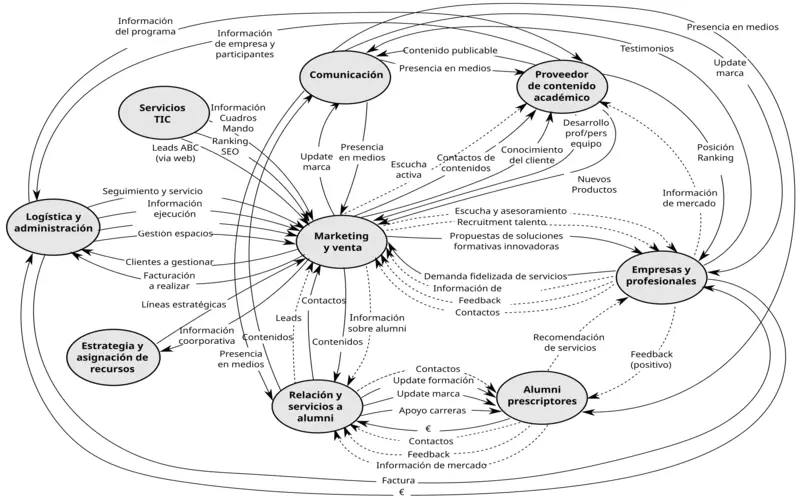
A value network is a set of connections between organizations and individuals interacting with each other to benefit the entire group. A value network allows members to buy and sell products and share information. These networks can be visualized with a simple mapping tool showing nodes (members) and connectors (relationships).
Understanding a Value Network
Value networks are an example of an economic ecosystem in business and trade. Each participant depends on the others to promote development and provide value. Members of a value network might be internal teams working on research and development projects or external members like consumers.
Value networks improve the environment, social welfare, and creativity, among many other things. A single node’s weakness may impact the whole network. A customer may have to wait for their cargo if, for instance, the manufacturing team finds it difficult to create the product due to a poor development team.
Value Network Types
The primary forms of value networks are:
- The Clayton Christensen network.
- The Fjeldstad and Stabells networks.
- The Normann and Ramirez constellations.
- Verna Allee’s networks.
Network Clayton Christensen
The Clayton Christensen network highlights linkages that are already in place outside of the network and that any new members will be shaped to match the existing structure of the network or business model. Because they will almost certainly adapt and align themselves with the present network, new entrants will need help to make a name for themselves, provide novel ideas, or carry out reforms.
The Network of Fjeldstad and Stabells
According to Fjeldstad and Stabells, a network’s most crucial components are its consumers, services, service providers, and contracts that provide access to those services. According to this notion, consumers are the lifeblood of the network since their participation adds value. The most famous examples are social media platforms like Facebook, YouTube, Instagram, and TikTok. Here, users join up, accept the terms of service, and contribute to the network.
Ramirez and Normann Constellations
According to the Normann and Ramirez constellations value network theory, networks are dynamic configurations that permit ongoing modification and advancement. Network members are responsible for assessing the existing connections and seeking chances to provide value.
Networks of Verna Allee
According to Verna Allee’s networks, value network analysis should be integrated into every aspect of an organization to maximize value at every step. Networks are said to produce both physical and intangible values.
Advantages of Value Networks
A value network’s advantage stems from how an organization or person uses the assets, connections, and wisdom of others. A startup, for instance, could seek its outside contacts, such as its mentors and investors, for knowledgeable advice on how to handle the expansion and development of the company.
While many founders have extensive knowledge of the product or service they create, they may need to be experienced in acquiring clients, marketing the offering, or growing the company.
They might use the intangible advantage of their relationship, seeking the counsel of dependable parties with relevant experience, to make up for this shortfall. For further exposure to possible mentors and investors, they may also choose organizations like incubators and accelerators focusing on supporting entrepreneurs.
A Value Network Example
Investors usually provide advice to the startups they support because stakeholders stand to gain from the startup’s growth by assisting the leaders in turning their concepts into real business. The investor’s knowledge may be used to provide such recommendations.
The investor may facilitate introductions between the startup’s founders and other companies to further their goals. An investor could point the business toward another business that makes prototypes on demand, for instance, if the firm wants to develop a prototype of its product. Similarly, if the startup is seeking a distributor or mass manufacturer, the advice they get could be helpful to everyone, as it might result in more revenue for each company and person.
Conclusion
- Value networks are associations between people or between people and businesses where the group benefits from the interactions between the members.
- In addition to buying and selling from one another, members of a value network may also share pertinent and crucial information.
- Value networks may be represented using nodes, which are members, and connectors, which are connections, in mapping tools.
- The main benefit of a value network is how a company or person uses the assets, clout, and knowledge of their network connections.

