

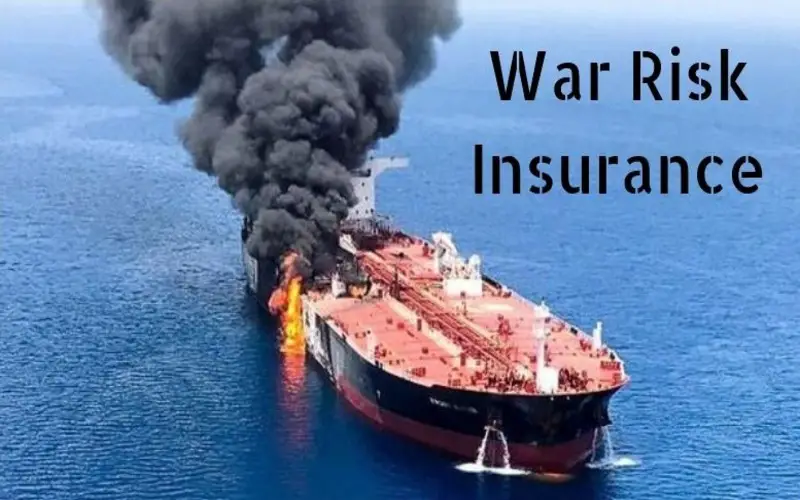
What is insurance for war risk?
An insurance policy known as “war risk insurance” shields the policyholder financially against losses resulting from terrorism, invasions, riots, strikes, revolutions, and military takeovers.
Policies for commercial property, auto, homeowners, renters, fire, and life insurance often carry exclusions for war. The coverage will not cover damages resulting from war-related incidents with these exclusions. Buying a separate war risk insurance policy is sometimes feasible since a basic insurance policy may expressly exclude war risk.
Comprehending Insurance for War Risk
An entity exposed to the threat of abrupt and severe political changes is a suitable candidate for war risk insurance. For instance, businesses that operate in politically volatile regions of the globe are more vulnerable to financial losses resulting from acts of violence. Risks covered by war risk insurance include kidnappings and ransom, sabotage, emergency medical evacuation, long-term incapacity, and property and cargo loss or damage.
Some plans may also cover war-related event cancellations. Some war risk insurance plans cover acts of terrorism, whereas others see war and terrorism as two distinct types of risk. Certain nations may require an airline to obtain war risk insurance before it uses an airport or operates in its airspace.
Specific aviation and marine industries may have more specialized war insurance plans to fit their unique requirements. For instance, if the government seizes a ship, war risk insurance may reimburse the ship owner for the whole vessel cost. War risk insurance could compensate for time lost if military operations put a boat into temporary detention.
The Bumbershoot policy is a specific kind of excess liability insurance for the marine sector.
War Risk Insurance Concerns
In the aftermath of the terrorist attacks on September 11, 2001, in New York City and Washington, D.C., the war exclusion clause gained significant attention within the insurance business. An estimated $40 billion in insurance losses resulted from the assaults. The insurance sector was reluctant to provide war-risk coverage due to the possibility of more terrorist strikes or hijackings.
Insurers terminated numerous third-party policies and coverages. Congress responded by voting to expand and amend the Aviation War Risk Insurance Program of the Federal Aviation Administration (FAA). Under the legislation, the FAA had to provide American Airlines with war-risk insurance. It also mandated that the pre-9/11 cost of coverage serve as the basis for the rates for this coverage. The program continued until 2014, when rates for conflict risk insurance dropped, and the private sector boosted capacity.
The challenge with war risk insurance is that an insurance provider cannot precisely project the potential course of events and, therefore, determine what kind of premiums to charge. Moreover, even significant tips may not cover the harm for which insurance companies are responsible due to the broad and unpredictable nature of the damage caused by war or its connected operations. Because of this, insurance firms facing a significant danger of going bankrupt due to a war insurance policy see war insurance as uncertain.
Conclusion
- Insurance against losses arising from war, invasions, uprisings, riots, strikes, and terrorism is known as war risk insurance.
- Because of the significant dangers involved, war risk insurance is not covered by regular insurance policies but is provided as a stand-alone policy.
- People and companies that do business in nations with high levels of risk may consider purchasing war risk insurance.
- Because insurance firms cannot estimate damages with enough accuracy to charge reasonable rates, war risk insurance is often left out of conventional plans.

