

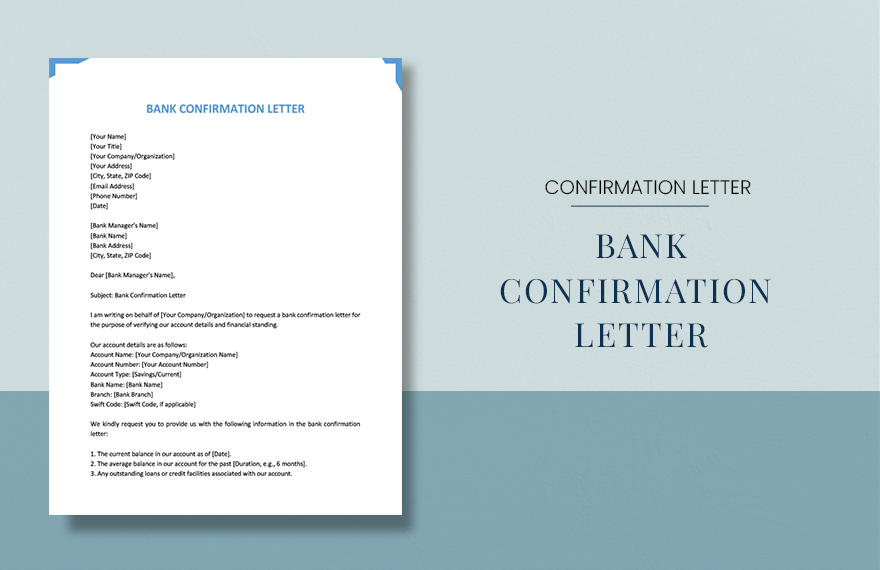
A Bank Confirmation Letter (BCL): What Is It?
A letter from a bank or other financial organization verifying the existence of a loan or credit line that has been given to a borrower is known as a bank confirmation letter or BCL. The letter formally attests to the borrower’s eligibility to borrow a certain amount for a particular purpose. The borrower is usually an individual, business, or institution.
The Functions of a Bank Confirmation Letter (BCL)
The objective of a bank confirmation letter is to guarantee to a third party, usually a seller, that the borrower has the financial means to finalize a transaction, such as buying products. The confirmation letter, sometimes called a comfort letter, verifies the borrower’s ability to pay; it does not guarantee payment.
The signatures of bank or financial institution personnel authorized to issue such communications are usually required on bank confirmation letters.
A letter of confirmation cannot be used for a different transaction or project since it is issued for a specific transaction or project. The bank’s customer often has to get a fresh confirmation letter if they choose to make a different purchase or contract.
For instance, a fresh BCL might be required if the potential buyer purchases a house different from the one listed in the bank confirmation letter.
Different countries have different regulations regarding whether and how much a confirmation letter has to specify the reason a loan or line of credit is being given to the borrower.
Typical Applications for a Bank Confirmation Letter Bank confirmation letters are often sent to a bank’s commercial clients, attesting to the existence of a specific credit line. The letters frequently reassure sellers of various goods.
They might also be given to a business collaborating on a project with another business. The letter assures the business that there is a good chance it will get payment from the bank’s client, even if it does not guarantee payment or the supply of cash.
A bank confirmation letter is used to reassure all parties involved in a commercial transaction that the borrower, the bank’s client, has the financial resources to complete the deal.
A bank confirmation letter is most frequently used by a person when buying a house or piece of property. In these situations, the letter certifies to a seller or real estate agent that the bank’s client is qualified for a mortgage up to a particular amount for a planned acquisition.
The letter states that the bank’s customer can access cash to complete a transaction; it does not constitute an offer to acquire the property. Generally speaking, a potential buyer cannot close on a home until they have a bank confirmation letter.
FAQs for Bank Confirmation Letters
A Bank Confirmation Letter: How Can I Obtain One?
Your bank can provide a bank confirmation letter if you ask for one. The bank will issue the letter and give it to you with the proper signatures.
A Bank Certification Letter: What Is It?
A letter from a bank certifying that a particular person has an account with them and the total amount of money in that account is known as a bank certification letter.
A Bank Verification Letter: What Is It?
A letter from a bank verifying that a person has an account there and the total amount of funds in the account is known as a bank certification letter or bank verification letter.
How Can My Bank Send Me a Letter of Confirmation?
You can request a bank confirmation letter in person from a bank employee at a branch, over the phone from the bank, or, depending on the financial institution, on their website.
Conclusion
- A bank confirmation letter (BCL) confirms a bank’s line of credit with a customer.
- The BLC assures the borrower’s ability to make a purchase; it is not a guarantee of payment.
- Business clients usually receive bank confirmation letters attesting to their creditworthiness.
- A company starting a joint venture project with another company may also need a bank confirmation letter.
- When buying a house or piece of land, people might ask for a BCL to prove their creditworthiness to the seller or to obtain a mortgage.

