

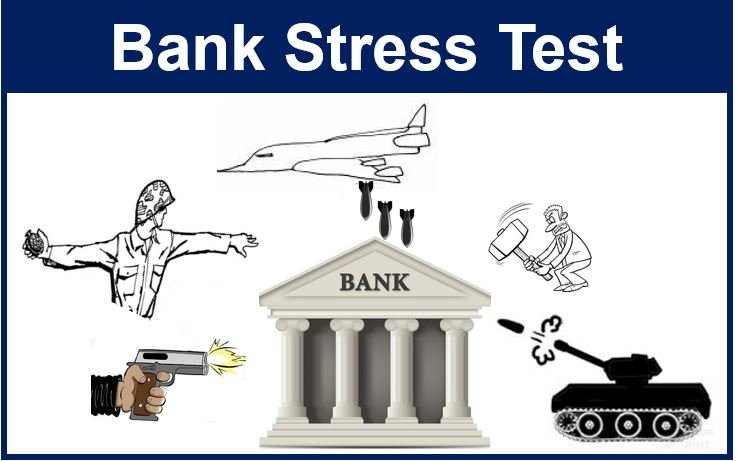
A Bank Stress Test: What Is It?
A study conducted under fictitious circumstances to see if a bank has the capital to survive a negative economic shock is known as a bank stress test. Unfavorable circumstances, such as a severe recession or a financial market meltdown, are included in these scenarios. Internal stress tests are mandated for banks in the US with assets of at least $50 billion. The Federal Reserve and the institutions’ risk management teams conduct these tests.
Many banks implemented stress testing following the 2008 financial crisis. There was a significant undercapitalization of several banks and financial organizations. The crisis exposed their vulnerability to stock market crashes and economic downturns. Consequently, federal and financial authorities considerably enlarged regulatory reporting requirements to concentrate on the sufficiency of capital reserves and internal capital management plans. Banks are required to assess and record their solvency periodically.
The Process of a Bank Stress Test
Stress tests quantify the financial health of banks during a crisis by concentrating on a few critical areas, including credit risk, market risk, and liquidity risk. Hypothetical scenarios are developed using computer simulations and various criteria from the Federal Reserve and the International Monetary Fund (IMF). Strict stress test regulations enforced by the European Central Bank (ECB) also apply to around 70% of the financial institutions in the eurozone. The company conducts stress tests twice a year and has strict reporting requirements.
A predefined set of scenarios that banks could encounter is included in all stress testing. A fictitious scenario can entail a particular catastrophe in a specific location, such as a conflict in Northern Africa or a storm in the Caribbean. Alternatively, it might involve all three co-occurring: a 30% decline in house values, a 15% overall decline in equities, and a 10% unemployment rate. The banks may then assess if they have sufficient capital to weather the crisis by looking at the predicted financials for the following nine quarters.
There are also historical scenarios that are based on actual historical financial occurrences. The most well-known instances include the tech bubble burst in 2000, the subprime mortgage crisis in 2007, and the coronavirus outbreak in 2020. The 1987 stock market crash, the late 1990s Asian financial crisis, and the 2010–2012 European sovereign debt crisis are some examples.
The United States implemented legislation in 2011 requiring banks to perform a Comprehensive Capital Analysis and Review (CCAR), which involves several stress tests.
Advantages of Stress Tests at Banks
Finding out if a bank has the capital to sustain itself in hard times is the primary objective of a stress test. Banks must release the outcomes of their stress testing. The public is subsequently made aware of these findings, demonstrating how the bank would respond during a significant financial crisis or catastrophe.
Regulations require companies that fail stress tests to reduce dividend payments and share buybacks to maintain or increase their capital buffers. This can avert a bank run before it begins and save undercapitalized banks from failing.
A bank may occasionally pass a stress test with certain conditions. This indicates that the bank is in danger of going out of business and losing its ability to pay dividends in the future. This kind of dividend reduction frequently negatively affects share prices. As a result, conditional passes incentivize banks to increase their reserves before having to reduce dividends. In addition, banks that receive a conditional pass must present a plan of action.
Bank Stress Test Criticism
Stress tests are frequently criticized for being unduly rigorous. Regulators push banks to hold too much capital by wanting them to be resilient to once-in-a-century financial crises. Consequently, the private sector is not receiving enough financing. This implies that first-time homeowners and creditworthy small enterprises might be unable to obtain loans. Relatively delayed economic recovery after 2008 has also been attributed to too stringent capital requirements for banks.
Furthermore, many contend that bank stress testing is not transparent enough. Certain banks could hold onto extra capital in case the regulations alter. Banks are hesitant to offer loans during typical business slowdowns because it can be challenging to forecast when stress tests will occur. However, revealing too much information might fictitiously enable banks to increase reserves before examinations.
Examples of Bank Stress Tests in the Real World
In actual life, many banks fail stress testing. Prestigious schools are not immune to error. For example, Santander and Deutsche Bank repeatedly failed stress tests.
Conclusion
- The purpose of a bank stress test is to evaluate a bank’s capital levels in the event of an economic or financial crisis.
- Many banks implemented stress testing following the 2008 financial crisis.
- Federal and international financial regulators require all banks above a specific size to perform stress tests and disclose the findings regularly.
- If a bank’s stress test results are negative, it needs to take action to maintain or increase its capital reserves.

