

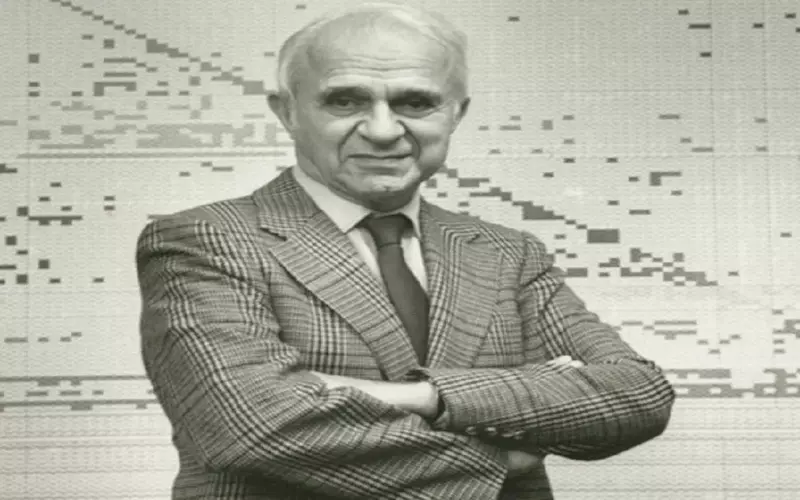
Who was Wassily Leontief?
Wassily Leontief was a professor and economist from Russia who won the Nobel Prize in Economics. He made numerous significant contributions to the field of economics. The subject of Leontief’s Nobel Prize study was input-output analysis, which divides the economy into its component sectors and examines the relationship between changes in one industry and those in others.
Understanding Wassily Leontief
At ninety-three, Wassily Leontief passed away in New York City in 1999. He was born in Germany in 1906. He made several contributions to the field of economics as an economist. Leontief earned the 1973 Nobel Memorial Prize in Economics for developing input-output analysis, which resulted from his study on sectors. In addition, Leontief is recognized for having discovered the Composite Commodity Theorem and the Leontief Paradox.
Leontief advocated for the use of quantitative data in economics throughout his career. Leontief supported more extensive and profound advancements in quantitative data analysis throughout his career. In addition, he was among the first economists to do quantitative research using a computer.
Leontief spent forty-four years as a professor at Harvard University before moving on to New York University. In 1970, he presided over the American Economic Association as its president.1. In addition, four of Leontief’s Ph.D. students—Paul Samuelson (1970), Vernon L. Smith (2002), Robert Solow (1987), and Thomas Schelling (2005)—were named Nobel laureates.
Leontiff’s Input-Output Study Methodology
Leontief worked to make economic analysis more quantitative in several areas, including developing an empirical application of general equilibrium theory. To do this, Leontief created one of the first methods for classifying economic sectors by dividing the American economy into 500 sectors. He created input-output tables for sector analysis to determine how changes in a given good’s production might affect other industries and their inputs. These tables established the interdependencies across economic sectors.
The input-output analysis illustrates how input demand fluctuates as output production varies, allowing analysts to assess the effects of positive and negative economic shocks. This aids in analyzing how changes in the demand for finished products go up the supply chain and impact the whole economy. Because input-output tables assume constant production technologies, they cannot fully account for the dynamics of a real economy. However, they may generate approximate estimates for minor or moderate output changes. The U.S. Department of Commerce, the World Bank, and the United Nations have all employed Leontief’s input-output analysis.
The Paradox of Leontief
In the 1950s, Leontief researched trade movements as well. He found that the United States, with much capital, was buying capital-intensive goods and exporting labor-intensive commodities based on input-output analysis of international commerce. On the other hand, previous theories of global trade anticipate that nations would specialize in and export commodities in which they have a competitive advantage. This implies that a capital-rich country like the United States would be expected to buy labor-intensive commodities from countries where labor is relatively less expensive and export capital-intensive goods.
Many economists questioned the Heckscher-Ohlin Theorem, which claims that nations produce and export what they can manufacture most effectively based on their means of production, once the Leontief Paradox became public. They also import products that they need help manufacturing effectively. Subsequent economists put out other theories to resolve this contradiction, such as the Home Market Effect and the Linder Hypothesis.
Notably, human capital and the ensuing distinction between skilled and unskilled labor are not taken into consideration by Leontief’s paradox. Subsequent studies demonstrated that skilled-labor-intensive U.S. exports—that is, exports with a high concentration of human capital compared to imports—resolved the Leontief Paradox in favor of the comparative advantage theory.
Theorem of Composite Commodities
A third significant advancement attributed to Leontief was the Composite Commodity Theorem, which he co-developed with John Hicks. This means that for mathematical modeling purposes, a basket of products may be considered a single composite good if the relative prices of the items are assumed to be constant. This made the equations required for modeling pricing theory simpler.
Conclusion
- Russian-American economist Wassily Leontief made several contributions to the field of economics.
- Leontief’s work on input-output analysis earned him the 1973 Nobel Prize.
- The Composite Commodity Theorem and the Leontief Paradox are also attributed to Leontief.

