

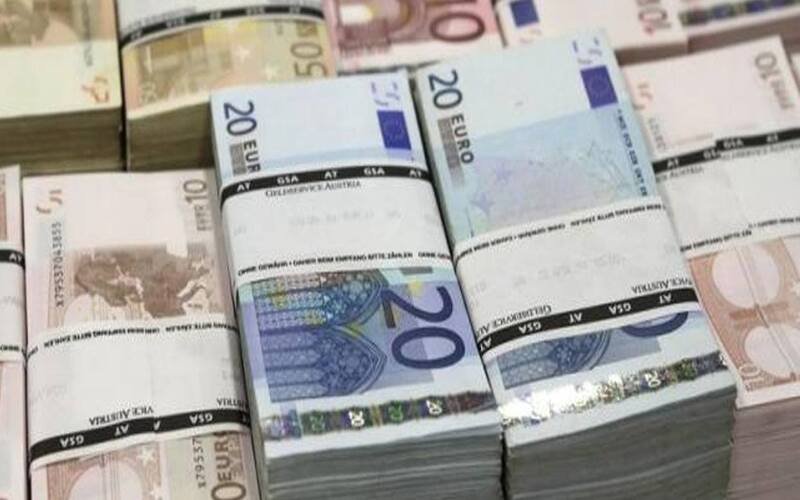
What is wholesale money?
The vast amounts of money financial organizations lend in the money markets are called wholesale money. The market for tradable securities, including federal funds, bankers’ acceptances, Treasury bills, commercial paper, foreign or brokered deposits, certificates of deposit, bills of exchange, repo agreements, and short-term mortgage and asset-backed securities, is included in wholesale banking.
Knowing About Wholesale Money
The availability of wholesale money is essential to the smooth operation of the financial systems in the United States and worldwide. It provides working capital and other forms of short-term financing to big businesses and financial institutions.
While wholesale finance may be quickly arranged, relying on it can be risky, as banks discovered when the wholesale funding market crashed during the global financial crisis. When liquidity mattered most, banks were vulnerable to liquidity risk due to an overabundance of repurchase agreements and short-term wholesale financing rather than retail deposits.
This was illustrated after Lehman Brothers’ demise during the 2008 financial crisis. Following the bank run, investors withdrew their wholesale money. It has been stated that Wachovia lost around 1% of its assets, or about $5 billion. Instead of declaring bankruptcy, the FDIC instructed the bank to engage in takeover negotiations with Citigroup and Wells Fargo. It was sold to Wells Fargo for around $15 billion throughout the weekend.
When Northern Rock, a British bank that mainly depended on wholesale markets for financing, was forced to approach the Bank of England for emergency liquidity in 2007 because it could not continue funding its lending operations, it marked a turning point in the subprime crisis.
Wholesale Money Market Indications
Because of this, wholesale money markets are a better predictor of financial system stress than official interest rates from central banks, and they also represent the actual cost of borrowing. Using short-term benchmark rates like the Federal Funds Rate, the OIS discounted overnight rate has emerged as a crucial indicator of credit risk in the banking industry.
Globally systemically important banks (G-SIBs) follow the new Basel III capital and liquidity rules, including the liquidity coverage ratio and the net stable funding ratio. However, the demand for high-quality liquid assets (HQLA) in the global financial markets shows that the wholesale money markets are still not fixed.
Although the United States implemented new money market rules in 2016, the Federal Reserve must continue using its Reverse Repurchase Program (RRP) program to stabilize the lending markets for some time. When interest rates rise, fewer retail deposits are available to banks, increasing their dependence on wholesale finance. Consequently, systemic risk rises as a result.
Conclusion
- Large quantities of money loaned by financial entities in money markets are called wholesale money.
- The subprime crisis shows that it is simple to plan but risky to depend on.
- One reliable predictor of financial system stress is the wholesale money market.

