

Several European nations have publicly backed Denmark after former US President Donald Trump renewed claims that the United States should take control of Greenland, refusing to rule out the use of force.
In a joint statement, the leaders of the UK, France, Germany, Italy, Poland, Spain and Denmark stressed that Greenland’s future can only be decided by Greenlanders and Denmark. They reaffirmed that the territory belongs to its people and that any change to its status must respect international law.
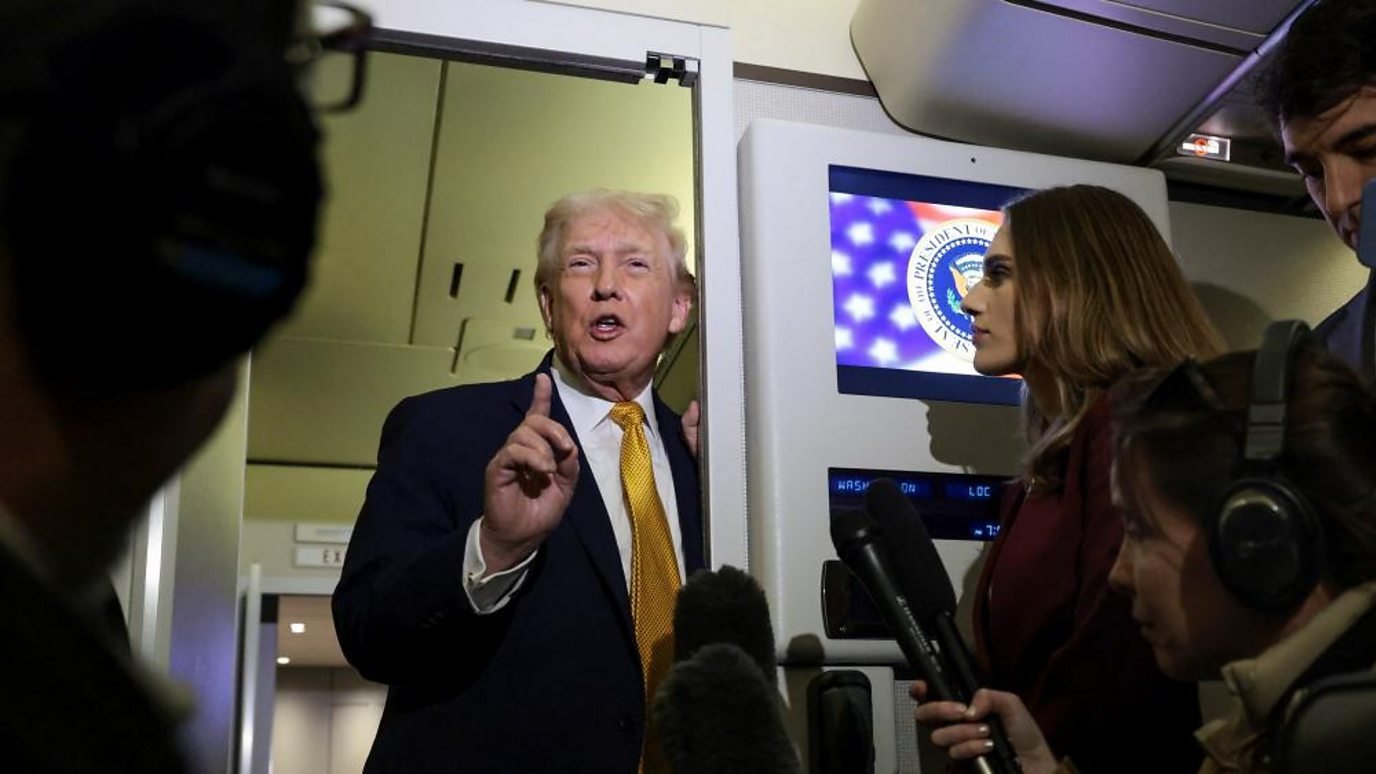
Trump said on Sunday that the US “needs” Greenland for national security reasons. The island is a semi-autonomous territory within the Kingdom of Denmark and a fellow Nato member. His comments reignited controversy after he declined to dismiss the possibility of military action.
Danish Prime Minister Mette Frederiksen warned that any attack by the US on Denmark or Greenland would effectively dismantle Nato, the transatlantic alliance built on collective defence.
Fears Intensified After Venezuela Operation
Concerns over Trump’s remarks have been amplified by the recent US military intervention in Venezuela, during which American special forces detained President Nicolás Maduro and transferred him to New York to face criminal charges.
Following that operation, Trump stated that the US would temporarily “run” Venezuela and declared a return to a doctrine of American dominance in its regional sphere of influence. He also suggested that other countries could become future targets of US action.
Speculation escalated further when Katie Miller, the wife of Trump adviser Stephen Miller, posted an image of Greenland coloured like the US flag with the word “SOON” on social media.
Stephen Miller later said it was the “official position” of the US government that Greenland should become part of the United States. Speaking to CNN, he argued that US control of Greenland was necessary to secure the Arctic and protect Nato interests. When pressed on whether force could be used, he responded that no country would challenge the US over Greenland’s future.
Europe Emphasises International Law
In response, the seven European nations said Arctic security must be addressed collectively through Nato, not unilaterally. Their statement emphasised respect for sovereignty, territorial integrity and the inviolability of borders, as outlined in the UN Charter.
Greenland’s Prime Minister, Jens-Frederik Nielsen, welcomed the show of support and called for calm and respectful dialogue. He stressed that Greenland’s status is grounded in international law and cannot be changed through coercion.
Trump has long argued that Greenland’s strategic location and its deposits of critical minerals make it vital to US security and economic interests. However, Denmark recently criticised Washington’s decision to appoint a special envoy to Greenland, calling it provocative.
Strong Opposition Within Greenland
Greenland has enjoyed extensive self-rule since 1979, although Denmark retains control over defence and foreign policy. While many Greenlanders support eventual independence from Denmark, opinion polls consistently show strong resistance to becoming part of the United States.
Morgan Angaju, a 27-year-old Inuit resident of Ilulissat, told the BBC that Trump’s comments were deeply unsettling. He said it was frightening to hear world leaders speak about Greenland as something to be claimed.
“We already belong to the Greenlandic people,” he said, explaining that Kalaallit Nunaat means “the land of the Greenlanders.”
Angaju added that the situation left many residents anxious about what could come next, expressing fears that Greenland’s leaders could face the same fate as Venezuela’s former president — or worse, a direct military intervention.
As diplomatic tensions grow, European leaders appear united in rejecting any attempt to redraw borders by force, warning that such actions would undermine the foundations of Nato and international stability.

