

Eco-Friendly Living: Exploring the Idea of More Straw Homes in Britain
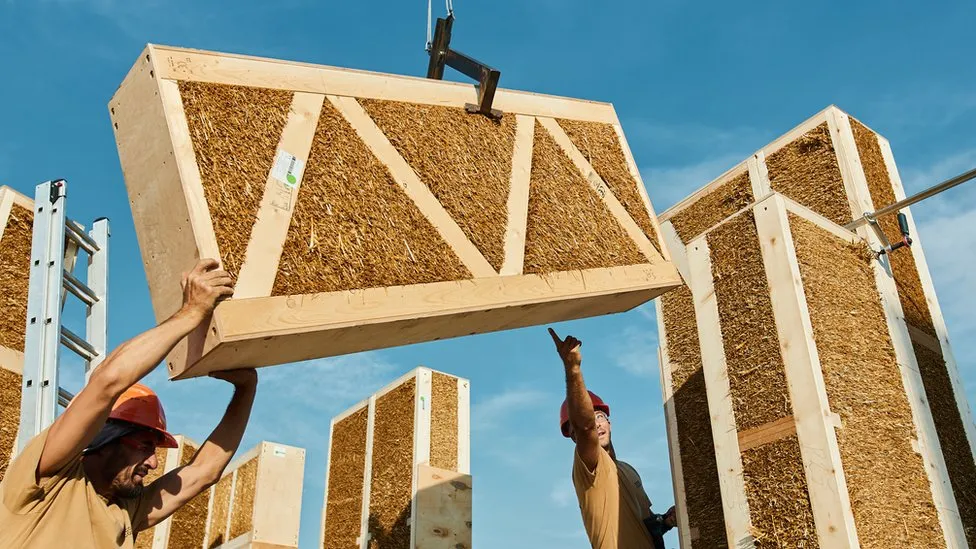
A project in Todmorden, West Yorkshire, aims to insulate a college building using straw panels. The Todmorden Learning Centre and Community Hub plans to clad the 1950s college with over 1,600 square meters of straw-stuffed panels, showcasing the potential of straw as a natural building material. EcoCocon, a Slovakian company, is providing the panels, which consist of timber-framed structures filled with chopped straw. The panels, approximately 3-400mm thick, are designed to provide insulation and can be applied to uneven surfaces without additional plaster layers.
EcoCocon is targeting larger-scale projects as the demand for sustainable insulation solutions rises. The company is set to open a highly automated factory in Slovakia by the end of the year, employing robots and digitized processes to produce straw-stuffed panels. The panels will be sourced locally, stuffed with straw, and then shipped to customers, including those in the UK.
While the panels may not be suitable for retrofitting smaller properties due to their thickness, they are considered viable for new builds. EcoCocon’s expansion strategy relies on the efficiency of its automated factory, allowing for scalability. The UK produces approximately nine million tonnes of straw annually, making it an abundant and sustainable agricultural byproduct.
Straw panels offer environmental benefits, sequestering around 1.5 kilograms of CO2 for every kilogram used. The carbon savings are further enhanced by the efficient transportation of panels from EcoCocon’s facilities in Central Europe. While there may be concerns about the acceptance of homes with straw-insulated walls, proponents argue that issues like rodent nesting or dampness are not common or insurmountable. The project aims to demonstrate the potential of straw as a construction material and encourage wider adoption of eco-friendly building practices.

