

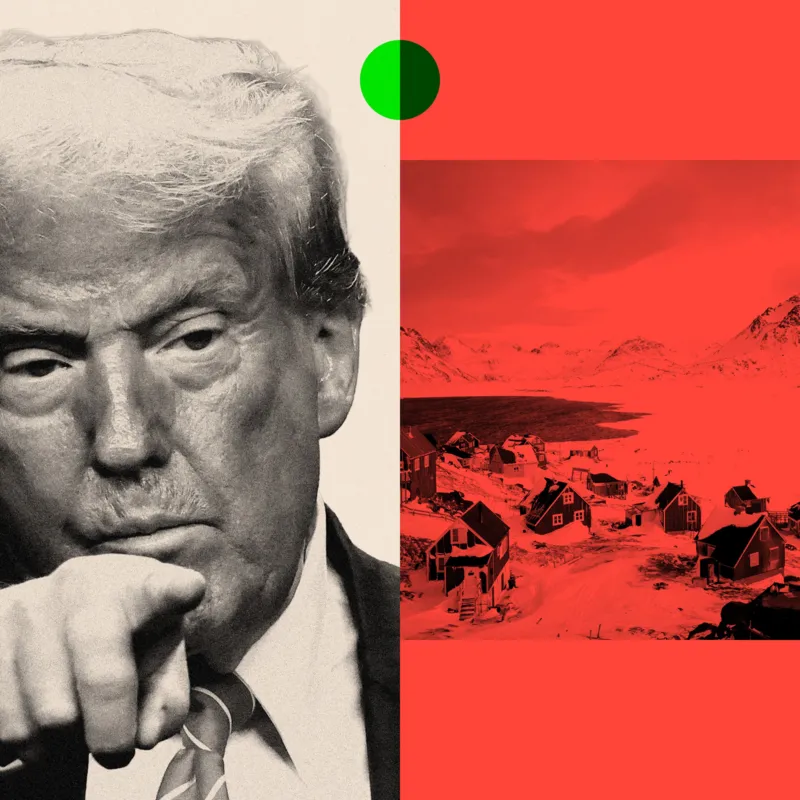
European leaders meeting in Paris on Tuesday were focused on securing a lasting peace plan for Ukraine, but an unspoken tension hung over the room. As diplomats worked to keep US support firmly behind Kyiv, recent statements and actions by President Donald Trump cast a long shadow over the discussions.
Ukraine’s President Volodymyr Zelensky has said a peace proposal to end the war with Russia is nearly complete. Yet no one present wanted to risk alienating Washington especially as the Trump administration has just carried out a controversial military operation in Venezuela and followed it with renewed claims that the US “needs” Greenland for national security reasons.
Greenland, the world’s largest island, is an autonomous territory within the Kingdom of Denmark and a strategic Arctic location. Trump’s insistence that the US must control it and his refusal to rule out force has triggered alarm across Europe.
Denmark Caught in a Diplomatic Bind
At the Paris meeting, Denmark’s Prime Minister Mette Frederiksen found herself in a particularly difficult position. She sat across from two of Trump’s most influential representatives — special envoy Steve Witkoff and Trump’s son-in-law Jared Kushner — while facing pressure from fellow European leaders to avoid openly challenging Washington.
Many feared that confronting the US over Greenland could weaken American backing for Ukraine.
European leaders would have preferred to keep Arctic sovereignty and the Ukraine war as separate issues. But as rhetoric from Washington intensified, several major European nations released a joint statement stressing that Greenland is part of Nato and that Arctic security must be handled collectively within the alliance.
The statement also made clear that decisions about Greenland’s future rest solely with Denmark and the people of Greenland.
Greenland’s Prime Minister, Jens-Frederik Nielsen, welcomed the declaration. However, critics argued it came too late and lacked the weight of a united European response. Only a handful of countries signed it, rather than all EU member states.
Camille Grande of the European Council on Foreign Relations said a unified declaration from all 27 EU nations alongside the UK would have sent a far stronger signal to Washington.
A Stark Contradiction
The situation exposes a striking contradiction. European leaders are urging the Trump administration to help defend Ukraine’s sovereignty against Russia’s territorial aggression while the US itself has just used military force in Venezuela and continues to threaten the territorial integrity of a Nato ally.
Denmark and the US are both members of Nato, an alliance built on mutual defence. But Trump’s repeated suggestions that Greenland should fall under US control raise questions about whether that bond still holds.
If Washington attempted to seize Greenland, it would represent not only a historic rupture within Nato, but a profound crisis for the European Union.
Europe’s Uneasy Silence
This is not the first time Trump has expressed interest in Greenland. He previously suggested buying the island and has repeatedly refused to dismiss the possibility of taking it by force.
Trump argues that Greenland is vital to US security, claiming it is increasingly surrounded by Russian and Chinese activity. Denmark rejects this narrative, pointing to its recent pledge to invest $4bn in Arctic defence through new patrol vessels, drones and aircraft.
The US already operates a military base in Greenland under a long-standing agreement dating back to the Cold War. Denmark has signalled openness to expanding US presence on the island, but not to unilateral action.
Following the US operation in Venezuela, European officials say they are taking Trump’s Greenland threats far more seriously.
One senior EU official, speaking privately, said the episode once again exposed Europe’s vulnerability when dealing with Trump.
While Denmark’s Nordic neighbours quickly voiced support, Europe’s major powers the UK, France and Germany were initially silent. Statements came later, carefully worded and avoiding direct criticism of Washington.
Europe’s Strategic Dilemma
This reluctance to confront the US lies at the heart of Europe’s problem. Many leaders prefer managing Trump diplomatically rather than risking retaliation or a breakdown in relations.
In an era increasingly shaped by great-power rivalry led by the US, China, Russia and others Europe often appears hesitant and sidelined.
The EU has frequently pledged to become a stronger global actor, yet its response to Trump has highlighted its limitations. Last year, it failed to use frozen Russian state assets to support Ukraine, missing what critics saw as a chance to demonstrate resolve.
Even in trade, where the EU traditionally projects strength, it backed down after Trump imposed tariffs on European goods, fearing that retaliation could jeopardise US security guarantees.
Nato Under Strain
The Greenland dispute has also exposed divisions within the EU over how far to support Denmark. Juliane Smith, the former US ambassador to Nato, warned that the issue risks fracturing both the EU and the alliance itself.
Denmark’s prime minister has openly cautioned that unilateral US action over Greenland could break Nato altogether.
Although Nato treaties do not clearly address conflict between member states, history shows the alliance avoids intervening when allies clash as seen during tensions between Turkey and Greece.
Denmark is a small but committed Nato member. The US is by far the alliance’s most powerful. This imbalance fuels Europe’s anxiety.
Despite recent joint statements affirming Denmark’s sovereignty, questions remain over how far Europe would actually go to defend it if Washington acted.
As one senior White House official bluntly put it this week: “Nobody’s going to fight the United States militarily over the future of Greenland.”
That reality is forcing uncomfortable conversations in European capitals. Analysts say the crisis once again highlights the need for Europe to reduce its reliance on US security and speak with a unified voice.
For now, many European leaders appear reluctant to imagine the unthinkable. But the Greenland question has made one thing clear: the alliance structures Europe has long relied upon are under unprecedented strain and may soon be tested in ways few were prepared for.

