

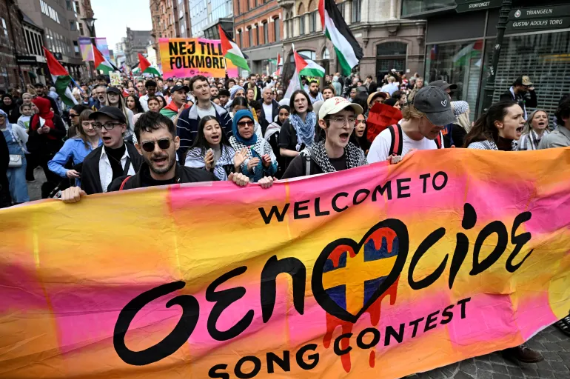
Iceland has announced it will not take part in the 2026 Eurovision Song Contest. This makes them the fifth country to withdraw over Israel’s participation, adding to the growing tension around the event.
RUV, Iceland’s public TV station, announced on Wednesday that Iceland is withdrawing. This decision followed the European Broadcasting Union’s statement allowing Israel to participate and refusing to hold a vote on their exclusion. Eurovision 2026 is scheduled for Vienna next May.
Stefan Eiriksson, head of RUV, explained that many people in Iceland were unhappy with the situation, making participation impossible. He said that after the EBU’s decision, it was clear Iceland would not feel any joy or peace by joining the contest under the current circumstances.
Earlier, Iceland, Ireland, Spain, Slovenia, and the Netherlands had warned they would withdraw if Israel participated. These broadcasters cited Israel’s war in Gaza, the difficult situation there, and allegations that Israel influenced the last contest to benefit their singer.
A vote on the issue was scheduled for November, but last week the EBU announced there would be none. Instead, they are working on new rules to build trust in the competition and prevent it from becoming political. This includes efforts to stop government interference in the voting process.
Several countries responded quickly to the decision. RTE, Ireland’s public broadcaster, expressed concern about civilian casualties and the situation in Gaza. Slovenia’s national broadcaster said it was withdrawing to show support for Palestinian children killed in the conflict. Spain and the Netherlands also announced they would not participate.
With Iceland’s withdrawal, Eurovision 2026 faces uncertainty. Political disputes are affecting what is meant to be a non-political event. As more countries boycott, questions arise about whether the contest can continue and if organizers can keep it separate from global issues.

