

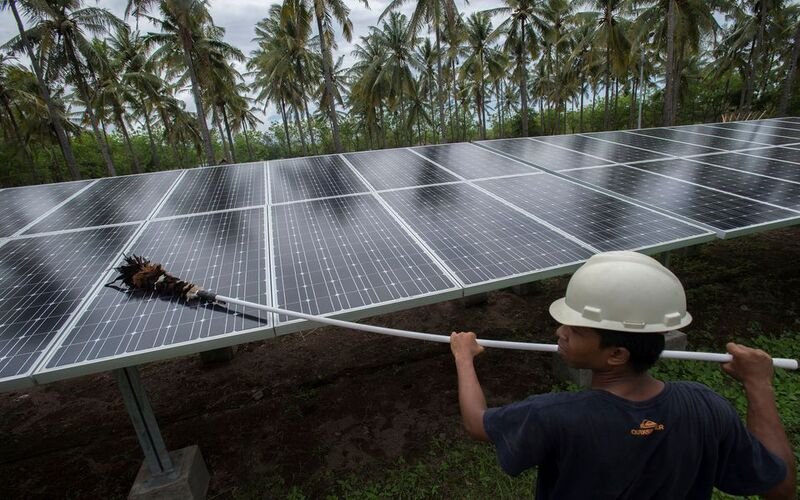
Indonesia’s state utility plans to build 32 GW of renewable energy capacity. Indonesia’s state utility company plans an ambitious initiative to develop 32 gigawatts (GW) of renewable energy capacity. This article delves into the details of this renewable energy expansion plan, its potential impact on Indonesia’s energy landscape, and the broader global renewable energy transition.
Indonesia’s state utility is taking significant steps to transition its energy sector towards sustainability by setting a target of building 32 GW of renewable energy capacity. The plan encompasses many renewable energy sources, including solar, wind, hydropower, and geothermal.
Investing in renewable energy infrastructure aligns with Indonesia’s goal of reducing its dependence on fossil fuels and enhancing energy security.
Shifting to renewable energy sources will result in substantial environmental benefits, including reduced carbon emissions and improved air quality. The renewable energy expansion plan is poised to create economic opportunities by attracting investments, creating jobs, and boosting the local clean energy industry.
Increased renewable energy capacity can enhance access to electricity in remote and underserved areas of Indonesia. Indonesia’s initiative reflects broader global trends toward adopting renewable energy and transitioning away from fossil fuels.
The plan will likely attract international investors and partners interested in contributing to Indonesia’s renewable energy development. The successful implementation of this plan will require significant infrastructure development and regulatory support.
Indonesia’s commitment to renewable energy underscores its long-term vision for a sustainable and environmentally friendly energy sector.
In conclusion, Indonesia’s state utility’s plan to develop 32 GW of renewable energy capacity represents a significant step towards a more sustainable and environmentally friendly energy landscape. This ambitious initiative holds the potential to drive economic growth, reduce carbon emissions, and enhance energy access for Indonesia’s population. As the world continues to embrace renewable energy, Indonesia’s efforts contribute to global efforts to combat climate change and accelerate the transition to clean and renewable energy sources.

