

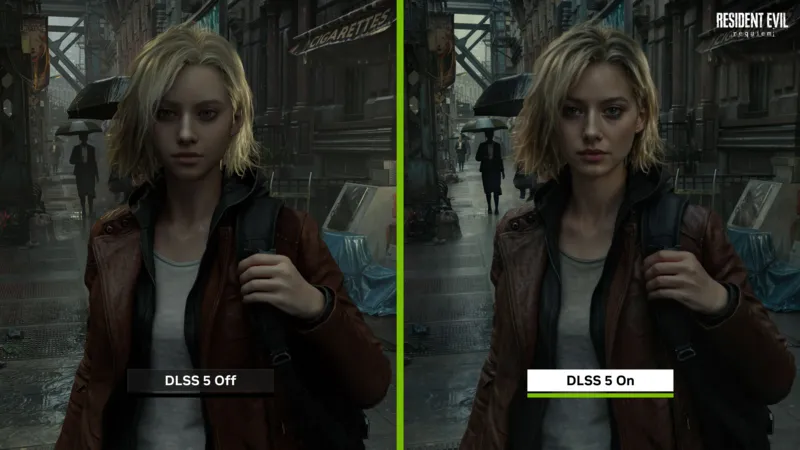
Nvidia has walked into a storm of criticism after unveiling a new AI-powered graphics tool it’s calling its biggest leap forward in computer graphics in years — and a vocal chunk of the gaming world isn’t buying it.
The feature, called DLSS 5, is set to roll out this autumn. Nvidia says it will bring Hollywood-level visual effects to video games, generating photorealistic hair, fabric, skin and environmental lighting using AI. At its annual conference in Silicon Valley, chief executive Jensen Huang declared that the company was “reinventing computer graphics once again,” pitching DLSS 5 as the most significant breakthrough since Nvidia introduced real-time ray tracing back in 2018.
Demonstration images showed the technology dramatically transforming the look of characters and environments in titles like Resident Evil Requiem and Hogwarts Legacy. Major publishers — Bethesda, CAPCOM and Warner Bros. Games among them — are already signed up to support it.
But the reaction online told a different story. Video game critic Alex Donaldson acknowledged the improvements to environments, but said the character rendering felt “uncanny and weird,” warning that artistic expression risked being “squeezed out.” Concept artist Jeff Talbot, who works at Gunfire Games, was more direct: “This is NOT the direction games should be going in. Each DLSS 5 shot looked worse and had less character than the original.”
The backlash sits within a broader and increasingly tense conversation about AI in gaming. Anger has been building for some time over studios quietly folding AI-generated content into their games. Publisher Running With Scissors pulled an upcoming title altogether after criticism over its AI-generated graphics. And indie RPG Clair Obscur: Expedition 33 — which had won Game of the Year at the Indie Game Awards — was stripped of the award after it emerged the developer had experimented with AI-generated images during production, even though they weren’t used in the final game.
Not everyone is hostile, though. Charlie Guillemot, joint chief executive of Vantage Studios, the team behind Assassin’s Creed Shadows, welcomed the technology warmly, saying DLSS 5 was allowing his team to “build the kind of worlds we’ve always wanted” by changing how lighting, materials and characters are rendered.
Nvidia, which built its name in gaming long before it became synonymous with AI data centre chips, finds itself at the centre of an argument the industry hasn’t resolved — and with DLSS 5 still months away from release, that argument shows no sign of quieting down.

