

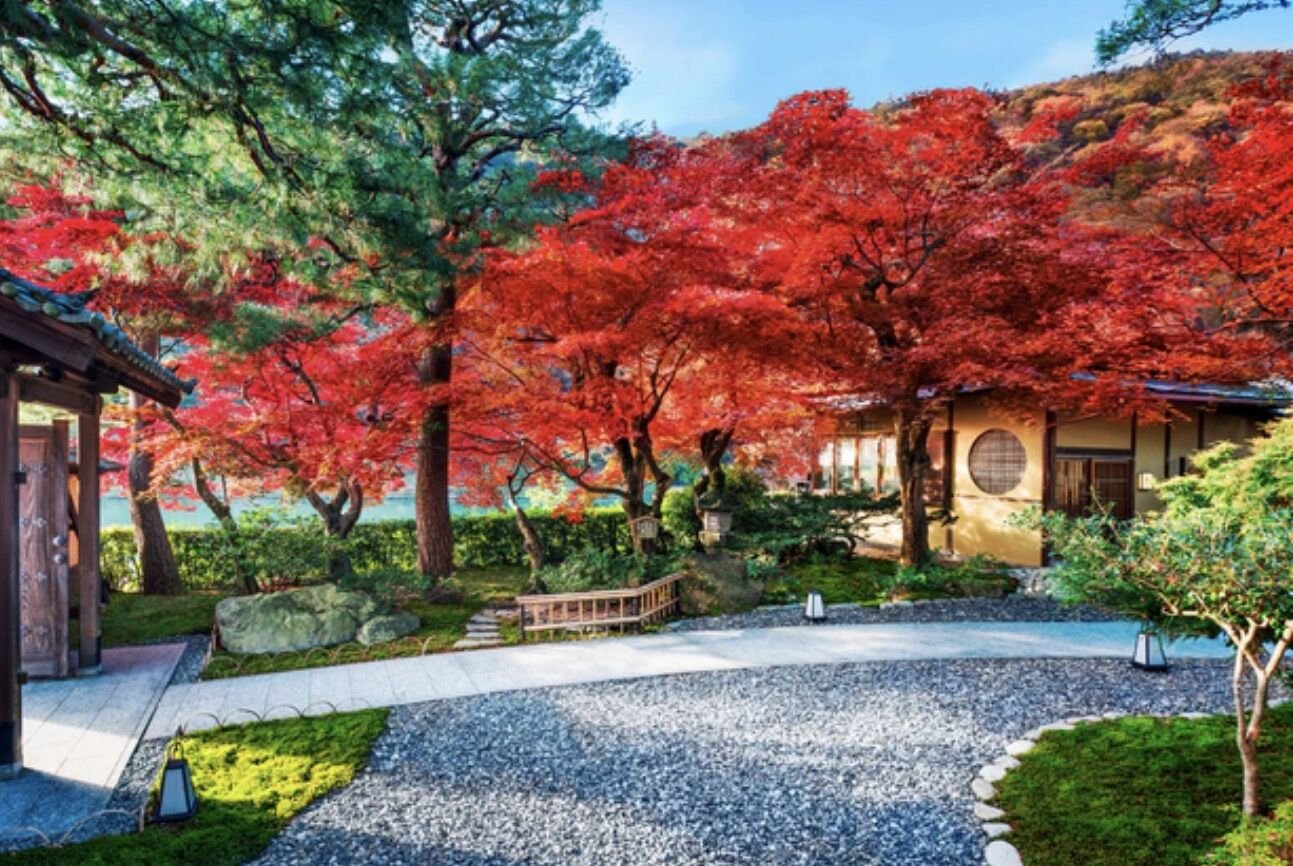
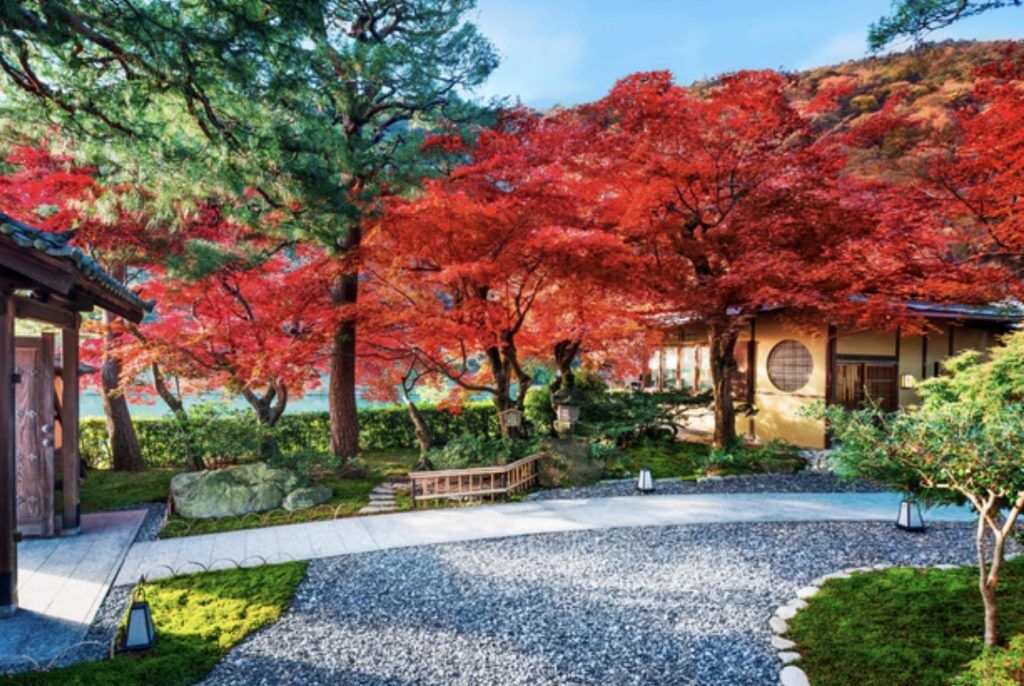
Suiran, a Luxury Collection Hotel, Kyoto is a place that reveals itself through the seasons. From the earliest blush of cherry blossoms accompanied by the song of evening cicadas, to the moment autumn maples soften into gold, this hotel offers a deeply sensory experience rooted in time, nature and place. Positioned along the jade-toned waters of the Hozu River in Arashiyama, and surrounded by moss-laden gardens layered with more than a thousand years of imperial history, Suiran feels quietly profound.
Framed by the forested hills of western Kyoto, the property is an intimate 39-room onsen hotel featuring a fine dining restaurant, a historic riverside café, and two private hot spring baths. Every element is designed to draw guests into Japan’s concept of micro-seasons — a uniquely poetic way of understanding time through subtle shifts in light, temperature, sound and colour.
This corner of Kyoto has long been revered. First established in the 13th century as an imperial palace, the land later became part of the Tenryu-ji temple complex before being acquired by Baron Shozo Kawasaki, the industrialist whose family enterprise would evolve into Kawasaki Heavy Industries.
Suiran opened here in 2015, carefully preserving its historical foundations. Most notably, Kawasaki’s 1899 summer villa remains intact and now houses the hotel’s signature restaurant, Kyo-Suiran — a graceful continuity between past and present.
Arrival
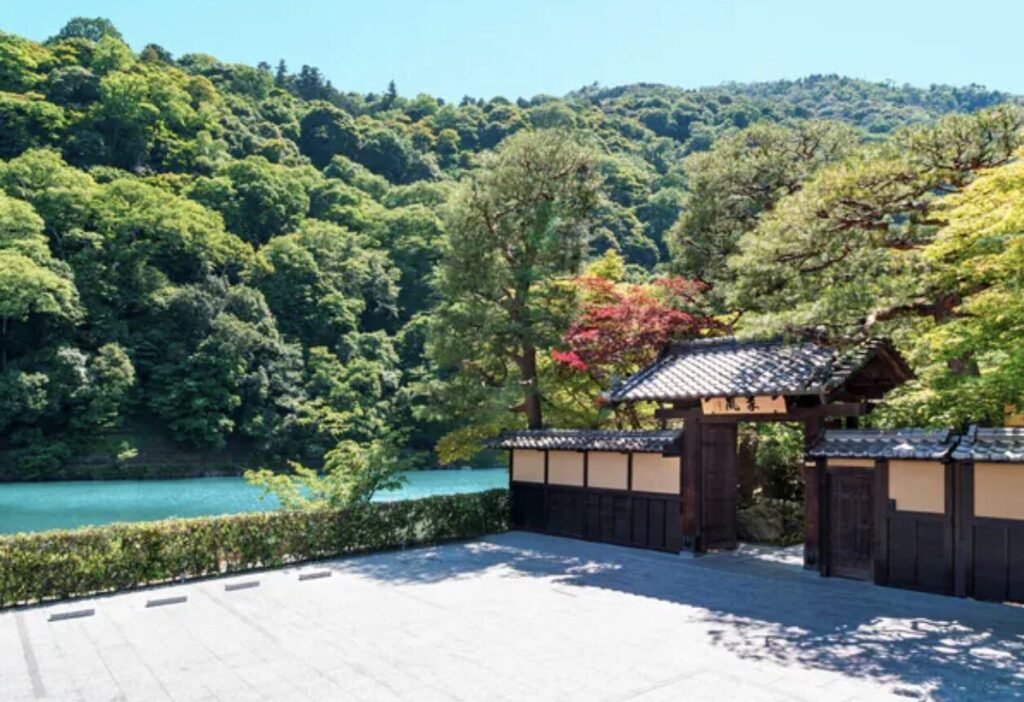
Arashiyama is no secret. Its bamboo groves, the iconic Togetsu-kyo Bridge, riverboats and temple gardens draw visitors from across the world. Yet stepping through Suiran’s private gate feels like crossing an invisible threshold. The crowds dissolve, replaced by stillness.
We arrived in the late afternoon, as sunlight filtered through maple leaves, casting dappled patterns of amber and green across the ground. Through the branches, the river shimmered gently, where small blue wooden boats drifted past, carrying laughter that softened as it travelled across the water.
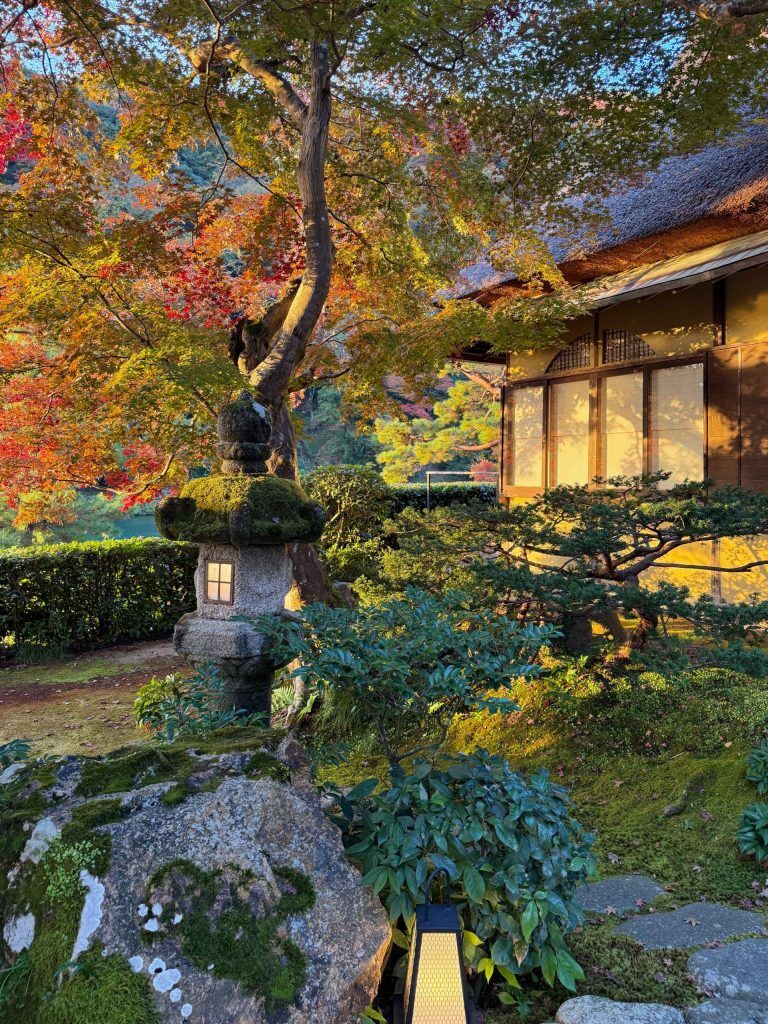
A stately cedarwood gate opens onto a winding garden path shaded by twisted pines and maples. The ground is thick with moss, punctuated by stone lantern sculptures, and the only sounds are birdsong and the distant movement of the river. It is, without question, one of the most enchanting hotel arrivals I’ve experienced.
Dressed in elegant, contemporary Japanese uniforms, the team collects your luggage the moment you step from the car, allowing you to wander freely toward the reception pavilion. Check-in takes place in the lounge — no formal desk, no queue. Instead, there is tea, seasonal sweets, a warm smile and time to browse beautifully curated books while details are quietly taken care of.
The Room
Our stay was in a Tsukinone Superior Twin on an upper floor — a 39-square-metre space with a terrace running the full length of the room. Floor-to-ceiling sliding glass doors opened onto a breathtaking view of the Arashiyama hillside, ablaze with autumn colour: scarlet and gold maples rising against stately cedars and pines.
The interior blended Western comfort with Japanese restraint. The palette was calm and deliberate, with a focus on quality materials and uncluttered design. On the table sat a black lacquer tray holding a weighty iron teapot, dark ceramic tea bowls, a tin of seasonal sweets and a plate of glossy mandarins beside the welcome card. The minibar offered the expected coffee machine, alongside an impressive selection of premium Japanese teas.
Beds are available as king or twin queens, and turndown service is quietly thoughtful: a tray with tea placed on the bed, accompanied by a small wooden box filled with seasonal dried fruits.
The bathroom continued the sense of refinement. Glossy black lacquer boxes concealed amenities, while a handmade Kyoto soap — wrapped in rice paper and tied with a silver cord — blended yuzu citrus, mandarin orange, bitter orange, gardenia, myrtle and cedarwood bark. It was presented on a scarlet lacquer dish, with hand-crafted Japanese ceramic cups completing the scene. Le Chemin by Byredo was used for bath and shower amenities.
The bathroom could remain open-plan, allowing the vanity to share the hillside view, or be closed off with a sliding partition for privacy.
At dawn the next morning, I slid open the balcony doors just before seven. Birdsong filled the air as the rising sun ignited the forested slopes. It was one of those rare travel moments that lingers long after you leave. I could imagine this setting in every season — luminous spring greens, warm summer evenings, the fire of autumn, and the hushed beauty of snow-covered hills.
The Onsen Experience
As an onsen hotel, bathing is central to the Suiran experience. Seventeen ground-floor rooms feature private open-air hot spring baths, while all guests can reserve one of two private onsen set within secluded gardens. One has a contemporary bamboo-accented design; the other, which we chose, is more traditional, framed by river stones and natural boulders.
After changing into the hotel’s yukata — a soft blue-and-white cotton robe patterned with birds, bamboo, crescent moons and maple leaves — I layered a matching jacket for warmth and slipped into spa sandals. A member of the spa team arrived to escort us to the onsen, turning the short walk into a quiet ritual.
The private bathing cabin included showers and all necessary amenities. Outside, the landscaped bamboo garden surrounded a generous open-air bath. Using a bamboo bucket, you rinse, then sink into mineral-rich water drawn from the Arashiyama hot springs. The heat is intense at first, but within moments your body yields, tension dissolving completely. Floating there, watching bamboo leaves drift down, the world narrows to breath, warmth and stillness.
Gardens and Quiet Spaces
True to its contemplative ethos, the property includes a small Shinto shrine overlooking the river. It is not used for formal worship, the team explained, but serves as a place for reflection and good fortune. From the gardens, a riverside trail leads out toward nearby sights and into the surrounding forest, extending the sense of connection to nature beyond the hotel grounds.
Gastronomy at Kyo-Suiran
Kyo-Suiran occupies Baron Kawasaki’s former summer residence, Enmeikaku — the “Villa of Longevity.” According to legend, Masayoshi Matsukata, Japan’s fourth and sixth Prime Minister, once stood here, gazed out at the river and hills, and remarked that the beauty of the view made life feel longer. His calligraphy of those words was gifted to the baron and still hangs in the restaurant today.
The Meiji-era building has been meticulously preserved, including its raised structure designed to protect against the river’s seasonal fluctuations. Inside, exposed timber beams and floor-to-ceiling windows overlook a manicured Japanese garden, setting the stage for washoku cuisine — traditional multi-course Japanese dining — prepared with refined French techniques.
We opted for the seasonal autumn tasting menu. The table setting was elegant in its restraint: crisp white linen, polished silverware, chopsticks resting on a small glass stand, and a napkin tied with a delicate gold cord.
The amuse consisted of three small bites featuring salmon, local chicken and dengaku miso with coffee beans, bottarga, watermelon radish and cheese, presented on vivid juniper leaves. This was followed by squid with caviar, cauliflower, yuba and endive. The owan course — matsutake mushroom with pike conger and ginkgo nuts — arrived in a ceramic teapot, allowing the fish and mushroom to be eaten with chopsticks before pouring the rich broth into a cup.
Next came warm lobster with bell pepper, then amadai with Kujo green onion, taro, aosa seaweed and shellfish. The grilled course featured wagyu beef with black garlic, set atop carrot and burdock, finished with sansho pepper and grapes — a dish that captured autumn on the plate. The meal concluded with Ryu no Hitomi premium rice, miso soup, and a dessert of sweet potato paired with vanilla ice cream.
One particularly memorable ritual was selecting a sake cup. The sommelier presented a tray of varied designs — delicate glass, hammered silver, gold-lined vessels — each unique. The sake was then decanted tableside into a small contemporary silver jug, a quiet moment of ceremony that perfectly reflected Japan’s attention to personal detail.
Café Hassui
The second historic building on the property, Café Hassui, dates back to 1910. Sitting beside the river beneath a thatched roof and leafy canopy, it was once a gathering place for poets — an atmosphere that lingers. Above the bar hangs a framed calligraphy poem depicting Japan’s 72 micro-seasons as experienced in Arashiyama.
In the afternoon, the café serves Japanese-style afternoon tea and its signature hisui-mochi. As evening approaches, it transforms into the setting for the hotel’s complimentary aperitif hour, offering glasses of Perrier-Jouët Belle Epoque champagne accompanied by a bento box of sweet and savoury bites.
Breakfast
Breakfast is served in Kyo-Suiran, with a choice of Western or Japanese. We chose Japanese — and it was exceptional. Expect beautifully arranged trays and bento boxes featuring river fish, pickled plum, miso, radishes, fresh fruit and all the elements of a traditional Kyoto morning meal, accompanied by an array of fresh juices served in shot glasses. It is a deliberate, generous way to begin the day.
Location
Arashiyama has been celebrated for over a millennium for its natural beauty. The hotel sits on Kyoto’s western edge along the Hozu River, directly beside the UNESCO-listed Tenryu-ji Temple. The bamboo grove is a ten-minute walk, while a quieter alternative lies at Adashino Nenbutsu-ji — a hauntingly beautiful temple with its own bamboo forest and thousands of moss-covered stone statues.
The Arashiyama Yusai-Tei Gallery, which requires advance booking, is also highly recommended. Kyoto Station is around 30 minutes away by car, and the hotel offers a complimentary one-way taxi transfer on arrival, as well as a complimentary rickshaw ride to or from nearby stations.
Final Thought
Suiran, a Luxury Collection Hotel, Kyoto is unmistakably a hotel for all seasons. From the gardens and riverside shrine to the private onsen, century-old architecture and deeply rooted sense of place, every element feels intentional, seasonal and serene. It is a property that doesn’t rush the guest — it invites you to slow down and truly arrive.

