

Welcome to our comprehensive guide on the accounting equation. In this article, we delve into the intricate details of the accounting equation and its significance in finance and business. As a leading authority in financial education, we aim to provide you with an in-depth understanding beyond the surface. Let’s embark on this journey to unravel the essence of the accounting equation.
Understanding the Accounting Equation
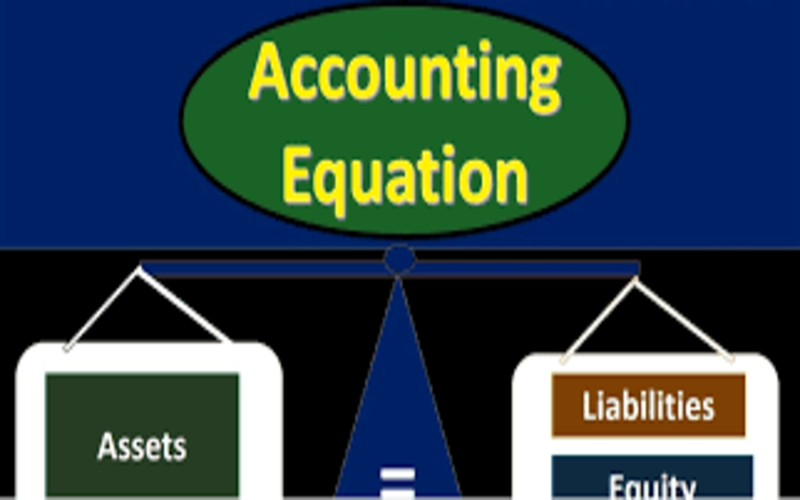
The accounting equation, often called the fundamental accounting equation, lays the foundation for understanding a company’s financial position. It is expressed as:
Assets = Liabilities + Equity
This equation highlights the relationship between a company’s resources (assets), its obligations (liabilities), and the residual interest of its owners (equity). By maintaining this equilibrium, businesses can ensure a clear representation of their financial health.
Components of the Accounting Equation
Assets
Assets encompass all the resources owned by a company that holds economic value. These resources can range from tangible assets like buildings, machinery, and inventory to intangible assets like patents and copyrights. Properly categorizing and valuing assets is crucial for accurate financial reporting.
Liabilities
Liabilities represent the financial obligations and debts a company owes to external parties. These can include loans, accounts payable, and accrued expenses. Accurate classification of liabilities ensures transparency in a company’s financial obligations and helps stakeholders assess its risk profile.
Equity
Equity signifies the residual interest in a company’s assets after deducting liabilities. It is the ownership stake that the shareholders hold in the business. Equity includes contributed capital (common and preferred stock) and retained earnings. Monitoring equity allows stakeholders to gauge the company’s financial stability and growth potential.
Importance of the Accounting Equation
Financial Analysis
The accounting equation serves as the cornerstone for financial analysis. Analysts can evaluate a company’s liquidity, solvency, and overall financial performance by comparing assets, liabilities, and equity. This analysis guides informed decision-making, aiding management in strategic planning and resource allocation.
Double-Entry Bookkeeping
The accounting equation is closely intertwined with the principles of double-entry bookkeeping. Every financial transaction affects at least two accounts, ensuring the equation remains balanced. This systematic approach minimizes errors and provides a reliable framework for maintaining accurate financial records.
Business Planning and Investment
Understanding the accounting equation is essential for entrepreneurs and investors when evaluating business opportunities. It provides insights into a company’s financial structure and potential risks. Entrepreneurs can strategize optimizing asset allocation, while investors can make informed decisions based on a company’s financial health.
Summary
- It is generally agreed that the double-entry accounting system may be traced back to the accounting equation.
- On the balance sheet, a company’s assets should equal its liabilities plus its shareholders’ equity, as shown by the accounting equation.
- A company’s assets are its valued possessions. The liabilities are equivalent to their responsibilities.
- A company’s assets may be funded in two ways: via its liabilities or its shareholders’ equity.
- Debt funding is shown as a debt, whereas equity financing is reflected as a shareholder’s equity.
In conclusion, the accounting equation is the financial reporting and analysis bedrock. Its balanced nature ensures accuracy and transparency in a company’s financial records, facilitating effective decision-making and strategic planning. By mastering the nuances of the accounting equation, businesses and stakeholders can confidently navigate the intricate landscape of finance.

