

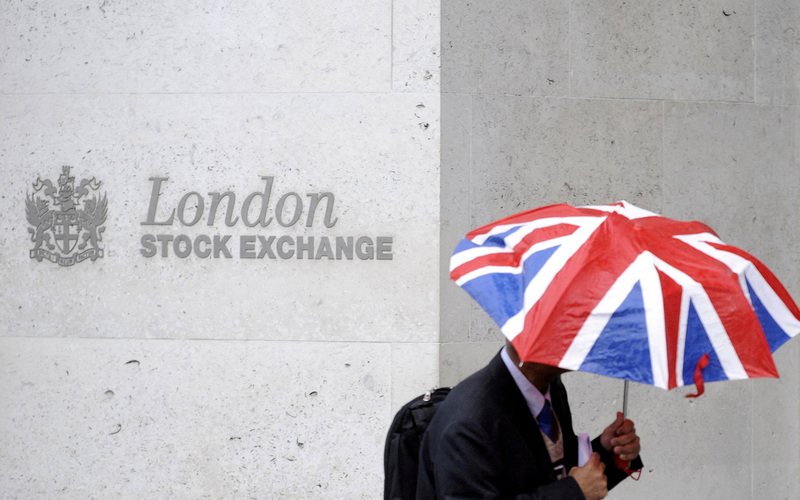
European equities started cautiously on Monday, and Wall Street futures struggled as U.S. debt ceiling negotiations neared crunch time.
President Joe Biden and House Republican Speaker Kevin McCarthy will debate the debt ceiling on Monday, less than two weeks before a June 1 deadline after which Treasury expects the federal government to struggle to pay its debts.
If the debt ceiling isn’t raised, global markets could collapse and interest rates rise.
Europe’s STOXX 600 lost 0.03%, while the MSCI All-World index (.MIWD00000PUS) rose 0.12%.FTSE is up 0.19% in London.
S&P 500 futures fell 0.15%, and Nasdaq futures increased 0.03%.
“We expect the U.S. debt ceiling issues to be brief.” “Certainly there (are) risks of greater financial volatility,” said HSBC chief Asia economist Frederic Neumann in a webinar on Monday.
“If this is more drawn out than expected, then this would likely depress U.S. growth… but it’s not our base case at the moment, because we do think that we’ll find a resolution either just before the deadline or just after the deadline.”
On Sunday, European markets extended some of Asia’s gains after China banned U.S. firm Micron from selling memory chips to critical domestic industries on security concerns.
As mainland enterprises sought memory chips from other sources, Micron’s rivals in China and abroad benefited from the embargo.
However, market concerns about U.S. debt ceiling talks set the mood.
“In the art of brinkmanship, it feels that to get a deal we must see greater market volatility,” said Chris Weston, Pepperstone’s head of research.
Jonathan Pingle, UBS’s U.S. head economist, thinks the Japanese yen and gold will profit most from a U.S. default.
“Only a 1-month long impasse post-X-date is likely to cause a sharp tightening of financing conditions sharp enough that it causes the dollar to rally strongly,” said Pingle.
Even as Federal Reserve Chairman Jerome Powell indicated U.S. interest rates might not need to climb as much due to tighter credit conditions after the financial crisis, Friday’s debt ceiling deadlock shook markets.
Futures predict a 90% chance that the Fed will hold rates unchanged at its June meeting and over 50 basis points of reduction by year’s end.
The dollar fell off a two-month high against a basket of major peers, but safe-haven demand lifted the index to 103.19, up 0.15%.
Regional U.S. bank shares dipped on Friday after Treasury Secretary Janet Yellen reportedly cautioned that further mergers might be needed after a series of bank failures.
Despite a weak economic rebound, China maintained its benchmark lending rates on Monday. Traders are also considering the Group of Seven’s “de-risk, not decouple” strategy to China and supply chains, announced at the summit on Sunday.
“Hype around China-related issues” at the conference prompted Beijing to call the Japanese ambassador.
U.S. personal consumption expenditures inflation statistics will be released on Friday, while the Fed’s May meeting minutes will be released on Wednesday.
Debt limit fears have caused huge distortions in the short end of the yield curve in Treasuries as investors avoid bills due when the Treasury is at risk of running out of funds.
On Monday, the one-month Treasury bill yield rose 15 basis points to 5.6677%.
Two-year yields dropped to 4.2429% from a two-month high, while the 10-year yield fell to 3.6574%.
Crude prices fell. U.S. crude prices sank 1.2% to $70.68 per barrel, while Brent crude futures dropped more than 1% to $74.77 per barrel.
At $1,974.60 per ounce, gold prices were stable.

