

In the escalating race to dominate space-based connectivity, Amazon has made a bold strategic move—committing $11.57bn (£8.5bn) to acquire Globalstar. The deal signals not just expansion, but intent: a clear push to rival the growing dominance of Starlink.
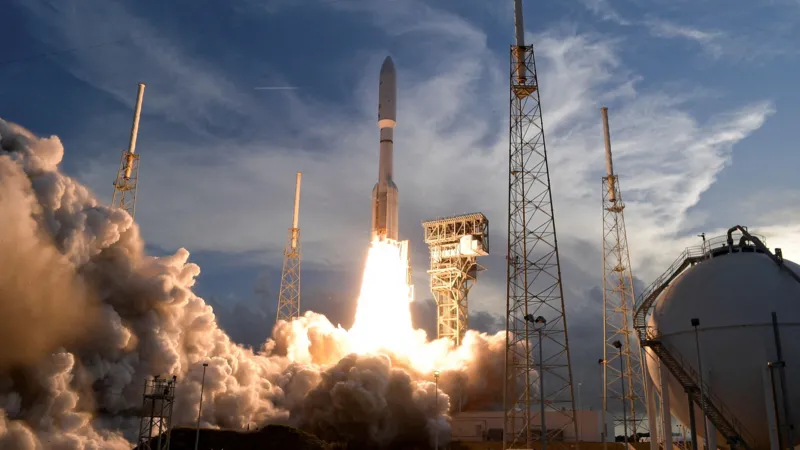
At the heart of this ambition lies Amazon’s long-gestating low-Earth orbit initiative, Project Kuiper (referred to here as its LEO project). By absorbing Globalstar, Amazon is positioning itself to accelerate satellite deployment and bring its vision of global internet and mobile connectivity closer to reality. The company has already outlined plans to roll out a “next-generation” satellite system by 2028—an aggressive timeline in an increasingly crowded and competitive space economy.
Yet Amazon is playing catch-up. While its current fleet hovers around 200 satellites, Starlink—developed by SpaceX—has already surged far ahead, with more than 10,000 active satellites in orbit and over 10 million paying users worldwide. Since its launch in 2019, Starlink has rapidly transformed from an experimental venture into a major revenue engine, reportedly generating between $500 million and $1.2 billion annually from subscriptions alone.
This disparity underscores the scale of Amazon’s challenge. The acquisition of Globalstar is less about immediate parity and more about long-term positioning—securing infrastructure, spectrum, and expertise needed to compete in a market where early movers have already established a commanding lead.
The stakes extend beyond corporate rivalry. Satellite internet is increasingly seen as critical infrastructure, capable of reshaping global connectivity, especially in underserved regions. For Amazon, success in this arena could diversify its empire far beyond e-commerce and cloud computing, embedding it deeply into the future of telecommunications.
Meanwhile, SpaceX itself is preparing for another leap. With plans to go public and a valuation expected to exceed $1 trillion, the company is poised to cement its influence not just in space exploration, but in the global digital economy.
Amazon’s latest move, then, is not just an acquisition—it is a declaration. The battle for the skies is intensifying, and the next phase of the internet may well be decided far above the Earth.
Even with Globalstar’s currently active constellation of about 50 satellites, Amazon Leo will need to significantly ramp up production to meet its goal of thousands of active satellites in orbit by 2028.
Amazon chief executive Andy Jassy said last week in an annual letter to shareholders that Leo already has commitments from Delta Airlines, JetBlue, AT&T, Vodafone, DIRECTV Latin America, Australia’s National Broadband Network, and NASA to use Leo satellites for their offerings and operations once more satellites come online.
Amazon is taking over all of Globalstar’s infrastructure, which includes operations in Louisiana, Georgia, Dublin, Ireland, Rio de Janeiro, Brazil, Toulouse, France, and two locations in California.
Globalstar started in 1991 as a satellite communications company.
It has a notable customer in Apple, through which it has offered since 2022 iPhone and Apple Watch users the ability to use their devices in an emergency “SOS” mode via its satellites.
Apple in 2024 took a 20% stake in Globalstar.
Amazon said on Tuesday that it had also reached an agreement with Apple to continue offering the “SOS” functionality on its mobile devices.
Like Amazon, Globalstar is a publicly listed company with a market valuation that has hovered around $10 billion this year.
Amazon’s takeover price is offering investors $90 per share in cash, or the equivalent value in Amazon stock.
Another recent entrant into the satellite internet competition is Blue Origin, the rocket startup from Amazon founder and former chief executive Jeff Bezos.
The company said its satellite project, called TerraWave, is aiming to launch by the end of 2027 at least 5,400 satellites focused on offering internet connectivity to large businesses.

