

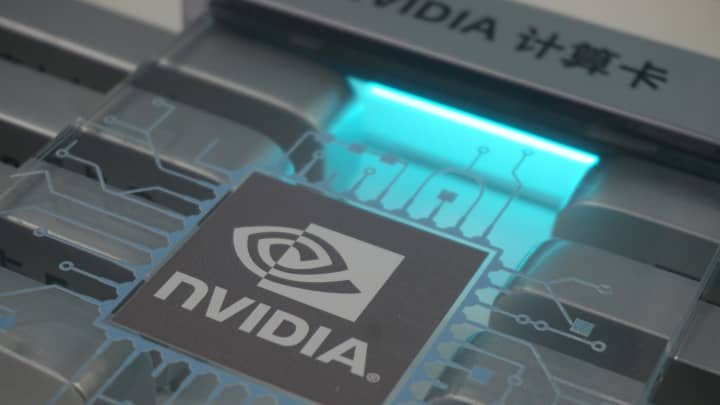
President Donald Trump’s decision to lift the ban on exporting Nvidia’s H200 chip to China marks a major shift in US-China trade and technology relations. The H200 is Nvidia’s most powerful AI chip for complex tasks, while the newer Blackwell and Rubin chips remain restricted.
Trump announced the decision on social media, stating that exports will be limited to approved commercial clients reviewed by the Department of Commerce, with safeguards to protect US national security. He added that 25% of the sales revenue could go to the US government. Trump also said he discussed the move with Chinese President Xi Jinping, who responded positively.
The announcement followed a meeting last week between Trump and Nvidia CEO Jensen Huang. Nvidia was delighted with the move, which they claimed would create high-paying jobs in the US and help businesses compete globally. AMD concurred, stating that the step enhances the US semiconductor competitiveness and investment. Intel has not commented.
This license is part of the Trump administration’s wider effort to balance national security with US leadership in global AI and semiconductor markets. Earlier this year, deals required Nvidia and AMD to share some revenue from chip sales to China with the US government. In July, Trump also announced a 10 percent stake in Intel, showing more US involvement in the industry.
Analysts see the move as a practical compromise. It lets US companies access China’s growing AI market while keeping sensitive technology safe. The decision also shows the administration’s commitment to keeping the US competitive in global AI, as China keeps investing in its own semiconductor industry.

