

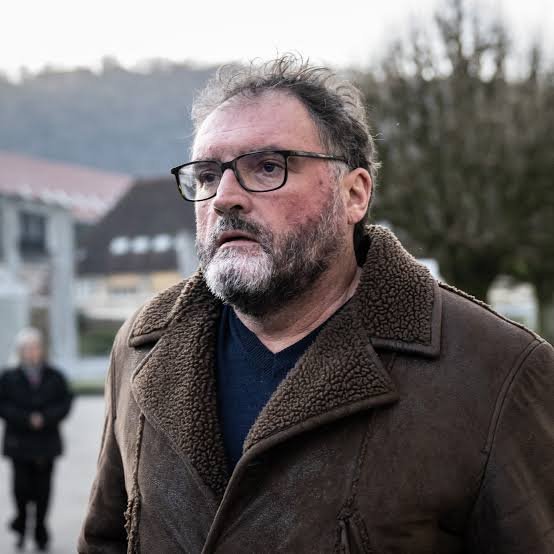
A French anesthesiologist has been sentenced to life in prison for intentionally poisoning 30 patients, 12 of whom died. This brings to a close one of the most disturbing medical scandals in the country’s recent history.
Frédéric Péchier, 53, was found guilty on Friday in Besançon after a four-month trial. The trial revealed years of hidden malpractice and unusual medical events. The former doctor will now spend at least 22 years behind bars.
The case, called one of France’s biggest medical crime investigations, focused on claims that Péchier tampered with IV bags. He allegedly added substances like potassium chloride and adrenaline, causing cardiac arrests or serious bleeding in patients.
His youngest victim was a four-year-old who had two cardiac arrests during a routine tonsil surgery in 2016 but survived. The oldest was 89.
“You’re Doctor Death, a poisoner, a murderer. You shame all doctors,” prosecutors told the court last week. “You turned this clinic into a graveyard.”
Many patients had cardiac arrests during surgery and needed immediate help. Péchier often stepped in to assist, which made him appear heroic to colleagues and families. But in 12 cases, even with the medical teams’ help, patients did not survive. Prosecutors claimed Péchier wanted to harm other anesthesiologists he did not get along with. He usually was not the main anesthesiologist, and investigators said he would arrive early to tamper with the IV bags before others arrived. When emergencies happened, he could identify the problem and suggest a solution.
Péchier was first investigated eight years ago, after suspicions arose that he was poisoning patients in two Besançon clinics between 2008 and 2017. The alarm was raised in 2017 when excessive potassium chloride was found in the IV bag of a woman who had cardiac arrest during back surgery.
Investigators then found a pattern of serious incidents at the Saint-Vincent private clinic. The usual rate for fatal cardiac arrest under anesthesia is one in 100,000, but at Saint-Vincent, it was over six times higher. In France, most cardiac arrests under anesthesia have clear medical reasons. At Saint-Vincent, investigators kept finding unusual cases with no clear cause. A clear pattern emerged: emergencies stopped when Péchier worked at another clinic, but increased when he arrived at the new hospital. Emergencies resumed at Saint-Vincent when he returned. Once Péchier was no longer allowed to practice in 2017, the pattern ended.
His first known victim, 36-year-old Sandra Simard, had a sudden cardiac arrest during spinal surgery. She lived because Péchier helped, but she later went into a coma. Tests on her IV bags found potassium levels 100 times higher than normal, which first alerted prosecutors.
Over 15 weeks of testimony, Péchier said that some patients who got sick or died might have been poisoned, but he said he wasn’t involved. “I’ve said it before, and I’ll say it again: I’m not a poisoner… I’ve always followed the Hippocratic oath,” he told the court. Although he claimed innocence, Péchier’s story changed over time. He eventually said that someone must have been poisoning people at the clinic but insisted it was not him. His lawyers argued there was no real proof he touched the IVs.
A court psychologist said Péchier had a split personality, like Dr. Jekyll and Mr. Hyde. The son of two doctors, he tried to kill himself twice, in 2014 and 2021.
A divorced father of three, Péchier said his priority was protecting his family. His children cried when the verdict was read. Péchier showed no emotion. The verdict was a relief for survivors who had waited years for this. “It’s the end of a bad dream,” said Simard. Another survivor, Jean-Claude Gandon, said the sentence helped as the holidays approached: “We can have a better Christmas now.”
Péchier, who was free during the trial, now has 10 days to appeal. If he does, a second trial should happen within a year.
The result ends a sad chapter for the medical community in Besançon and raises questions about why the poisoning continued for almost ten years. For families who lost loved ones, the life sentence is a major step in their search for justice, though many say nothing can repair the damage.

