

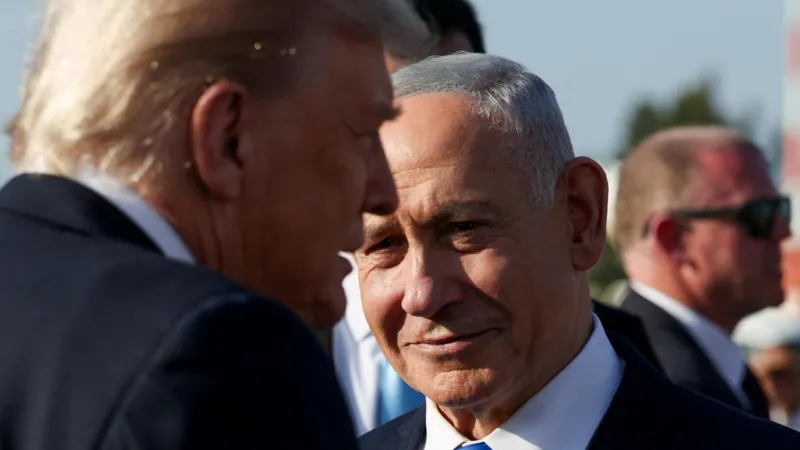
Trump’s intervention could prove pivotal in breaking the current impasse, with US mediation seen by many as the only leverage capable of pushing Israel and Hamas toward the next phase of the ceasefire.
Washington has pressed Israel to allow the agreement to advance, while urging Hamas to make further concessions on disarmament and hostage returns. US officials believe progress is essential to stabilise Gaza and prevent the conflict from spilling further into neighbouring states.
Netanyahu is also expected to use the Florida meetings to raise concerns about Iran, which Israel says is rebuilding its missile and drone capabilities following a brief but intense conflict earlier this year involving Israeli and US strikes on Iranian nuclear facilities.
Iranian President Masoud Pezeshkian said over the weekend that Tehran considers itself locked in an “all-out war” with Israel, the United States and Europe, accusing Western powers of seeking to destabilise the country.
Meanwhile, tensions continue to rise in the occupied West Bank, where Israeli settlement expansion has accelerated. Israeli ministers have described the policy as irreversible, prompting renewed international criticism. Under international law, both settlements and annexation of occupied territory are illegal.
Trump has previously opposed formal annexation of the West Bank, and Israeli media reports suggest Netanyahu may attempt to revisit the issue during his discussions with US officials, including Secretary of State Marco Rubio.
As Netanyahu arrives in Florida, expectations remain cautious. While the meeting underscores the close relationship between the two leaders, deep divisions persist over Gaza’s political future, Palestinian statehood and regional security.
With humanitarian conditions in Gaza deteriorating amid winter storms and continued military activity, many observers see the talks as a critical test of whether US diplomacy can deliver tangible progress — or whether the region remains locked in an increasingly volatile stalemate.

