

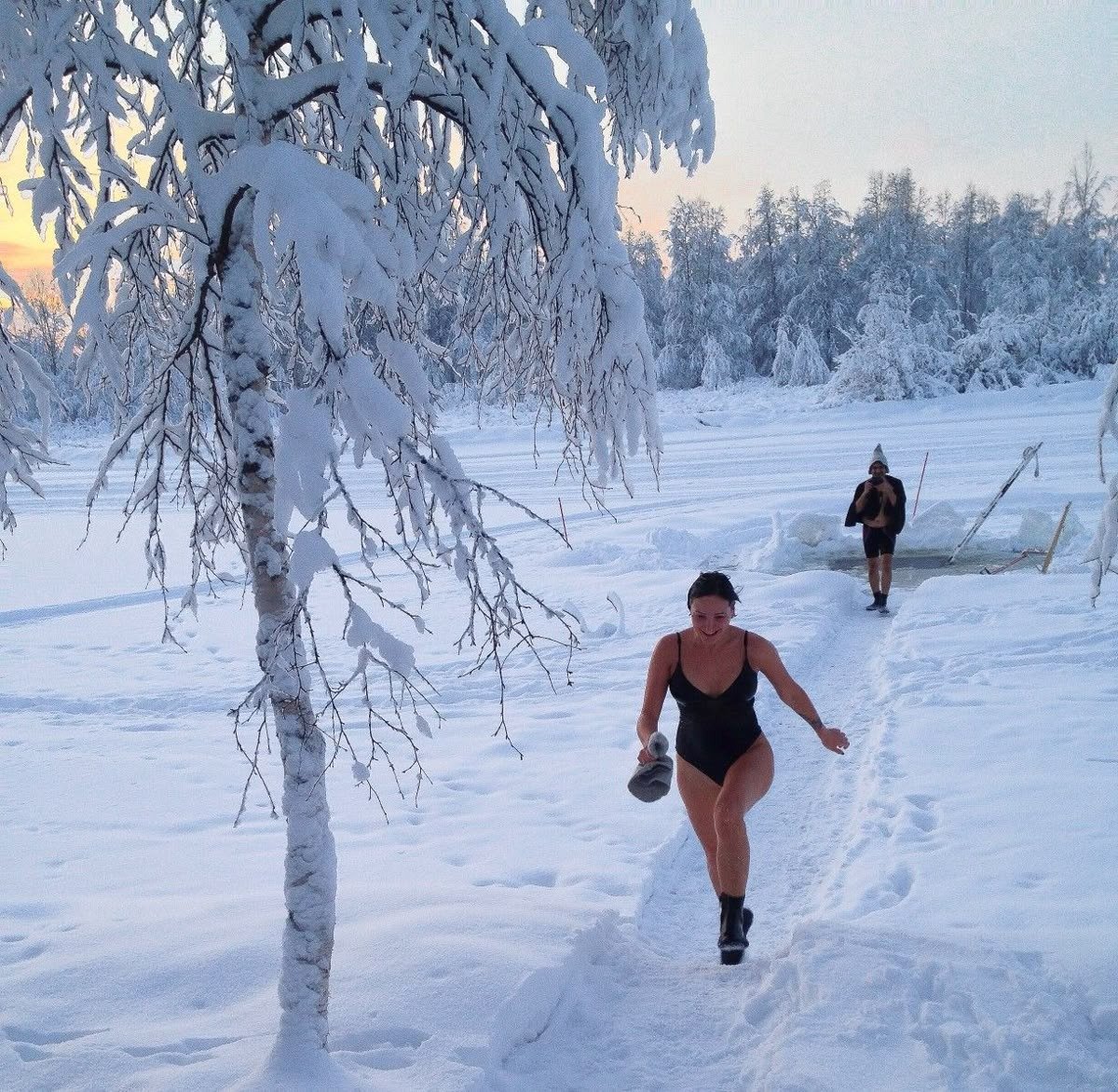
Ice swimming is a way of life in Finland, woven into daily routines, seasonal rhythms and the country’s deep relationship with nature. While it has gained global attention as a wellness trend, Finns have been slipping into freezing water for generations, often pairing the ritual with a hot sauna and quiet moments outdoors.
Endurance athlete and Ironwoman Marjaana Maijala describes ice plunging not as an extreme sport, but as a grounding practice that sharpens the mind and builds resilience. For her, the appeal lies in simplicity: cold water, steady breathing and full presence in the moment. The experience, she says, is about listening to the body rather than conquering it.
Helsinki offers one of the most accessible introductions to ice swimming. At the Allas Sea Pool, swimmers can enter the Baltic Sea year-round, even when the water is edged with ice. The setting blends urban life with nature, with ferries passing nearby and the city skyline in view. Heated saunas beside the pool allow swimmers to warm up gradually, making it an ideal spot for beginners.
Further east, Kuopio provides a quieter, more traditional lake experience. During winter, openings are carefully maintained in the frozen surface of Lake Kallavesi, allowing regular swimmers to dip safely. The surrounding snow-covered landscape creates a sense of stillness that many find calming. Maijala says plunging here feels deeply meditative, especially in the early morning or at dusk.
Tampere, widely known as Finland’s sauna capital, offers some of the country’s most iconic hot-and-cold experiences. Public saunas such as Rauhaniemi and Kaupinoja sit beside frozen lakes, where swimmers move directly from steam-filled rooms into icy water. Maijala explains that alternating between heat and cold stimulates circulation and leaves the body feeling refreshed rather than drained.
In southern Finland, the coastal town of Ekenäs offers sea plunges that feel raw and elemental. Winter swimmers enter the shallow, icy water surrounded by rocky shores and bare trees. The saltwater cold is sharper than that of lakes, and Maijala recommends limiting time in the sea for those new to the practice.
Lapland provides the most dramatic settings for ice swimming. In places like Rovaniemi and Inari, plunges often take place in rivers bordered by snow-laden forests. The extreme cold of the far north intensifies every sensation, from the bite of the water to the clarity that follows. Maijala stresses that preparation is essential here, especially controlling breathing and moving calmly.
Smaller communities across Finland also maintain their own plunge spots, often cared for by local swimming groups. These informal locations reflect how deeply rooted the tradition is in everyday life. Maijala notes that these shared spaces are built on trust, routine and respect for nature.
Safety is central to ice swimming culture. Beginners are encouraged to start slowly, entering the water for just a few seconds at first. Swimmers should never plunge alone, and many wear neoprene boots or gloves to protect against slipping on icy surfaces. Calm, controlled breathing is key, as panic can increase the body’s stress response.
Maijala emphasizes that ice swimming is not about endurance or staying in the water as long as possible. Most experienced swimmers exit while they still feel in control, often after less than a minute. The goal is to stimulate the nervous system without overwhelming it.
While research into the health benefits of ice swimming continues, many Finns swear by its positive effects on mood, sleep and stress levels. Maijala says the mental impact is immediate, describing a clear-headed calm that follows each plunge. She compares it to the feeling after a long run or intense workout, but with less physical strain.
Recovery rituals play an important role. After plunging, swimmers typically warm up slowly, either in a sauna or with dry clothes and hot drinks. Some take time to sit quietly outdoors, letting the body settle. These moments, Maijala says, are essential for integrating the experience rather than rushing back into daily life.
Ice swimming in Finland is inclusive and community-driven. People of all ages take part, from children to retirees, often together. Maijala believes this accessibility is what sets Finnish ice swimming apart from more performance-driven cold exposure trends elsewhere.
Visitors are welcome, but she advises starting at established locations with clear safety measures and sauna access. Respecting local customs, keeping noise low and caring for shared spaces are important parts of the experience.
For Finns, ice plunging is not about testing limits or chasing discomfort. It is a quiet, powerful way to reconnect with the body, the seasons and the natural world. Whether in a city harbour, a frozen lake or a remote northern river, each plunge offers the same lesson: resilience grows through calm, not force.

