

The trade deal between India and the European Union is about more than business—it’s shaped by geopolitics.
The EU is India’s largest trading partner, with goods trade reaching $142.3 billion in 2024, making up 11.5% of India’s total trade. India is the EU’s ninth largest trading partner. Despite these strong numbers, trade talks were stalled for twenty years.
The breakthrough comes amid global uncertainty and the unpredictable stance of the US under President Donald Trump. The US has imposed 50% tariffs on Indian goods, including extra penalties for India’s continued oil purchases from Russia. Some EU countries have also faced tariff threats from Trump over unrelated disputes.
The EU and India are not alone in seeking new alliances as countries around the world strike trade deals to manage an unpredictable global landscape. The EU-India pact is India’s seventh recent trade deal and follows the EU’s agreement with Mercosur after 25 years of negotiation, a process experts say was also influenced by Trump’s policies. Other world leaders, including Canada’s and the UK’s prime ministers, are also seeking new trade relationships amid strained ties with the US and China.
The India-EU trade deal, which still awaits ratification, carries geopolitical weight for both Brussels and Delhi. It signals to Washington that global powers are working together to protect their interests. According to Michael Kugelman of the Atlantic Council, Trump’s tariffs pushed both sides to make compromises and move the deal forward.
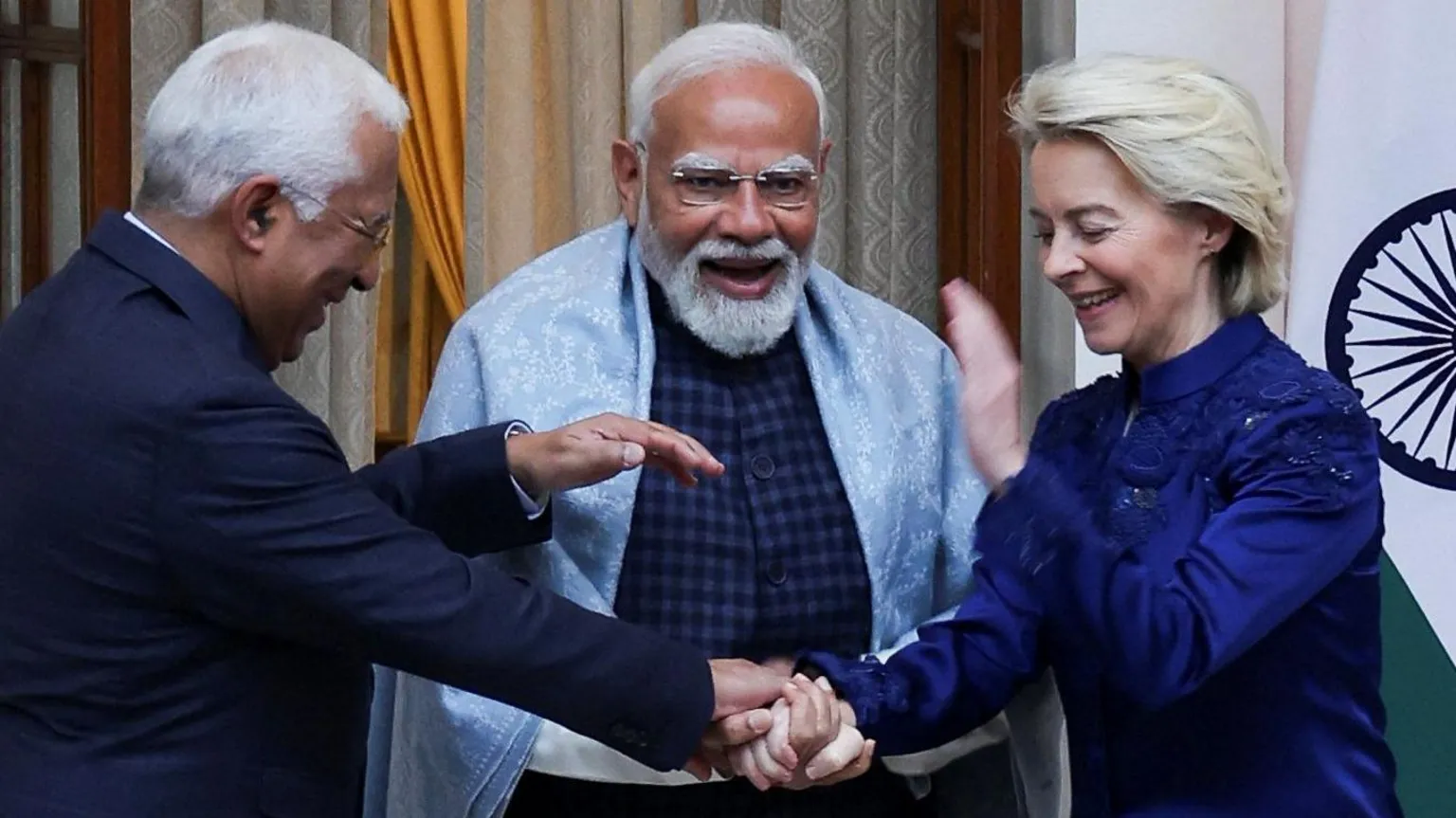
Indian Prime Minister Narendra Modi and European Commission President Ursula von der Leyen called the agreement “the mother of all deals.” Von der Leyen said the partnership reduces strategic dependencies and boosts security amid a turbulent global order. Modi described the deal as a blueprint for shared prosperity.
The deal has drawn criticism from the US, with Treasury Secretary Scott Bessent accusing the EU of “financing the war against themselves” by working with India, citing India’s Russian oil purchases. India says this is needed to secure energy for its people.
India’s long-standing ties to Russia are a factor in its cautious approach, but the EU deal also opens doors for defence cooperation with other European countries. For the EU, the agreement offers a way to reduce reliance on China.
Experts say both sides still have work to do. The agreement must be formally signed and ratified, and key issues—such as carbon taxes, intellectual property, and agriculture—remain unresolved. The EU’s Carbon Border Adjustment Mechanism could disadvantage Indian exports, as it is not covered by the deal.
Still, business groups in both regions have welcomed the agreement for expanding market access. Implementation, however, will be crucial.
While Trump’s tariffs sped up the deal, renewed talks began in 2022 with a shared goal of reaching an agreement. The deal supports India’s push for more free trade agreements and market openness. The EU-India deal is larger than other recent FTAs, including with the UK.
Both sides will seek to keep good relations with the US, but this agreement gives them more leverage in future negotiations. How Trump will respond remains to be seen.

