

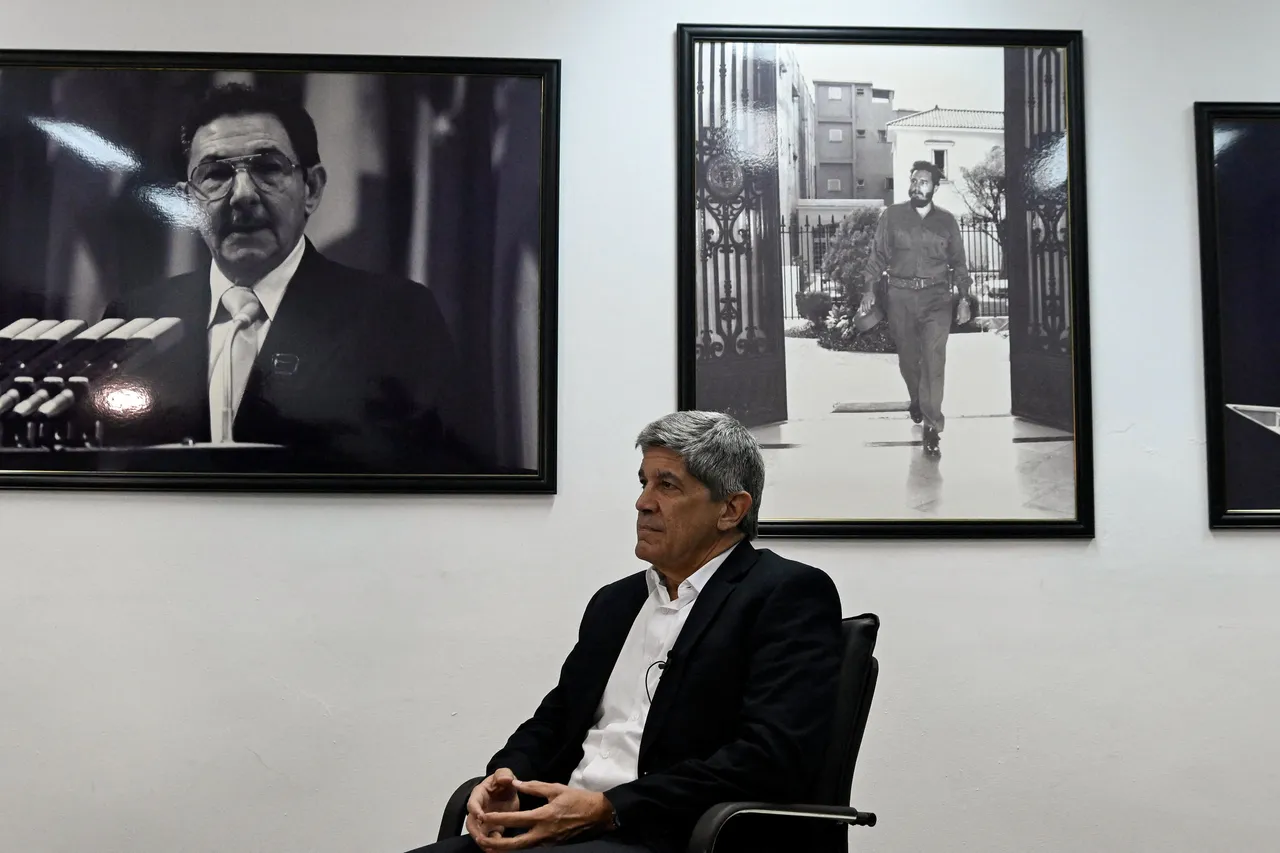
Cuba has said it is willing to engage in “meaningful” dialogue with the United States, but insists that any talks will not include changes to its political system, according to the country’s deputy foreign minister. The comments come as the Trump administration intensifies pressure on the island and openly raises the possibility of regime change.
“We are not prepared to discuss our constitutional system, just as we assume the United States would not be prepared to discuss theirs — their political system or their economic reality,” said Carlos Fernández de Cossío.
Cuban President Miguel Díaz-Canel reinforced that position on Thursday, saying that genuine dialogue cannot take place under pressure or threats.
De Cossío said there is currently no formal bilateral dialogue between the two countries, though he acknowledged that there have been limited exchanges of messages connected to the highest levels of Cuba’s government.
His remarks follow comments from US Secretary of State Marco Rubio, who recently said Washington “would love to see” regime change in Cuba, even if it would not necessarily act to bring it about.
The statements also come amid a sharp escalation in US pressure on Havana, including efforts to disrupt oil supplies to the island. The United States has already affected fuel shipments from Venezuela after removing that country’s president from power.
Last week, Washington threatened to impose tariffs on countries exporting oil to Cuba, arguing that Havana poses an “extraordinary threat” due to its alignment with what the US describes as hostile nations and malign actors, and for hosting foreign military and intelligence capabilities.
De Cossío rejected that characterization, saying Cuba does not threaten the United States. “Cuba is not aggressive toward the United States. It is not hostile. It does not harbor terrorists, nor does it sponsor terrorism,” he said.
He urged Washington to scale back what he described as an economic pressure campaign that has already caused serious harm inside the country.
Across Cuba, residents are dealing with frequent blackouts and long queues at fuel stations as supplies continue to shrink. Cuban officials say US economic sanctions are largely responsible for the country’s worsening energy crisis, though critics also point to years of underinvestment in infrastructure.
De Cossío warned that Cuba may be forced to introduce austerity measures and make sacrifices to conserve fuel, though he did not specify how much fuel remains in reserve.
“What Cuba is experiencing is equivalent to war, in terms of economic coercion,” he said.
President Donald Trump has said Cuba could avoid a complete fuel cutoff by reaching “a deal” with the United States, potentially involving the return of property confiscated from Cuban exiles who left the country after the 1959 revolution.
Trump also said this week that Mexico — a close ally of Havana — would suspend oil shipments to Cuba as US pressure increases. Mexican authorities responded by saying their oil contracts with Cuba remain in place, but that they are exploring alternative ways to assist the island while avoiding US tariffs.
Cubans were stunned earlier this year by a US operation that captured Venezuelan leader Nicolás Maduro, another close ally of Cuba, an incident that reportedly resulted in the deaths of more than 30 Cuban security personnel assigned to protect him. Cuban officials have vowed to resist any similar US military action against their country.
In recent weeks, state media has broadcast images of increased military drills and readiness exercises. Díaz-Canel said on Thursday that Cuba’s National Defense Council has been updating its plans to defend the nation if necessary.
Despite the rising tensions, Díaz-Canel stressed that Cubans do not view the American people as enemies. “We recognize the values of the American people — the values of their history, their culture,” he said.
Earlier this week, the US Embassy in Havana advised American citizens in Cuba to take precautions amid the worsening energy crisis, including conserving fuel, water and food, and keeping electronic devices charged. It also warned of cases in which US citizens were denied entry into the country and noted an increase in government-backed protests against the United States.
De Cossío argued that dialogue, not coercion, offers the best path forward. While Cuba will not engage in talks about regime change, he said the country is open to cooperation in areas of shared interest, including regional security.
“If the United States wants cooperation in combating drug trafficking, Cuba can help,” he said. “We have helped in the past, and we can continue to assist with trafficking routes within the region.”

