

The Milan–Cortina 2026 Winter Olympics have arrived, with Italy set to host one of the most wide-ranging Winter Games in history.
Around 2,900 athletes from more than 90 countries will compete across snow and ice over 16 days. Events are spread across northern Italy, stretching from Milan to Cortina d’Ampezzo, with competitions also taking place in Predazzo, Tesero, Livigno and Bormio, all set against the backdrop of the Dolomites and Alpine resorts.
Opening ceremony
Although competition began earlier in the week, the Games officially open on Friday with a ceremony at Milan’s San Siro stadium. A star-studded lineup is expected, including Mariah Carey and Italian tenor Andrea Bocelli.
Because venues are spread far apart, not all athletes will be in Milan. Parallel ceremonies will take place in Cortina, complete with its own Olympic cauldron, while additional satellite celebrations are planned in Predazzo and Livigno.
Figure skater Lilah Fear and bobsleigh pilot Brad Hall will carry the Great Britain flag — Fear in Milan and Hall in Cortina.
Team GB medal hopes
Great Britain could be on course for its strongest-ever Winter Olympics. The nation’s best medal haul at a Winter Games so far stands at five, but projections suggest that up to eight medals could be within reach this time.
Skeleton athletes Matt Weston and Marcus Wyatt arrive as two of the strongest contenders in the field after dominating the World Cup season. Snowboarders Mia Brookes and Charlotte Bankes, alongside freestyle skiers Kirsty Muir and Zoe Atkin, are tipped as potential medal winners on snow.
On the ice, Lewis Gibson and Lilah Fear are seen as serious contenders in figure skating, while Britain’s curlers are aiming to build on their success from 2022.
What’s new at Milan–Cortina 2026
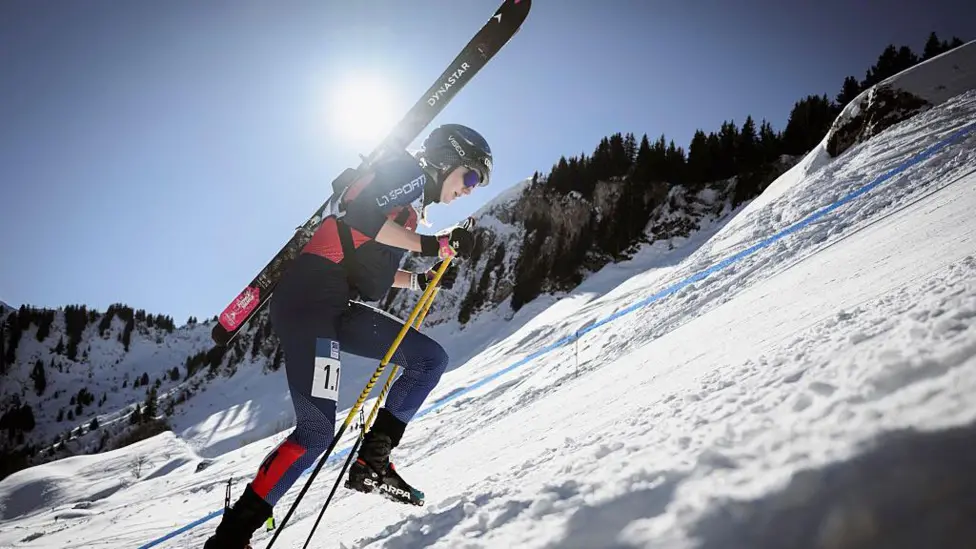
For the first time since 2002, a new sport has been added to the Winter Olympic programme. Ski mountaineering — known as skimo — will debut in Bormio, featuring men’s and women’s sprint events and a mixed relay.
The discipline combines uphill sprinting on skis fitted with skins, climbing on foot with skis carried in backpacks, and fast downhill skiing to the finish line. No British athletes are competing in skimo.
Several new events have also been added, including dual moguls, luge doubles, team alpine combined events, women’s large hill ski jumping, and a mixed team relay in skeleton.
The build-up
Milan and Cortina were chosen as host cities in 2019, with organisers largely relying on existing venues. However, new facilities were built for ice hockey and sliding sports.
The rebuilt Cortina Sliding Centre, constructed on a historic track at a cost exceeding £70m, was completed just in time for the season. The Milano Santagiulia ice hockey arena, however, has faced repeated delays. Organisers have confirmed that while construction is ongoing, all scheduled matches will go ahead.
The venue has attracted criticism over ice quality and rink dimensions, which differ from NHL standards. Preparations were further overshadowed by controversy when Italian biathlete Rebecca Passler was removed from the Games following a failed doping test.
Russian and Belarusian athletes
Athletes from Russia and Belarus are competing under a neutral designation, following approval to participate under strict conditions. They must show they have not supported the war in Ukraine and are not affiliated with the military.
A total of 20 athletes from the two countries are set to compete across eight sports as Individual Neutral Athletes. Some competitors have faced scrutiny over past activity, though Olympic officials have said all approved athletes were reviewed in line with established criteria.
With venues set, new sports added, and medal hopes running high, Milan–Cortina 2026 is shaping up to be one of the most ambitious Winter Olympics yet.

