

The longevity industry is built on a powerful promise: the idea that ageing can be slowed, managed, and even optimised. As more clinics open and prices climb, questions are growing about how much of what’s being sold is backed by science—and who can actually afford to take part in the pursuit of a longer, healthier life.
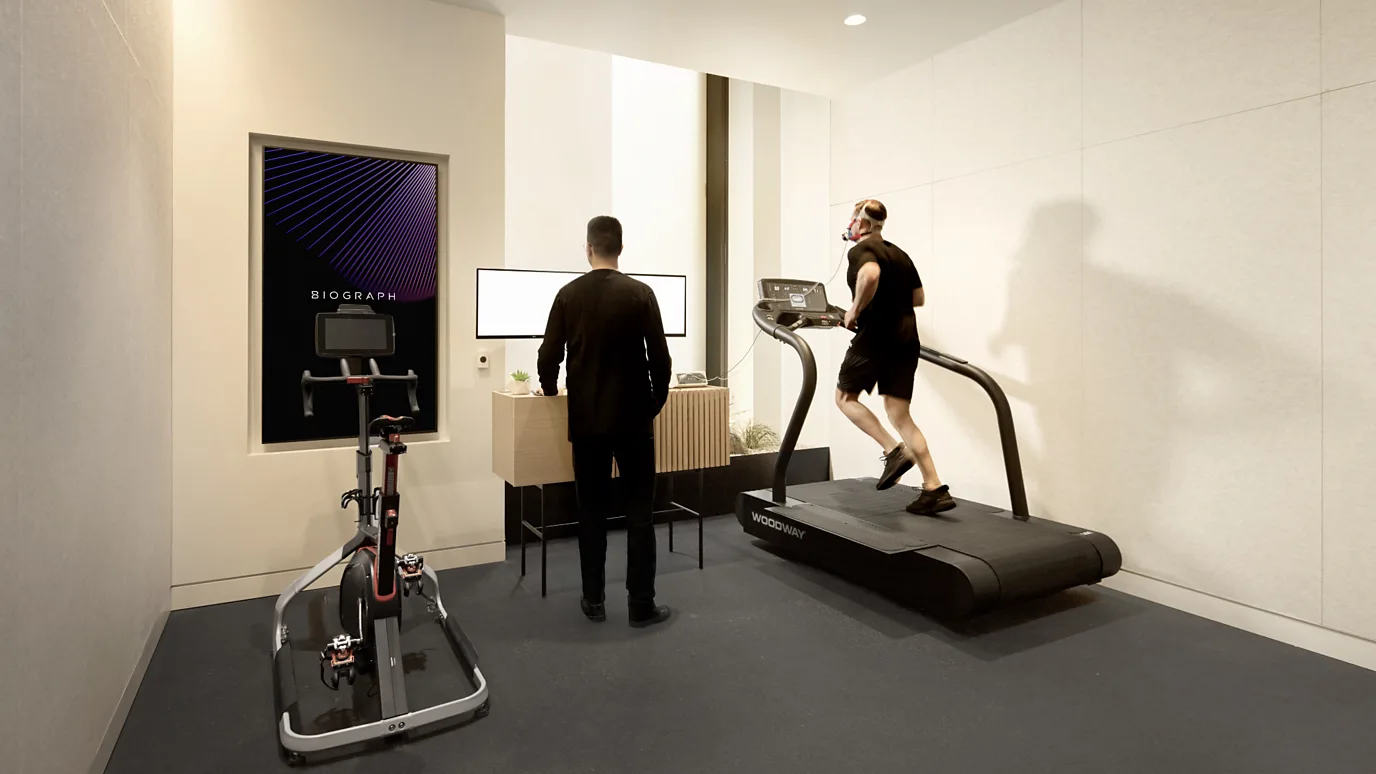
At Biograph, a high-end longevity clinic in New York City and San Francisco, clients can spend up to six hours undergoing an intensive assessment. The process involves collecting more than 1,000 data points through over 30 advanced diagnostic tests, including proprietary MRI and CT scans, body composition analysis, VO2 max testing and extensive bloodwork. Members are given a private suite where they can relax between tests, review findings and shower before leaving. Weeks later, they receive a personalised health-risk profile that pulls all the data together.
Biograph is just one example of a fast-growing category of businesses centred on the belief that ageing is something that can be controlled—for a price. While the global wellness industry has surged in recent years, longevity has become one of its fastest-growing segments.
Across the world, similar offerings are popping up. In Grand Cayman, a 16,000-square-foot wellness destination called Meraki Wellness is set to open this spring. In St Barth, Le Barthélemy Hotel now offers biological age testing paired with seaside mindfulness sessions. In Switzerland, the luxury clinic Clinique La Prairie has launched a programme called Life Reset, focused on mental longevity through diagnostics, personalised nutrition, neurostimulation, sleep optimisation and stress-resilience therapies.
Longevity services are also increasingly woven into luxury travel. Hotels are positioning wellness protocols as part of the guest experience. At the Four Seasons Los Angeles at Beverly Hills, guests can book a $1,000 (£732) medical-grade recovery programme called Flight Check, designed to counter the physical stress of air travel.
Developed with Immortelle Integrative Health, the 60-minute session includes IV therapy, laser-based immune support, light therapy aimed at brain function and thermotherapy for circulation and tissue repair. Optional add-ons range from genetic analysis and gut health testing to stem cell therapy.
Evan Pinchuk, CEO and co-founder of Immortelle, says the programme grew out of years of observing guests arriving exhausted and run down after flying. With about 90% of hotel guests travelling by plane, the demand was clear. The company now has around 30 nurses on site, and appointments—limited to two per day—must be booked 24 hours in advance.
Jessica Jacobson, Immortelle’s co-founder and director of patient care, says flight recovery often opens the door to broader discussions about longevity. “Flying creates this perfect storm of immune suppression that people don’t realise they need to recover from,” she says.
What the evidence says
Not everyone is convinced. Deborah Kado, a professor of medicine and research chief of geriatric medicine at Stanford Medicine, urges caution when linking large volumes of data to meaningful health outcomes. While some biomarkers may be useful, she says, their real-world impact depends on what’s being measured. “The key word is ‘perhaps’,” she stresses.
For many popular interventions—such as red light therapy, cold plunges, infrared saunas and contrast therapy—the scientific evidence remains limited. Results seen in animal studies, Kado notes, don’t automatically translate into longer human lifespans.
Andrea LaCroix, a professor at UC San Diego’s Herbert Wertheim School of Public Health and Human Longevity Science, is even more direct. She says there is a lack of clinical trial data proving that these interventions extend healthy human longevity, describing many treatments as “self-experimentation at your own risk”.
Following the money
Costs vary widely. A basic wellness screening may start at $200 (£146), while a 45-minute “cellular repair” session can cost $1,300 (£951). Full annual programmes often run into the thousands. Regardless of price point, the message is largely the same: advanced diagnostics and targeted interventions can help people live longer and better lives.
Michael Doney, executive medical director at Biograph, draws a sharp line between what he considers true diagnostic clinics and broader wellness spaces. He says longevity, as Biograph defines it, is about extending healthspan and lifespan by identifying risks early—often long before symptoms appear. According to Doney, one in six members uncovers a potentially life-threatening issue, with the real value lying in how all the data is interpreted together rather than in isolated tests.
Frank Lipman, an integrative medicine physician, takes a more grounded view. He points out that science consistently supports basics like good nutrition, quality sleep, regular exercise, stress management and having a sense of purpose. While research may eventually validate newer treatments, he says, science often lags behind innovation.
At Meraki Wellness, co-founder Shula Clarke emphasises that the destination is not a medical facility. Instead, data is used for insight and self-awareness, not diagnosis or clinical decision-making.
The women’s health dimension
Women make up a significant share of longevity clinic clients, with menopause-focused programmes emerging as a major subcategory—often with price tags in the thousands.
Jessica Shepherd, a physician specialising in women’s health, sees both opportunity and danger in this trend. She says menopause has long been under-supported, leaving many women feeling dismissed. What’s changing now, she notes, is that women are demanding better care and more information.
Still, Shepherd warns against turning menopause into a luxury problem to be solved with expensive packages. “The line gets crossed when women feel they must spend thousands to protect their health,” she says. “Menopause isn’t something to be fixed—it’s a transition to be supported.”
The two-tier question
As longevity services grow more popular, concerns about inequality are becoming harder to ignore. Kado points out that a two-tier ageing system already exists, especially in the US, where many people skip preventative care simply to meet basic needs. Yet she adds that healthy longevity doesn’t require luxury services, noting that many people who live well into their 80s, 90s and beyond have never used them.
Melanie Goldey, CEO of Tally Health, which offers biological age testing starting at $249 (£182), says the industry needs clearer accountability. Longevity, she argues, becomes problematic when companies charge high fees while overstating what science can currently deliver. Transparency, she says, means being honest about what is proven, what is still developing, and what remains unknown.

